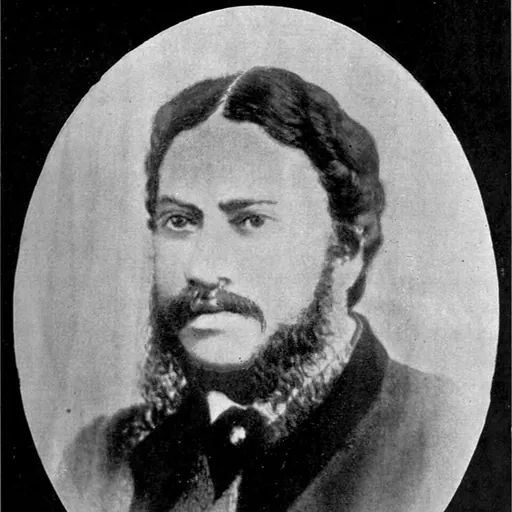
About Michael Madhusudan Dutt
Lived 1824 – 1873 (aged 49). Michael Madhusudan Dutt was an Indian poet, writer, editor, translator, barrister and playwright.
Michael Madhusudan Dutt (, ; 25 January 1824 – 29 June 1873) was a Bengali poet and playwright. He is considered one of the pioneers of Bengali literature.
Early life Madhusudan was born in Sagardari, a village in Keshabpur Upazila, Jessore District of Bengal (present-day Bangladesh), to a Hindu family. His father was Rajnarayan Dutta, who was a lawyer and his mother was Jahnabi Devi. His family, being reasonably well-off, ensured that Madhusudan received an education in the English language and additional tutorship in English at home. Rajnarayan had intended for this Western education to open the doors for a government position for his son. He expressed these sentiments in one of his poems. An early and formative influence on Dutt was his teacher at Hindu College, David Lester Richardson. Richardson was a poet and inspired in Dutt a love of English poetry, particularly by that of Byron. Dutt began writing English poetry aged around 17 years, sending his works to publications in England, including Blackwood's Magazine and Bentley's Miscellany. They were, however, never accepted for publication. at the Old Mission Church, in spite of the objections of his parents and relatives. He did not take the name Michael until his marriage in 1848.
He had to leave Hindu College on account of converting to Christianity. In 1844, he resumed his education at Bishop's College, where he stayed for three years.
In 1847, he moved to Madras (Chennai) due to family tensions and economic hardship, having been disinherited by his father. and polyglot. He studied English, Bengali, Hebrew, Latin, Greek, Tamil, Telugu and Sanskrit.
Michael Madhusudan Dutt dedicated his first sonnet to his friend Rajnarayan Basu, which he accompanied with a letter: "What say you to this, my good friend? In my humble opinion, if cultivated by men of genius, our sonnet in time would rival the Italian." His most famous sonnet is Kapatakkha River. Always, o river, you peep in my mind. Always I think you in this loneliness. Always I soothe my ears with the murmur Of your waters in illusion, the way Men hear songs of illusion in a dream. Many a river I have seen on earth; But which can quench my thirst the way you do? You're the flow of milk in my homeland's breasts. Will I meet you ever? As long as you Go to kinglike ocean to pay the tax Of water, I beg to you, sing my name Into the ears of people of Bengal, Sing his name, o dear, who in this far land Sings your name in all his songs for Bengal.
When Dutt later stayed in Versailles, the sixth centenary of the Italian poet Dante Alighieri was being celebrated all over Europe. He composed a poem in honour of the poet, translated it into French and Italian, and sent it to the king of Italy. Victor Emmanuel II, then monarch, liked the poem and wrote to Dutt, saying, "It will be a ring which will connect the Orient with the Occident."
Work in blank verse Sharmistha (spelt as Sermista in English) was Dutt's first attempt at blank verse in Bengali literature. Kaliprasanna Singha organised a felicitation ceremony for Madhusudan to mark the introduction of blank verse in Bengali poetry. His famous epic, quoted as the only epic of Bengali kind, Meghnadbad-Kabya is also totally written in blank verse.
Praising Dutt's blank verse, Sir Ashutosh Mukherjee, observed: "As long as the Bengali race and Bengali literature would exist, the sweet lyre of Madhusudan would never cease playing." He added: "Ordinarily, reading of poetry causes a soporific effect, but the intoxicating vigour of Madhusudan's poems makes even a sick man sit up on his bed."
Purabi Panwar's review "Lured by Hope : A Biography of Michael Madhusudan Dutt by Ghulam Murshid and Gopa Majumdar"centres on how Ghulam Murshid's biography rescues Michael Madhusudan Dutt from myth and misconception presenting a fact based portrait of the poet's rebellious life and his pioneering role in Bengali Literature. Panwar highlights that translator Gopa Majumdar was drawn to the book because it separated hearsay from the truth, drama from reality", a phrase that captures the review's central claim: that Murshid's work finally gives Dutt an unbiased, well-researched account after decades of legends overshadowing his actual literary achievements.
Barrister-at-law
Dutt went to England in 1862 to become a barrister-at-law and enrolled at the Gray's Inn.
On the eve of his departure to England:রেখ, মা, দাসেরে মনে, এ মিনতি করি পদে সাধিতে মনের সাধ ঘটে যদি পরমাদ, মধুহীন কর না গো মনঃ কোকনদে | (Original Bengali)
Forget me not, O Mother, Should I fail to return To thy hallowed bosom. Make not the lotus of thy memory Void of its nectar honey. (English translation by the poet.)
His family joined him in 1863, and thereafter they shifted to the much cheaper Versailles, due to the miserable state of their finances. Funds were not arriving from India according to his plans. He was only able to relocate to England in 1865 and study for the bar due to the generosity of Ishwar Chandra Vidyasagar. For this, Dutt was to regard Vidyasagar as Dayar Sagar (meaning the ocean of kindness) for as long as he lived. He was admitted to the High Court in Calcutta on his return in February 1867. His family followed him in 1869.
Marriage and family Dutt had refused to enter into an arranged marriage which his father had decided for him. He had no respect for that tradition and wanted to break free from the confines of caste-based endogamous marriage. His knowledge of the European tradition convinced him of his choice of marriages made by mutual consent (or love marriages).
While in Madras, he married Rebecca Thompson McTavish,
Dutt returned from Madras to Calcutta in February 1856, after his father's death (in 1855), abandoning his wife and four children in Madras. No records of his divorce from Rebecca or remarriage have been found. and Albert Napoleon (1869 – 22 August 1909),
Death Dutt died in Presidency General Hospital on 29 June 1873. The belated tribute was a tomb erected at his gravesite.
His epitaph, a verse of his own, reads: Stop a while, traveller! Should Mother Bengal claim thee for her son. As a child takes repose on his mother's elysian lap, Even so here in the Long Home, On the bosom of the earth, Enjoys the sweet eternal sleep Poet Madhusudan of the Duttas.
Michael Madhusudhan is a 1950 Indian Bengali-language drama film by Modhu Bose which starred Utpal Dutt in the titular role.
Author Namita Gokhale published a play about Madhusudhan in 2021, based largely on letters written by him to friends and other authors, called Betrayed by Hope.
In honour of Dutt, every year on his birthday, a fair is held in his home at Sagardari, which is organized by the District Council of Jessore. Every year, various MPs and ministers of the national parliament of Bangladesh attend this fair.
In honour of Dutt a school and a college are named after him in Jessore District. And a university was proposed to be set up in this birthplace. They are: Michael Madhusudan College Sagardari Michael Madhusadan Institution Micheal Madhusudan Specialized University A 12 km Long Road which connects Keshabpur with Sagardari Named after him, The road Known as Modhu Sarak. His Ancestors House known as Modhu Polli is also named after him.
In India Michael Madhusudan Dutta College in Tripura is named after him. Michael Madhusudan Memorial College in West Bengal is named after him. Madhusudan Mancha in West Bengal is named after him.
Don’t just read it —
keep it.
Full-length biographies made to live with: read them, listen on the way to work, watch them tonight.
- E-book
- Audio
- Video
Instant download · yours to keep · every purchase keeps this site free
Important facts
People in Michael Madhusudan Dutt's life
Named in this biography and alive at the same time
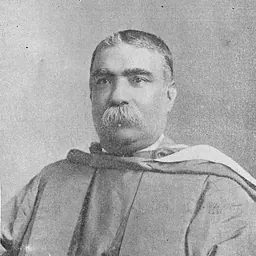



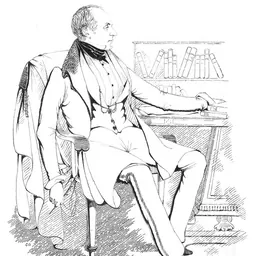
Related people
Same field, nearest in time
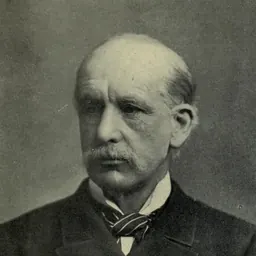
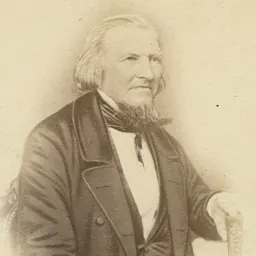

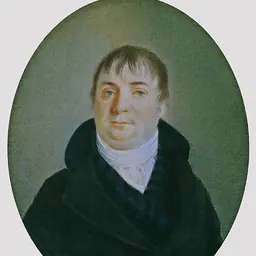
Contemporaries
People whose lives overlapped Michael Madhusudan Dutt's




Frequently asked questions
Who was Michael Madhusudan Dutt?
Bengali poet and dramatist (1824–1873)
When was Michael Madhusudan Dutt born?
Michael Madhusudan Dutt was born on 25 January 1824 in Sagardari.
When did Michael Madhusudan Dutt die?
Michael Madhusudan Dutt died on 29 June 1873 in Kolkata.
What was Michael Madhusudan Dutt's occupation?
Michael Madhusudan Dutt was a poet, writer, editor, translator, barrister and playwright.
What nationality was Michael Madhusudan Dutt?
Michael Madhusudan Dutt was Indian.
Sources & further reading
· Wikipedia: Michael Madhusudan Dutt
· DBpedia: Michael Madhusudan Dutt
Cite this page
APA: Biography.guide. (2026). Michael Madhusudan Dutt. https://biography.guide/michael-madhusudan-dutt/
MLA: "Michael Madhusudan Dutt." Biography.guide, https://biography.guide/michael-madhusudan-dutt/.
Chicago: "Michael Madhusudan Dutt." Biography.guide. https://biography.guide/michael-madhusudan-dutt/.
Data last updated: 2026-09-22 · Spot an error? Report a correction.
Portrait: Wikimedia Commons · author & licence
Page generated 2026-09-27 05:01 UTC