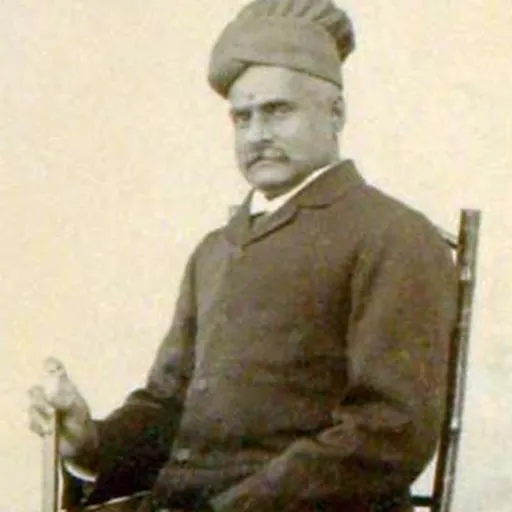
About Raja Ravi Varma
Lived 1848 – 1906 (aged 58). Raja Ravi Varma was a painter and creator.
Raja Ravi Varma (29 April 1848 – 2 October 1906 ) was an Indian painter. His works are one of the best examples of the fusion of European academic art with a purely Indian sensibility and iconography. He greatly enhanced his reach and influence as a painter and public figure by making affordable lithographs of his paintings available to the public. His lithographs increased the involvement of common people with fine arts and defined artistic tastes. Furthermore, his religious depictions of Hindu deities and works from Indian epic poetry and Puranas have received critical acclaim. He was part of the royal family of Parappanad, Malappuram district.
Raja Ravi Varma was closely related to the royal family of Travancore of present-day Kerala state in India. Later in his life, two of his granddaughters were adopted into the royal family.
Personal life Varma was born on 29 April 1848, as M. R. Ry. Ravi Varma , Koil Thampuran of Kilimanoor at Kilimanoor palace in the erstwhile princely state of Travancore (present-day Kerala) into an aristocratic family that for over 200 years produced consorts for the princesses of the matrilineal Travancore royal family. The title Raja was conferred as a personal title by the Viceroy and Governor-General of India Lord Curzon. He learned the basics of painting in Madurai. Later, he was trained in water painting by Rama Swami Naidu and rather reluctantly in oil painting by British portraitist Theodore Jenson.
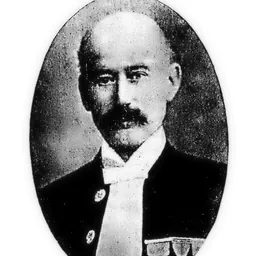
The British administrator, Edgar Thurston was significant in promoting the careers of Varma and his brother. Varma received widespread acclaim after he won an award for an exhibition of his paintings at Vienna in 1873. Varma's paintings were also sent to the World's Columbian Exposition held in Chicago in 1893 and he was awarded three gold medals. He travelled throughout India in search of subjects. He often modelled Hindu Goddesses on Indian women, whom he considered beautiful. Ravi Varma is particularly noted for his paintings depicting episodes from the story of Dushyanta and Shakuntala, and Nala and Damayanti, from the Mahabharata. Ravi Varma's representation of Hindu characters has become a part of the Indian imagination of the epics. He is often criticized for being too showy and sentimental in his style but his work remains very popular in India. Many of his fabulous paintings are housed at Laxmi Vilas Palace, Vadodara.
Raja Ravi Varma Press
Apparently on the advice of the then Dewan (Prime Minister) of Travancore, T. Madhava Rao, Ravi Varma started a lithographic printing press in Ghatkopar, Mumbai in 1894 and later shifted it to Malavli near Lonavala, Maharashtra in 1899. The oleographs produced by the press were mostly of Hindu gods and goddesses in scenes adapted mainly from the Mahabharata, the Ramayana and the Puranas. These oleographs were very popular and continued to be printed in thousands for many years, even after the 1906 death of Ravi Varma.
The Ravi Varma press was the largest and most innovative press in India at that time. The press was managed by Varma's brother, Raja Varma, but under their management, it was a commercial failure. By 1899 the press was deeply in debt and in 1901, the press was sold to his printing technician from Germany, Fritz Schleicher. Schleicher continued to print Ravi Varma's prints but later employed other artists to create new designs. Schleicher also broadened the product of press to include commercial and advertisement labels. Under the management of Schleicher and his successors, the press continued successfully until a devastating fire destroyed the whole factory in 1972. Many of Ravi Varma's original lithographic prints were also lost in the fire.
Honours
In 1904, Viceroy Lord Curzon, on behalf of the British King Emperor, bestowed upon Varma the Kaisar-i-Hind Gold Medal. A college dedicated to fine arts was also constituted in his honour at Mavelikara, Kerala. Raja Ravi Varma High at Kilimanoor was named after him and there are many cultural organizations throughout India bearing his name. In 2013, the crater Varma on Mercury was named in his honor. Considering his vast contribution to Indian art, the Government of Kerala has instituted an award called Raja Ravi Varma Puraskaram, which is awarded every year to people who show excellence in the field of art and culture. On his 65th death anniversary, India Post issued a commemorative postal stamp depicting Ravi Varma and his famous painting 'Damayanti and Swan'
Legacy
Raja Ravi Varma is sometimes regarded as the first modern Indian artist due to his ability to reconcile Western aesthetics with Indian iconography. The Indian art historian and critic Geeta Kapur wrote,
Similarly, Baroda School artist Gulam Mohammed Sheikh also wrote about Ravi Varma as a modern artist. In his essay "Ravi Varma in Baroda", Sheikh asserted that Varma was a key figure in the establishment of Indian modern art, claiming that "the story of contemporary Indian art was never the same after Ravi Varma had entered it. He left his imprint on almost every aspect of it." Like Kapur, Sheikh praised Ravi Varma's integration of Indian and Western aesthetics and techniques, comparing him favorably to Indian modernist Nandalal Bose.
However, Ravi Varma's legacy is controversial. Fellow Baroda School artist and art historian Ratan Parimoo saw Ravi Varma in a less favorable light, derogatorily referring to him as kitsch and claiming Varma's work was less spiritually authentic than folk art and tribal art. He argued that Ravi Varma was responsible for the "vulgarity" of popular art, comparing Varma's work to the lurid colors and sexuality of popular images in calendar art and films.
Despite his controversial legacy, Ravi Varma continues to be an important figure for modern and contemporary Indian artists. For example, modern artist Nalini Malani recreated Ravi Varma's Galaxy of Musicians in her video installation Unity in Diversity to interrogate Ravi Varma's idealistic nationalism. Similarly, contemporary artist Pushpamala N. recreated several Ravi Varma paintings with herself as the subject to deconstruct Ravi Varma's idealized depictions of goddesses and Indian women.
Many organizations do programs in his memory and give awards in his name. A two days festival of The Maharaja Ranjitsinh Gaekwad Festival of Arts is annually organized, in his memory at the Durbar Hall in Laxmi Vilas Palace, Vadodara, Gujarat. The Raja Ravi Varma Award for Excellence in the Field of Visual Arts is presented during this festival. Jayant Parikh was the first recipient.
List of major works The following is a list of the prominent works of Ravi Varma. On the anniversary of what would be his 150th birthday, Google Arts and Culture released over 300 of his works online for everyone to view.
Mohini playing with a ball Yashoda and Krishna Village Belle Lady Lost in Thought Damayanti Talking to a Swan The Orchestra Arjuna and Subhadra The heartbroken Swarbat Player Shakuntala Lord Krishna as Ambassador Jatayu, a bird devotee of Lord Rama is mauled by Ravana Victory of Indrajit The gypsies A Lady Playing Swarbat Lady Giving Alms at the Temple Lord Rama Conquers Varuna Victory of Meghanada Nair Woman Romancing Couple Draupadi Dreading to Meet Kichaka Shantanu and Matsyagandha Shakuntala Composing a Love Letter to King Dushyanta Girl in Sage Kanwa's Hermitage (Rishi-Kanya) Bharani Thirunal Lakshmi Bayi of Travancore Sri Shanmukha Subramania Swami Woman holding a fan 3D painting of the Mysore king on a horse (now on display at the Mysore Palace)
Sri Cyrus Poonawalla who is the founder and managing director of Serum Institute of India, acquired Ravi Varma's painting, "Yashoda and Krishna" for 167.2 crore Indian rupees at a Saffronart auction in Delhi on 1 April 2026. (source www.thehindu.com updated on 3.4.2026 at 8.29 am IST.) The sale at US$17.9 million set an auction record for the work of an Indian artist and surpasses Varma's previous record of US$4.5 million set in 2023.
Gallery More at Category:Raja Ravi Varma
In popular culture J. Sasikumar made Raja Ravi Varma, an Indian documentary television film on the artist in 1997. It was produced by the Government of India's Films Division.
Makaramanju (English: The Mist of Capricorn) is a 2011 Indian Malayalam-language romantic drama film by Lenin Rajendran starring Santosh Sivan as Varma, the film focuses on Varma's painting "Urvashi Pururavas". The 2014 Indian Hindi-language film, Rang Rasiya (English title: Colours of Passion) explores Varma's inspiration behind his paintings with Randeep Hooda in the role of the painter.
Don’t just read it —
keep it.
Full-length biographies made to live with: read them, listen on the way to work, watch them tonight.
- E-book
- Audio
- Video
Instant download · yours to keep · every purchase keeps this site free
Important facts
People in Raja Ravi Varma's life
Named in this biography and alive at the same time

Related people
Same field, nearest in time
Contemporaries
People whose lives overlapped Raja Ravi Varma's




Frequently asked questions
Who was Raja Ravi Varma?
Indian painter from Kerala (1848–1906)
When was Raja Ravi Varma born?
Raja Ravi Varma was born on 29 April 1848 in Kilimanoor.
When did Raja Ravi Varma die?
Raja Ravi Varma died on 2 October 1906 in Attingal.
What was Raja Ravi Varma's occupation?
Raja Ravi Varma was a painter and creator.
What nationality was Raja Ravi Varma?
Raja Ravi Varma's recorded nationality: Kingdom of Thiruvithamkoor.
Sources & further reading
Cite this page
APA: Biography.guide. (2026). Raja Ravi Varma. https://biography.guide/raja-ravi-varma/
MLA: "Raja Ravi Varma." Biography.guide, https://biography.guide/raja-ravi-varma/.
Chicago: "Raja Ravi Varma." Biography.guide. https://biography.guide/raja-ravi-varma/.
Data last updated: 2026-09-23 · Spot an error? Report a correction.
Portrait: Wikimedia Commons · author & licence
Page generated 2026-09-27 05:07 UTC