
About Edgar Thurston
Lived 1855 – 1935 (aged 79–80). Edgar Thurston was a British botanist, indologist, ethnologist and zoologist.
The title page of the first volume of Castes and Tribes of Southern India.
Edgar Thurston (1855– 12 October 1935) was the British Superintendent at the Madras Government Museum from 1885 to 1908 who contributed to research studies in the fields of zoology, ethnology and botany of India, and later also published his works at the museum. Thurston was educated in medicine and lectured in anatomy at the Madras Medical College while simultaneously holding a senior position at the museum. His early works were on numismatics and geology, and these were later followed by researches in anthropology and ethnography. He succeeded Frederick S. Mullaly as the Superintendent of Ethnography for the Madras Presidency.
Ethnography and geography Whereas early European ideas on phrenology were applied to identify mental traits of individuals, advocates of scientific racism used what they considered to be more refined anthropometric measurements to identify castes. Thurston was one such person. He believed that intelligence was inversely proportional to the breadth of the nose and claimed that he scrutinised this as well as handwriting when recruiting clerks in his office. He gave lectures to the students of the Madras University and sometimes to the Madras Police on practical anthropology during the 1890s, and he trained the Madras Police in the use of anthropometry for criminal identification. The Bertillon system had already been incorporated in the Bengal and Madras Police departments by the 1890s and Thurston's training was intended to help the police identify membership of what were then termed as "criminal castes".
In 1901, Thurston was appointed to the Ethnographic Survey of India project, established at that time following the success of Herbert Hope Risley's Ethnographic Survey of Bengal. Risley was an adherent to the theories of scientific racism and had been appointed as director of Ethnology in India. Thurston worked as a part of this project to collect accurate anthropometric measurements. These included a number of measurements of the skull and derived indices or proportions such as the nasal index. He did this work alongside his role as superintendent of the Madras Museum, a position that he did not leave until 1908.
Among other published works, Thurston wrote the seven volumes of Castes and Tribes of Southern India, published in 1909 as part of the Ethnographic Survey of India. In that work he was assisted by K. Rangachari, a colleague from the Madras museum who had also assisted him in a 1906 ethnographic study, Ethnographic Notes in Southern India. Rangachari had supplied most of the forty photographs used in this earlier study.
Botany and zoology Thurston made numerous collections of plant and animals specimens, many of which were sent to the British Museum. In the late 1880s he was involved in studies on pearl fishing in the Gulf of Mannar. On a visit to Europe he sought to find electric lights that would work at a depth of 20 fathoms so as to assist in pearl harvesting. Some species have been named after him, including the marine organisms Manaria thurstoni (E.A. Smith, 1906), Sepia thurstoni (W. Adam & W. J. Rees, 1966), Mobula thurstoni (Lloyd, 1908), and Ecteinascidia thurstoni (Herdman, 1890). Also, a species of Indian snake, Gerrhopilus thurstoni (Boettger, 1890), is named in his honor.
Museum and art Aside from his role at the Madras Museum, Thurston was for some time Honorary Secretary to the now-defunct Fine Arts Society of Madras and was influential in promoting the artistic works of Raja Ravi Varma and his brother C. Raja Raja Varma.
Later life Thurston was awarded the Kaisar-i-Hind Medal, first class, on 26 June 1902. He was made C.I.E. in 1909. He retired to England and spent his winters at Penzance where he studied the local plants and regularly hosted a New Year party for the local botanists. He died on 12 October 1935 at Penzance.
Works
Don’t just read it —
keep it.
Full-length biographies made to live with: read them, listen on the way to work, watch them tonight.
- E-book
- Audio
- Video
Instant download · yours to keep · every purchase keeps this site free
Important facts
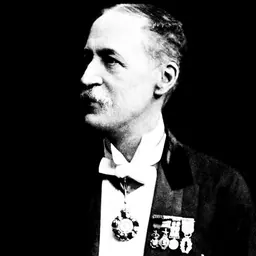
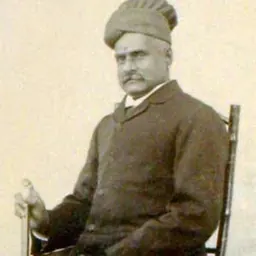
People in Edgar Thurston's life
Named in this biography and alive at the same time
Related people
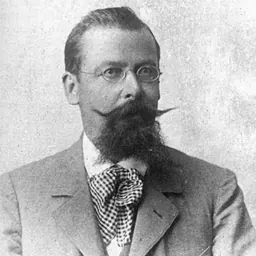
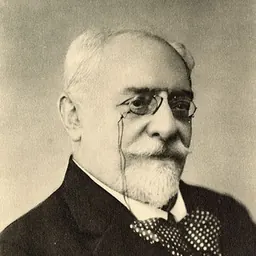
Same field, nearest in time


Contemporaries
People whose lives overlapped Edgar Thurston's




Frequently asked questions
Who was Edgar Thurston?
British indologist (1855-1935)
When was Edgar Thurston born?
Edgar Thurston was born in 1855 in London.
When did Edgar Thurston die?
Edgar Thurston died in 1935 in Penzance.
What was Edgar Thurston's occupation?
Edgar Thurston was a botanist, indologist, ethnologist and zoologist.
What nationality was Edgar Thurston?
Edgar Thurston was British.
Sources & further reading
Cite this page
APA: Biography.guide. (2026). Edgar Thurston. https://biography.guide/edgar-thurston/
MLA: "Edgar Thurston." Biography.guide, https://biography.guide/edgar-thurston/.
Chicago: "Edgar Thurston." Biography.guide. https://biography.guide/edgar-thurston/.
Data last updated: 2026-09-25 · Spot an error? Report a correction.
Page generated 2026-09-27 05:10 UTC