
Rainer Zitelmann
German historian, author, management consultant and real estate expert
About Rainer Zitelmann
Born 1957. Rainer Zitelmann is a German journalist, historian, publisher, literary editor, opinion journalist and entrepreneur.
Rainer Zitelmann (born 14 June 1957) is a German historian, sociologist, author, management consultant and real estate expert.
Life Zitelmann was born in Frankfurt. He studied history and political science at the Technical University of Darmstadt. He completed his doctorate in 1986 under Karl Otmar Freiherr von Aretin with the grade of summa cum laude the subject being the goals of Hitler's social, economic and interior policies. Zitelmann's doctoral dissertation, Hitler: Selbstverständnis eines Revolutionärs went through four editions in Germany and was published in English under the title "Hitler: The Politics of Seduction" (London: London House, 2000).
Then, Zitelmann pursued a career in conservative print media. After his work as a research assistant at the Free University of Berlin, he became an editorial director for the publishing company Ullstein and Propyläen in 1992. Soon, he transferred to the German daily Die Welt as the head of desk for contemporary thought. Later, Zitelmann transferred to the desk for contemporary history and finally to the real estate desk.
In 2000, he founded Dr.ZitelmannPB. GmbH, which had many international companies among its clients, including CBRE, Ernst & Young Real Estate, Jamestown, Cordea Savills and NCC. Zitelmann was the managing director of Dr. ZitelmannPB. GmbH until the end of February 2016, when he sold the company in an MBO.
In 2016, he was awarded his second doctorate, this time in sociology (Dr. rer. pol) at the University of Potsdam. The subject of his second doctoral dissertation was the psychology of the super-rich. His dissertation was published in a variety of languages, including Chinese and Korean, as well as in English under the title The Wealth Elite.
Author Zitelmann has written and edited 32 books, which have been published in 35 languages, among others: English, German, Spanish, Italian, Portuguese, Chinese, Japanese, Korean, Vietnamese, Russian, Polish, Arabic, Hindi, Urdu. He writes also articles in The Wall Street Journal, Forbes.com, Linkiesta, Neue Zürcher Zeitung, The National Interest, Townhall, Washington Examiner, wallstreet:online, Daily Telegraph, City AM , Neue Zürcher Zeitung, Welt, Focus, Frankfurter Allgemeine Zeitung and The European.
Examination of National Socialism Hitler's sense of self as a revolutionary As a historian, Zitelmann is best known for his argument that Nazi Germany followed a conscious strategy of modernization. In his doctoral thesis, Zitelmann strove to show that the modernising efforts of the Third Reich, which had been diagnosed by scholars like Ralf Dahrendorf, David Schoenbaum and Henry Ashby Turner, were intended as such. Unlike Dahrendorf, Schoenbaum and Turner, who argued that the modernisation of German society during the Nazi period was an unintentional side effect or merely a necessary adjunct towards achieving profoundly antimodern goals, Zitelmann argued that modernization of German society was intended and a central goal of the Nazis. Closely linked to the latter goal was what Zitelmann maintains was Hitler's desire to see the destruction of the traditional values and class distinctions of German society and their replacement for at least those Germans considered “Aryan” of a relatively-egalitarian merit-based society. Zitelmann has argued Hitler was much influenced by Joseph Stalin's modernization of the Soviet Union and that as Führer, Hitler consciously pursued a revolutionary modernization of German society.
The Bonn-based historian Prof. Klaus Hildebrand reviewed the thesis for the German daily Süddeutsche Zeitung in its 29 September 1987, issue: "To view Hitler—just like Stalin and Mao Zedong—as representatives of a permanent revolution or a modernising dictatorship reopens an academic debate that has been ongoing since the years between the wars of the twentieth century. To be welcomed in this context is that Zitelmann, critically controlling his sources and striving for objective balance, inquires with renewed vigour into Hitler’s motives while remaining fully aware of the fact that history fails to coincide with human intentions".
In his research overview, The Hitler of History (New York: Alfred A. Knopf, 1997), the American historian John Lukacs presented Zitelmann's thesis, as well as his book Hitler. Eine politische Biographie ("Hitler. A Political Biography""), as important contributions to the scientific study of Hitler. The echo in specialist journals, such as the Journal of Modern History (in a review by Prof. Klemens von Klemperer), and the Historische Zeitschrift, were predominantly positive. In the latter, Germany's leading academic journal for historiography, Prof. Peter Krüger wrote, "Rainer Zitelmann has written one of those books that make you wonder why they have not been available much earlier". In the historiographic quarterly Vierteljahreshefte für Zeitgeschichte, the Polish historian Franciszek Ryszka agreed: "Without a doubt, Dr. Zitelmann’s merit is to have substantially amended, and possibly surpassed, all other Hitler biographies".
However, critical voices existed like in the German weekly Die Zeit of 2 October 1987. On 22 September 1989, the critical review in Die Zeit was followed by another review of the two Hitler studies that had some critical remarks but came to the overall conclusion that Zitelmann had submitted a Hitler biography that was "emphatically sober, without any superfluous moralising, not omitting any of the dictator's villainies". However, the reviewer suggested that "the image of Hitler drawn by the author [calls for] some amendments and corrections".
The American Historical Review wrote in May 1989, "Zitelmann's book is an admirable example of exhaustive scholarship on an important aspect of the mind of Hitler. But it is less likely to stand as a decisive synthesis than as a provocative turn in the pursuit of the eternal enigmas of the Third Reich and its creator". In the February 1988 issue of the Militärgeschichtliche Mitteilungen, the American historian Gerhard L. Weinberg wrote, "This work will require all who concern themselves with the Third Reich to rethink their own ideas and to reexamine the evidence on which those ideas are based. For any book to do that today is itself a major accomplishment. It would certainly be most unwise for any scholar to ignore the picture of Hitler presented here simply because it does not fit in with his or her own preconceptions".
Zitelmann criticised David Irving in the liberal German weekly Die Zeit on 6 October 1989 by questioning the fact that Irving had said “not without a certain hubris... that he sees no need to pay any mind to the academic debate and research findings of the 'old school historians' he detests". Zitelmann criticised specifically that Irving had deleted the word "extermination camp" from the new edition of his Hitler biography and that he now appeared to share the notions entertained by revisionist historians. "This entire development", as Zitelmann said in Die Zeit, “has so far not been adequately acknowledged and addressed by West German historians". He called on the historians to be more "aggressive" in critically engaging Irving.
In 1991, Zitelmann edited with the Bielefeld-based historian Michael Prinz the anthology Nationalsozialismus und Modernisierung (National-Socialism and Modernisation; Darmstadt: Wissenschaftliche Buchgesellschaft). On 19 September 1991, Die Zeit read, “The evidence presented here to substantiate the modernisation dynamics of National Socialism is impressive, and they underline how misleading a one-sided view of national-socialism from the perspective of the 'blood and soil' romanticism would be; the latter having been widely spread, and having essentially contributed to an underrating of National Socialism". The reviewer also criticises that the book's contributing authors had exceeded their mark and should have given more attention to the party's art policy, for instance. "The problem of National Socialism and modernisation is therefore not to be resolved with a simple formula. It needs to be constantly reconsidered and to be illuminated from various angles".
Historicising National Socialism Zitelmann provoked a mixed reaction with his anthology Die Schatten der Vergangenheit (The Shadows of the Past), which he edited with Eckhard Jesse and Uwe Backes. Its editors sought to respond to Martin Broszat's 1985 call to historicise National Socialism. As the editors emphasize in their introduction, their goal was the "objectification of the discussion of National Socialist times.... The intention is not to 'downplay' anything: only an emphatically sober historiography, free of moralising bias, can create the foundation for assessing the historical and political-moral dimensions of the mass crimes committed by National Socialism." Zitelmann thinks that the historisation of National Socialism suggested by Martin Broszat was a way to resolve the problem of neither engaging in apologetics about the era or nor utterly condemning it. The preface to the second edition in 1988 of his 1987 book Adolf Hitler Selbstverständnis eines Revolutionärs included a lengthy attack on the critics of Nolte and Hillgruber. Zitelmann went on to state, "Politically, this means that the conservatives are rather defensive and are not united". (Awarded the “Audience Choice Award for Short Films” at the Anthem Film Festival 2022) Poland: From Socialism to Prosperity Vietnam - Beating Poverty with Market Economy (Awarded the Anthem Film Festival Best International Documentary Award) What Sweden Got Right (Awarded the Anthem Film Festival Best International Short Documentary)
Books The Nazi Elite, New York Univ Pr, New York 1993. Hitler: The Policies of Seduction, Allison & Busby, London 2000. New edition: Hitler's National Socialism. Management Books 2000, Oxford 2022. Updated version with a preface: On the Recent Historiography of Hitler and National Socialism (1996-2020). Dare to be Different and Grow Rich, Indus Source Books, Mumbai 2012. The Wealth Elite: A groundbreaking study of the psychology of the super rich, Lid Publishing, London and New York 2018. The Power of Capitalism: A Journey Through Recent History Across Five Continents, Lid Publishing, London and New York 2018. Dare to be Different and Grow Rich: The Secrets of Self-Made People, Lid Publishing, London and New York 2019. The Art of a Successful Life: The Wisdom of the Ages from Confucius to Steve Jobs., Lid Publishing, London and New York 2020. The Rich in Public Opinion: What We Think When We Think about Wealth, Cato Institute, Washington 2020. How People Become Famous: Geniuses of Self-Marketing from Albert Einstein to Kim Kardashian. Management Books 2000. Gloucestershire 2021. In Defense of Capitalism, Republic Book Publishers 2023, El Odio a Los Ricos, El Mercurio, Santiago 2023, (with Axel Kaiser). Unbreakable Spirit, Atlas Elite Publishing, How Nations Escape Poverty, Encounter Books, The Origins of Poverty and Wealth, Management Books 2000, 2075 - When Beauty Became a Crime, Management Books 2000, New Space Capitalism: The Entrepreneurial Path to the Stars, Skyhorse Publishing.
Awards
2022 Anthem Film Festival, "Audience Choice Award" for the movie "Life Behind the Berlin Wall" 2025 Anthem Film Festival, "Best International Documentary" for the movie "Vietnam. Beating Poverty with Market Economy" Publicity Award 2025 “Innovator of the Year” Nominated for the Hayek Book Prize of the Manhattan Institute 2025 for the book “How Nations Escape Poverty” 2026 Anthem Film Festival, "Best International Short Documentary" for the movie "What Sweden Got Right"
Endnotes
Don’t just read it —
keep it.
Full-length biographies made to live with: read them, listen on the way to work, watch them tonight.
- E-book
- Audio
- Video
Instant download · yours to keep · every purchase keeps this site free
Important facts
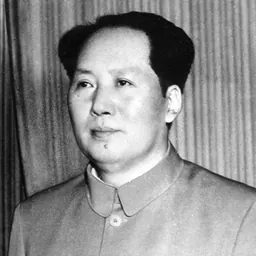
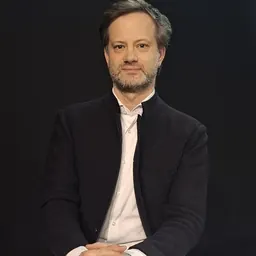
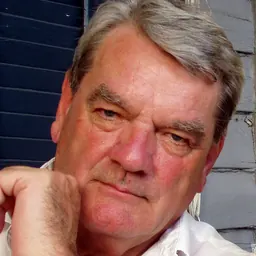
People in Rainer Zitelmann's life
Named in this biography and alive at the same time





Related people
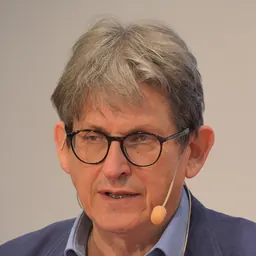
Same field, nearest in time



Contemporaries
People whose lives overlapped Rainer Zitelmann's


Frequently asked questions
Who is Rainer Zitelmann?
German historian, author, management consultant and real estate expert
When was Rainer Zitelmann born?
Rainer Zitelmann was born in 1957 in Frankfurt.
What is Rainer Zitelmann's occupation?
Rainer Zitelmann is a journalist, historian, publisher, literary editor, opinion journalist and entrepreneur.
What nationality is Rainer Zitelmann?
Rainer Zitelmann is German.
Sources & further reading
Cite this page
APA: Biography.guide. (2026). Rainer Zitelmann. https://biography.guide/rainer-zitelmann/
MLA: "Rainer Zitelmann." Biography.guide, https://biography.guide/rainer-zitelmann/.
Chicago: "Rainer Zitelmann." Biography.guide. https://biography.guide/rainer-zitelmann/.
Data last updated: 2026-09-20 · Spot an error? Report a correction.
Page generated 2026-09-27 05:18 UTC