
About Radu Korne
Lived 1895 – 1949 (aged 53). Radu Korne was a Romanian military personnel.
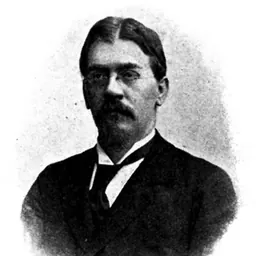
Radu Korne (23 December 1895 – 28 April 1949) was a Romanian Brigadier General during World War II.
Biography World War I He was born in Bucharest. From 1913 to 1915 he studied at the Cavalry Officer School in Târgoviște, graduating with the rank of second lieutenant. He fought in World War I with the 4th Regiment Roșiori "Regina Maria", and in 1917 was promoted to lieutenant. He stood out in August 1917 during the Third Battle of Oituz, when he commanded a machine-gun detachment in the assault on Tarapan Hill, and was later wounded in action; for his valor, he was decorated with the Order of Michael the Brave, 3rd class. He was then named cavalry instructor and tactics professor at the Special Cavalry School in Sibiu; promoted in 1927 to the rank of major, he became the school’s director of studies. In 1934 he was promoted to the rank of lieutenant colonel and assigned to command the 1st Battalion/9th Călărași Regiment. Subsequently he was chief of staff of the 12th Division and then of the General Inspectorate of the Cavalry, after which he was promoted in 1939 to the rank of colonel and given the command of the 8th Roșiori Regiment.
World War II The start of Operation Barbarossa on 22 June 1941 found Colonel Korne in command of the 6th Motorized Roșiori Regiment from the 5th Cavalry Brigade, which was stationed in Northern Moldavia. On 4 July, as part of Operation München, the brigade crossed the Prut River and advanced with a detachment commanded by Korne towards Lipnic, reaching the Dniester River on 7 July. After forcing the river on 17 July and breaking through the Stalin Line, situated on the left bank, his regiment advanced to the Bug River, reaching it at the beginning of August. By the end of the month his regiment was at the Dnieper River; crossing the river on 19 September, it continued to advance north of the Sea of Azov. On 25 September, at the start of the Battle of the Sea of Azov, the 5th Cavalry Brigade faced the powerful Soviet offensive carried out by the 9th and 18th Armies, being attacked by a much superior force in the Yakymivka area. The 6th Motorized Roșiori Regiment stood its ground, even though the rest of the brigade was pushed back. The offensive ran out of steam after several days and the German–Romanian counterattack led to the encirclement and destruction of the two Soviet armies. For his actions during the battle, Colonel Korne was awarded on 12 February 1942 the Order of Michael the Brave, 2nd class by King Michael I.
Starting in August 1942 Korne fought in the Battle of the Caucasus, reaching Anapa at the end of the month, and then Novorossiysk, which fell to Wehrmacht and Romanian Army units at the beginning of September. On 7 October, Korne took command of 8th Cavalry Division and engaged in the Battle of Stalingrad, as part of the 4th Romanian Army, under the command of lieutenant general Constantin Constantinescu-Claps. After the start of the Soviet offensive on 20 November, the division pulled back; its attempt to reach the encircled German 6th Army failed. The newly formed "Korne Detachment" (3rd, 4th Cavalry Regiments, 2nd Artillery Battalion, and the 7th Heavy Artillery Regiment), backed by German armored units, launched a counterattack towards Abganerovo; the action failed due to lack of effective anti-tank weapons. On 22 November, Korne's Detachment was attacked in the Krasnay-Geroy area, suffering heavy losses. On 26 November, the Korne and "Pannwitz" Detachments managed to push back the Soviet troops which had infiltrated between the Romanian formations. The next day, the Soviets broke through the lines of defense, and the general retreat started.
In January 1943, Korne was promoted to the rank of brigadier general, and was appointed commander of the 8th Cavalry Division (succeeding Colonel Corneliu Carp). At the time, he was considered to be the foremost expert in Romania on mechanized operations. On April 4, 1944, he took command of the 1st Armored Division; equipped with several dozen Pz IV tanks and a dozen Stug III assault guns, as well as some SPW armoured personnel carriers for the infantry troops, the division was the strongest formation of the Romanian Army at the time. near Scobâlțeni. Starting at 05:15, a 90–100 minute Soviet artillery and aviation bombardment destroyed the Romanian forward lines, and hundreds of tanks of the 6th Guards Tank Army poured through the breach. Korne, assisted by Colonels Cristache Iliescu and Constantin Nistor,
At the request of the Soviet commission for the implementation of the Armistice, the division was disbanded, After being held at the military headquarters in Bucharest, On 24 March 1948, Korne was arrested by the Siguranța Statului secret police for "conspiracy against state security," and sent to Jilava Prison. on orders from the prison commandant, Nicolae Moromete, and was left with a broken spine, according to historian Radu Ciuceanu. At Jilava, Korne's health deteriorated rapidly; after being transferred to the hospital of Văcărești Prison on 18 April 1949, he died there 10 days later. He is buried at Eternitatea cemetery in Iași, next to a relative, General Mihail Cerchez.
Awards Order of Michael the Brave 3rd Class (2 November 1917) 2nd Class (12 February 1942) Iron Cross (1939) 2nd and 1st Class Order of the Star of Romania, Officer rank (8 June 1940) Knight's Cross of the Iron Cross (18 December 1942)
Legacy The National Military Museum in Bucharest houses a permanent exhibition that displays personal objects which belonged to top Romanian military leaders, including memorabilia of Radu Korne.
Don’t just read it —
keep it.
Full-length biographies made to live with: read them, listen on the way to work, watch them tonight.
- E-book
- Audio
- Video
Instant download · yours to keep · every purchase keeps this site free
Important facts
People in Radu Korne's life
Named in this biography and alive at the same time


Related people
Same field, nearest in time





Contemporaries
People whose lives overlapped Radu Korne's
Frequently asked questions
Who was Radu Korne?
Romanian general (1895–1949)
When was Radu Korne born?
Radu Korne was born on 23 December 1895 in Bucharest.
When did Radu Korne die?
Radu Korne died on 28 April 1949 in Văcărești.
What was Radu Korne's occupation?
Radu Korne was a military personnel.
What nationality was Radu Korne?
Radu Korne was Romanian.
Sources & further reading
Cite this page
APA: Biography.guide. (2026). Radu Korne. https://biography.guide/radu-korne/
MLA: "Radu Korne." Biography.guide, https://biography.guide/radu-korne/.
Chicago: "Radu Korne." Biography.guide. https://biography.guide/radu-korne/.
Data last updated: 2026-09-20 · Spot an error? Report a correction.
Page generated 2026-09-27 05:26 UTC