
R. Duncan Luce
American mathematical psychologist
About R. Duncan Luce
Lived 1925 – 2012 (aged 87). R. Duncan Luce was an American mathematician, university teacher, psychologist and mathematical economist, known for Clique (graph theory), Luce's choice axiom and Semiorder.
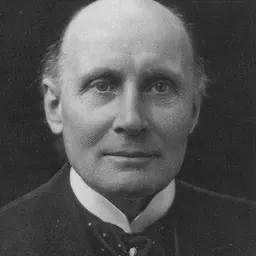
Robert Duncan Luce (May 16, 1925 – August 11, 2012) was an American mathematician and social scientist, and one of the most preeminent figures in the field of mathematical psychology. At the end of his life, he held the position of Distinguished Research Professor of Cognitive Science at the University of California, Irvine.
Education and career Luce received a Bachelor of Science degree in Aeronautical Engineering from the Massachusetts Institute of Technology in 1945, and PhD in Mathematics from the same university in 1950 under Irvin S. Cohen with thesis On Semigroups.
He began his professorial career at Columbia University in 1954, where he was an assistant professor in mathematical statistics and sociology. Following a lecturership at Harvard University from 1957 to 1959, he became a professor at the University of Pennsylvania in 1959, and was awarded the Benjamin Franklin Professorship of Psychology in 1968. After visiting the Institute for Advanced Study beginning in 1969, he joined the UC Irvine faculty in 1972, but returned to Harvard in 1976 as Alfred North Whitehead Professor of Psychology and then later as Victor S. Thomas Professor of Psychology. In 1988 Luce rejoined the UC Irvine faculty as Distinguished Professor of Cognitive Sciences and (from 1988 to 1998) director of UCI's Institute for Mathematical Behavioral Sciences.
Contributions Contributions for which Luce is known include formulating Luce's choice axiom formalizing the principle that additional options should not affect the probability of selecting one item over another, defining semiorders, introducing graph-theoretic methods into the social sciences, and coining the term "clique" for a complete subgraph in graph theory.
Recognition In 1966, Luce was elected to the American Academy of Arts and Sciences. Luce was elected to the National Academy of Sciences in 1972 for his work on fundamental measurement, utility theory, global psychophysics, and mathematical behavioral sciences. He received the 2003 National Medal of Science in behavioral and social science for his contributions to the field of mathematical psychology. In 2004, he was elected to the American Philosophical Society.
Books by Luce Paperback reprint, Dover, New York
Don’t just read it —
keep it.
Full-length biographies made to live with: read them, listen on the way to work, watch them tonight.
- E-book
- Audio
- Video
Instant download · yours to keep · every purchase keeps this site free
Important facts
People in R. Duncan Luce's life
Named in this biography and alive at the same time



Related people
Same field, nearest in time



Contemporaries
People whose lives overlapped R. Duncan Luce's





Frequently asked questions
Who was R. Duncan Luce?
American mathematical psychologist (1925–2012)
When was R. Duncan Luce born?
R. Duncan Luce was born on 16 May 1925 in Scranton.
When did R. Duncan Luce die?
R. Duncan Luce died on 11 August 2012 in Irvine.
What was R. Duncan Luce's occupation?
R. Duncan Luce was a mathematician, university teacher, psychologist and mathematical economist.
What was R. Duncan Luce known for?
R. Duncan Luce was known for Clique (graph theory), Luce's choice axiom, Semiorder, Social dynamics and Theory of conjoint measurement.
What nationality was R. Duncan Luce?
R. Duncan Luce was American.
Sources & further reading
Cite this page
APA: Biography.guide. (2026). R. Duncan Luce. https://biography.guide/r-duncan-luce/
MLA: "R. Duncan Luce." Biography.guide, https://biography.guide/r-duncan-luce/.
Chicago: "R. Duncan Luce." Biography.guide. https://biography.guide/r-duncan-luce/.
Data last updated: 2026-09-20 · Spot an error? Report a correction.
Page generated 2026-09-27 04:59 UTC