
Quock Walker
Sued for and won his freedom in 1781 by using language in the Massachusetts Constitution that declared all men to be born free and equal
About Quock Walker
Lived 1753 – 1810 (aged 56–57). Quock Walker was an American slavery, known for Massachusetts.
Quock Walker, also known as Kwaku or Quork Walker (c. 1753 – ?), was an enslaved American who sued for and won his freedom suit case in June 1781. The court cited language in the 1780 Constitution of Massachusetts that declared, "All men are born free and equal". The case is credited with helping to abolish slavery in Massachusetts, although the 1780 constitution was never amended to prohibit the practice explicitly. Massachusetts was the first U.S. state to effectively and fully abolish slavery—the 1790 United States census recorded no enslaved people in the state.
Early life Quock Walker was born in Massachusetts in 1753 to enslaved parents Mingo and Dinah, who according to Connell O'Donovan were Akan people. The following year, the entire family was bought by James Caldwell, of the prominent Caldwell family of Worcester County. After Caldwell died, his widow remarried, and her new husband Nathaniel Jennison refused to manumit Walker who claimed Caldwell had promised to free him. In 1781 Walker escaped and fled to the house of Caldwell's brother. The dispute resulted in three separate legal proceedings, two civil and one criminal.
Quock Walker cases The Quock Walker cases were a series of three cases spanning 1781–1783 shortly after the Massachusetts State Constitution had gone into effect in 1780.
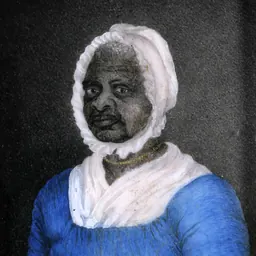
By the late 18th century, abolitionist sentiment was on the rise in Massachusetts. In 1780, the updated version of the Massachusetts State Constitution, written primarily by John Adams with the help of several committees (who determined its contents), declared "all men are born free and equal." In 1781, Elizabeth Freeman, an enslaved woman also known as Mum Bett, sued for freedom and won in county court based on her claim that slavery was inconsistent with the state constitution's declaration that "All men are born free and equal." Her case was cited by the state court in Quock Walker's cases shortly thereafter.
Cases
Walker v. Jennison In Walker v. Jennison, Worcester County attorneys Levi Lincoln and Caleb Strong, helped Walker to sue Jennison for assault and battery, arguing that Walker was injured as a free man. The jury agreed, stating that "Quork is a Freeman and not the proper Negro slave of [Jennison]." The jury awarded him £50 in damages, though he had requested £300. While Jennison appealed, he lost his appeal after failing to appear.
The jury found Jennison guilty, and the judge did not issue a written opinion.
Consequences of the cases Legislators were unable or unwilling to address either enslavers' concerns about losing their "investment" or white citizens' concerns that if slavery were abolished, formerly enslaved people could become a burden on the community. Some feared that escaped enslaved people from elsewhere would flood the state.
The Massachusetts Supreme Judicial Court decisions in Walker v. Jennison and Commonwealth v. Jennison established the basis for ending slavery in Massachusetts on constitutional grounds. Still, no law or amendment to the state constitution was passed. Instead, slavery gradually ended "voluntarily" in the state over the next decade. The decisions in the Elizabeth Freeman and Quock Walker trials had removed slavery's legal support, and it was said to end by erosion. Some enslavers manumitted the people they enslaved formally and arranged to pay them wages for continued labor. Other enslaved people were "freed" but were restricted as indentured servants for extended periods. By 1790, the federal census recorded no enslaved people in the state.
Massachusetts Emancipation Day / Quock Walker Day In recognition of the declaration of rights that rendered slavery unconstitutional in Massachusetts, Bill H.3117 was signed by Governor Charlie Baker on November 1, 2022. The bill declares July 8 as Massachusetts Emancipation Day, also known as Quock Walker Day. Massachusetts Emancipation Day was marked as a statewide holiday by Governor Maura Healey in 2023.
Don’t just read it —
keep it.
Full-length biographies made to live with: read them, listen on the way to work, watch them tonight.
- E-book
- Audio
- Video
Instant download · yours to keep · every purchase keeps this site free
Important facts
People in Quock Walker's life
Named in this biography and alive at the same time
Related people
Same field, nearest in time

Contemporaries
People whose lives overlapped Quock Walker's






Frequently asked questions
Who was Quock Walker?
sued for and won his freedom in 1781 by using language in the Massachusetts Constitution that declared all men to be born free and equal
When was Quock Walker born?
Quock Walker was born in 1753 in Massachusetts.
When did Quock Walker die?
Quock Walker died in 1810.
What was Quock Walker's occupation?
Quock Walker was a slavery.
What was Quock Walker known for?
Quock Walker was known for Massachusetts.
What nationality was Quock Walker?
Quock Walker was American.
Sources & further reading
Cite this page
APA: Biography.guide. (2026). Quock Walker. https://biography.guide/quock-walker/
MLA: "Quock Walker." Biography.guide, https://biography.guide/quock-walker/.
Chicago: "Quock Walker." Biography.guide. https://biography.guide/quock-walker/.
Data last updated: 2026-09-22 · Spot an error? Report a correction.
Page generated 2026-09-27 05:18 UTC