
About Qasim Khan
Lived 1763 – 1828 (aged 64–65). Qasim Khan was a Russian monarch and ruler.
Qasim Khan was the khan of Shirvan who reigned twice in late 18th century.
Background He was born to Muhammad Said Khan of Shirvan and his second wife Mah Pari Khanum in 1763. His family belonged to House of Sarkar of the Turkic Khanchobani tribe . He had elder half-brothers Muhammad Riza Khan, Askar Khan and Mahmud bey, in addition to full-brother Isgandar bey. His half-sister Hamsa Khanum (1764 –1815) married to a local Shirvani bey while full-sisters, Halima Khanum (1765–1793) and Anakhanum Khanum (1774 – ?) married to their paternal cousins.
He was the only son of his father who was born during his reign. Following his father's execution in 1788 in Salyan, 25-year-old Qasim fled together with his brother Askar to Muhammad Hasan of Shaki, who gave them protection. According to Russian-Armenian major Averian Serebrov who was dispatched to the region in 1796, Fath-Ali Khan of Quba, deeming it necessary to have escaped heirs nearby to prevent any future obstacles to his rule, demanded the two Muhammad Hasan. When he refused, Fath Ali Khan marched on him with his army, seized Shaki, and captured Muhammad Hasan. However, the two already escaped and joined their cousins with Ibrahim Khalil Khan in Shusha.
According to Isgandar bey Hajinsky, this account was merely hearsay propagated by Askar's supporters. He explains that Shabaddin Sultan of Arash, following orders from his overlord Muhammad Hasan Khan, used various pretexts to summon the sons of former khans who had previously taken refuge in Shusha. After arresting them, he sent the prisoners under escort to Shamakhi, accompanied by Fath Ali Khan's emissary Muhammad Karim Bey and Haji Said Bey, a trusted representative of the Khan of Shaki. However, when the convoy reached the Goychay river, one of Sarkar loyalists spread a false rumor that Fath Ali Khan had arrested Nukha nobles and was advancing on Shaki province with a large army. Believing this fabrication, Haji Said Bey immediately returned to Nukha and freed the imprisoned Shirvan khans' sons, who then fled to Avaria to seek protection from Umma Khan, offering their assistance in avenging his father Nutsal Khan's death in Fath Ali Khan's tent in 1774.
First exile According to Serebrov, Ibrahim Khalil Khan and Umma Khan then compelled Fathali's new vassal Muhammad Hasan Khan to join them, despite his marriage alliance. ). However, later the Shamkhal of Tarki came to Fatali Khan's rescue and forced Umma Khan to retreat. According to Heraclius II's letter to Grigory Potemkin on 20 January 1788, Umma Khan not having achieved another pan-Dagestani coalition against Fath Ali Khan (they refused to be fight citing religious reasons), managed to forge an alliance against Georgia. As a token of reconciliation, Fath Ali Khan betrothed his daughter Peri Jahan Khanum to Umma Khan with a dowry of 200,000 roubles, half of which was immediately paid in khan’s coin. Muhammad Hasan Khan justified his participation in the war by claiming he had been forced into it and reaffirmed his previous peace with Fath Ali Khan. Left without allies, Ibrahim Khan withdrew with Askar, Qasim, Mustafa and Ismail to Karabakh. However, Surkhay expelled Qasim Khan later who on 22 June 1811 the Samur River into the Quba region with his family, entourage of about 100 people and livestock, without prior notice. This was seen as a threat from new Russian authorities. Major-general Semyon Guryev who was appointed to the region interpreted this as a deliberate attempt by Surkhay Khan to influence the Quba population, potentially implying that Qasim Khan intended to assume power in Quba.
Citing rumours of infectious disease in Surkhay Khan's territory, Guryev dispatched a Quba noble and interpreter to tell Qasim Khan that, without higher authorisation, he could not be accepted in Quba, especially given the health risk. Qasim Khan refused to return, claiming he was unable to go back to Gazikumukh, while the carts that had brought him were already sent back across the river on Surkhay Khan's orders. In response, Guryev deployed an officer with 25 cossacks to block Qasim Khan's group from entering Quba villages and to insist on his return across the Samur River. Commandant of Baku, Ivan Repin supported Guryev's measures and ordered strict border controls to prevent the spread of disease and stated that any decision on Qasim Khan's case should await viceroy Alexander Tormasov’s directive.
Return to Caucasus Qasim Khan was later received by major-general Andrey Pestel who was newly appointed chief of Tiflis 15th Grenadier Regiment in 1812. Pestel befriended him, and held secret talks that revived Qasim's hopes of regaining the khanate of Shirvan. By 1813, he was already accepted to Russian service. However, he was denied entry to Shirvan by Mustafa Khan, who still feared his ambitions. To alleviate such fears, Aleksey Velyaminov directed Pestel to cease all communication with Qasim in 1818.
He was residing in the lands of Talysh Khanate when Mustafa Khan escaped to Qajar Iran in 1820 following annexation of Shaki Khanate. Following this, viceroy Aleksey Yermolov sent special directives to Valerian Madatov that are under no circumstances Qasim was to be allowed entry into Shirvan. Should Qasim present any claims, those were to be rejected outright. As far as Yermolov was concerned, Qasim had no right to khanate. As a solution to this problem, Yermolov requested from Alexander I in 1822 that Qasim Khan be granted, for the duration of his life, an annual pension of 1,000 silver roubles drawn from the revenues of Shirvan, together with the administration—though not the ownership—of several villages in the Quba district, to be designated at the discretion of the authorities. This request was granted, along with 300 households under his rule.
Last years It appears following the outbreak of Russo-Persian War of 1826–1828, Qasim Khan once again chose to ally with Qajar Iran as Ivan Paskevich reported to Karl Nesselrode in 1829 that "son of the traitor Qasim Khan stirred rebellion in the Erivan region". Qasim Khan died a year before the rebellion, in 1828 and was buried in Behrud, which was under Qajar rule at the time.
Family Adolf Berzhe reported that he was only married once to his cousin Kafiya Khanum (1766–1849), Aghasi Khan's daughter in 1793. However, a Russian report dated December 1802 stated that he was married to a daughter of Mirza Rabi, vizier of Heraclius II during his first exile. His sons with Kafiya Khanum were:
Isgandar bey (1795–1846) – m. 1834 to Gowhar Khanum (d.1863), daughter of Ismail bey of Shamakhi. Allahverdi bey (1796–1818) – m. 1814 to Nisa Begüm (d.1834), daughter Haji Bey – yuzbashi of Basqal. Allahverdi bey later escaped to Ottoman Turkey and died in Erzurum. Muhammad Said Khan (1797–1827) – m. 1815 to Fatma Khanum (d. 1826), daughter of Hasan Effendi of Quba. Muhammad Said also fled to Ottoman Turkey and died there.
Apart from that, according to Bakikhanov she had a daughter who was married to naib of Howz mahal, Yuzbashi bey, who eventually deposed him. However, this issue was not reported by genealogists.
Seal Qasim Khan's seal from the second reign has been found in 2019 by researcher Fariz Khalilli, which was in possession of Qasim Khan's sixth-generation descendant. The base of the seal is made of bronze, while the seal itself is made of mother-of-pearl. It measures 29 millimetres in width and 33 millimetres in length. The inscription on the seal reads: "There is no god but Allah, the Sovereign, the Manifest Truth. His servant Muhammad Qasim" . The seal is dated to .
Don’t just read it —
keep it.
Full-length biographies made to live with: read them, listen on the way to work, watch them tonight.
- E-book
- Audio
- Video
Instant download · yours to keep · every purchase keeps this site free
Important facts
People in Qasim Khan's life
Named in this biography and alive at the same time


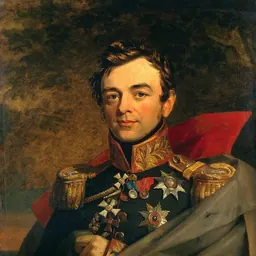
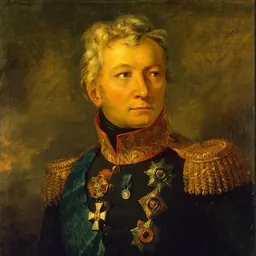



Related people
Same field, nearest in time
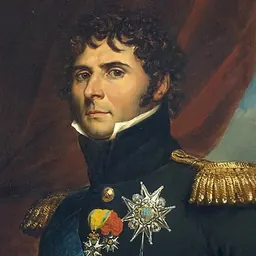


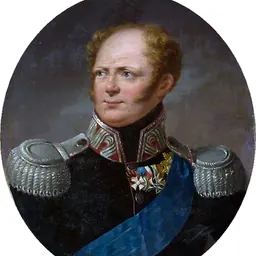
Contemporaries
People whose lives overlapped Qasim Khan's





Frequently asked questions
Who was Qasim Khan?
Khan of Shirvan
When was Qasim Khan born?
Qasim Khan was born in 1763 in Shamakhi.
When did Qasim Khan die?
Qasim Khan died in 1828.
What was Qasim Khan's occupation?
Qasim Khan was a monarch and ruler.
What nationality was Qasim Khan?
Qasim Khan was Russian.
Sources & further reading
· DBpedia: Qasim Khan of Shirvan
Cite this page
APA: Biography.guide. (2026). Qasim Khan. https://biography.guide/qasim-khan-monarch/
MLA: "Qasim Khan." Biography.guide, https://biography.guide/qasim-khan-monarch/.
Chicago: "Qasim Khan." Biography.guide. https://biography.guide/qasim-khan-monarch/.
Data last updated: 2026-09-20 · Spot an error? Report a correction.
Page generated 2026-09-27 05:14 UTC