
About Pyotr Weinberg
Lived 1830 – 1908 (aged 77–78). Pyotr Weinberg was a Russian poet, literary historian, journalist, translator, writer and teacher.
Pyotr Isaevich Veinberg (, July 16 (28) 1831, Mykolaiv, then Russian Empire, now Ukraine, – July 3 (16) 1908, Saint Petersburg, Russian Empire) was a Russian poet, translator, journalist and literary historian.
Biography Pyotr Veinberg was born in Mykolaiv to the family of a notary. After studying in the Odessa gymnasium and Richelieu's lyceum he joined Kharkov University's history and philology faculty, from which he graduated in 1854. For the next three years he was working in Tambov as a local governor's aide, editing the Tambov Governorate News newspaper’s unofficial section. One of his first poems, "He was a titular councillor" (1859), was an autobiographical one and dealt with his own unrequited love for the governor's daughter. Veinberg, Jewish by birth, adopted Christianity in his youth.
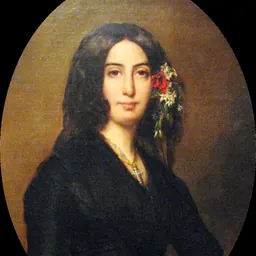
Pyotr Veinberg's literary career started in 1851 when the Panteon magazine published his translation of George Sand’s Claudie drama. In 1854 in Odessa a small compilation of his translations from Horace, André Chénier, Victor Hugo and Lord Byron came out. In 1856 The Russian Messenger published several of Veinberg’s own poems, subtitling it, mistakenly, "From Heine". This prompted the author to use a pseudonym, "Heine from Tambov".
In 1858 Veinberg moved to Saint Petersburg to embark upon a professional literary career. His poems and translations started to appear regularly in Sovremennik, Biblioteka Dlya Chteniya, Syn Otechestva, later in Nekrasov's Otechestvennye Zapiski. He became known as a satirist when the Veseltchak magazine published in 1858 his poetry cycle Grey-Colored Melodies and a series of humorous sketches called Life and Its Oddities. From 1859 to 1866 Veinberg contributed to Iskra magazine. Many of his work published there featured in the Humorous Poems of Heine from Tambov compilation (Saint Petersburg, 1863).
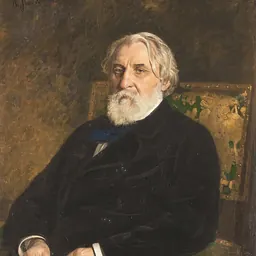
From 1868 to 1874 Veinberg worked as the head of the Russian literature cathedra at the Warsaw University. His treatise "Russian Folk Songs About Ivan the Terrible" was praised by the academic A. N. Veselovsky. On return to the capital he joined the Saint Petersburg University's Literature cathedra and lectured in several colleges and courses. In 1884 Weinberg adapted Ivan Turgenev’s Home of the Gentry for theater production. In 1885 he wrote a libretto for Eduard Nápravník's opera Harold. He compiled several textbooks on literature and theater and wrote a book Extracts from the History of Western Literature (1907). Several of his verses were put to music by composers like Cui, Grechaninov, Ippolitov-Ivanov.
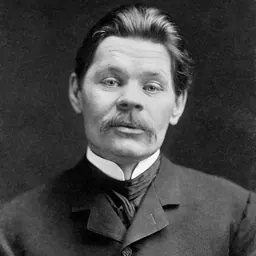
In his later years Veinberg was an active member of the Russian Literary Fund. In 1905 he was elected an honorary member of the Russian Academy. Using his authority he did a lot to help authors persecuted by the government for political reasons; Maxim Gorky, German Lopatin and others.
English translations The Dostoevsky Archive: Firsthand Accounts of the Novelist from Contemporaries' Memoirs and Rare Periodicals, (includes two accounts of Dostoyevsky by Pyotr Veinberg), McFarland & Company, 1997.
Don’t just read it —
keep it.
Full-length biographies made to live with: read them, listen on the way to work, watch them tonight.
- E-book
- Audio
- Video
Instant download · yours to keep · every purchase keeps this site free
Important facts
more
Piotr Isaevich VeinbergPeople in Pyotr Weinberg's life
Named in this biography and alive at the same time




Related people
Same field, nearest in time
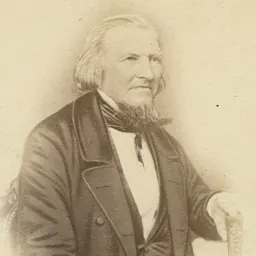

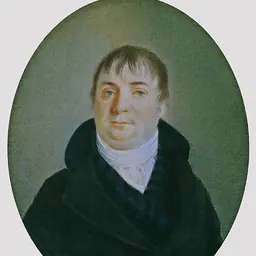
Contemporaries
People whose lives overlapped Pyotr Weinberg's





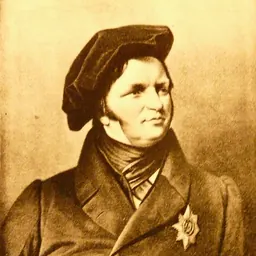
Frequently asked questions
Who was Pyotr Weinberg?
Russian poet (1831–1908)
When was Pyotr Weinberg born?
Pyotr Weinberg was born in 1830 in Mykolaiv.
When did Pyotr Weinberg die?
Pyotr Weinberg died on 3 July 1908 in Saint Petersburg.
What was Pyotr Weinberg's occupation?
Pyotr Weinberg was a poet, literary historian, journalist, translator, writer and teacher.
What nationality was Pyotr Weinberg?
Pyotr Weinberg was Russian.
Sources & further reading
Cite this page
APA: Biography.guide. (2026). Pyotr Weinberg. https://biography.guide/pyotr-weinberg/
MLA: "Pyotr Weinberg." Biography.guide, https://biography.guide/pyotr-weinberg/.
Chicago: "Pyotr Weinberg." Biography.guide. https://biography.guide/pyotr-weinberg/.
Data last updated: 2026-09-26 · Spot an error? Report a correction.
Page generated 2026-09-27 05:14 UTC