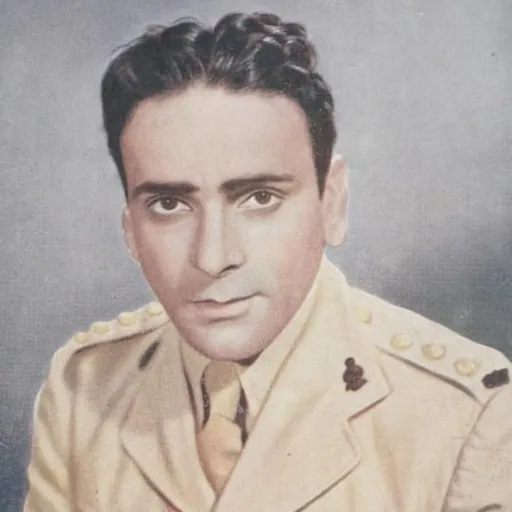
About Prithviraj Kapoor
Lived 1906 – 1972 (aged 65). Prithviraj Kapoor was an Indian politician, stage actor, film actor, film director, film producer and theatre manager.
Prithviraj Kapoor (born Prithvinath Kapoor; 3 November 1906 – 29 May 1972) was an Indian actor who is also considered to be one of the founding figures of Hindi cinema. He was associated with IPTA as one of its founding members and established the Prithvi Theatres in 1944 as a travelling theatre company based in Mumbai.
He was the patriarch of the Kapoor family of Hindi films, four generations of which, beginning with him, have played active roles in the Hindi film industry, with the youngest generation still active in Bollywood. His father, Basheshwarnath Kapoor, also played a short role in his movie Awara. The Government of India honoured him with the Padma Bhushan in 1969 and the Dadasaheb Phalke Award in 1971 for his contributions towards Indian cinema. in Samundri, British India, into a Punjabi Hindu Khatri family. Kapoor was the eldest of eight siblings; five boys (including actor Trilok Kapoor) and three girls. His cousin was film producer Surinder Kapoor, the father of Anil Kapoor, Boney Kapoor and Sanjay Kapoor.
Kapoor's childhood was largely spent in Lyallpur District, where his grandparents and extended family lived. A few years later the family shifted to Peshawar but retained their holdings in Lyallpur. Kapoor studied initially at Lyallpur Khalsa College, and later at Edwardes College in Peshawar, where he received his Bachelor of Arts. He also went on to study law for a year before deciding to become an actor.
Career Kapoor began his acting career in the theatres of Lyallpur and Peshawar. In 1928, he moved to Mumbai, with a loan from an aunt. There he joined the Imperial Films Company and started acting in minor roles in movies. He went on to earn a lead role in his third film, titled Cinema Girl, which released in 1930.
After featuring in nine silent films, including Be Dhari Talwar, Cinema Girl, Sher-e-Arab and Prince Vijaykumar, Kapoor did a supporting role in India's first film talkie, Alam Ara (1931). His performance in Vidyapati (1937) was much appreciated. His best-known performance is perhaps as Alexander the Great in Sohrab Modi's Sikandar (1941). He also joined the Grant Anderson Theater Company, an English theatrical company that remained in Mumbai for a year.
By the late 1950s, it was clear that the era of the travelling theatre had been irreversibly supplanted by the cinema and it was no longer financially feasible for a troupe of up to 80 people to travel the country for four to six months at a time along with their props and equipment and living in hotels and campsites. The financial returns, through ticket sales and the rapidly diminishing largesse of patrons from the erstwhile princely class of India, was not enough to support such an effort. Many of the fine actors and technicians that Prithvi Theatres nurtured had found their way to the movies. Indeed, this was the case with all of Prithviraj's own sons. As Kapoor progressed into his 50s, he gradually ceased theatre activities and accepted occasional offers from film-makers, including his own sons. He appeared with his son Raj in the 1951 film Awara as a stern judge who had thrown his own wife out of his house. Later, under his son, Shashi Kapoor, and daughter-in-law Jennifer Kendal, Prithvi Theatre merged with the Indian Shakespeare theatre company, "Shakespeareana", and the company got a permanent home, with the inauguration of the Prithvi Theatre in Mumbai on 5 November 1978. It featured the logo of the theatre, the dates 1945–1995, and an image of Kapoor. The first day cover, (stamped 15-1-95), showed an illustration of a performance of a travelling theatre in progress, on a stage that seems fit for a travelling theatre, as Prithvi theatre was for sixteen years, until 1960. On the occasion of 100 years of the Indian cinema, another postage stamp, bearing his likeness, was released by India Post on 3 May 2013.
Later years His filmography of this period includes Mughal-e-Azam (1960), where he gave his most memorable performance as the Mughal emperor Akbar, which earned him a nomination for the Filmfare Award for Best Supporting Actor, Harishchandra Taramati (1963) in which he played the lead role, an unforgettable performance as Porus in Sikandar-e-Azam (1965), and the stentorian grandfather in Kal Aaj Aur Kal (1971), in which he appeared with his son Raj Kapoor and grandson Randhir Kapoor.
Awards 1954: Sangeet Natak Akademi Fellowship by the Sangeet Natak Akademi 1956: Sangeet Natak Akademi Award by the Sangeet Natak Akademi 1961: Nominated – Filmfare Award for Best Supporting Actor – Mughal-e-Azam 1969: Padma Bhushan by the Government of India 1972: Dadasaheb Phalke Award (Posthumous) for the year 1971, for his immense contribution to Indian theatre and cinema 1972: Filmfare Special Award (Special Commendation)
Personal life Kapoor was 17 when he was married to 15-year-old Ramsarni Mehra, who was from the same community, in an arranged marriage. The marriage was harmonious and conventional, and they remained married with each other till death. Some believe the marriage had actually been held earlier with the farewell ceremony only being held when Ramsarni was 15 years old. Ramsarni's brother, Jugal Kishore Mehra, would later enter the film industry.
The couple's eldest child, Raj Kapoor, was born the following year in Peshawar, North West Frontier Province, on 14 December 1924; making Prithviraj a father at the age of 18. By the time Prithviraj moved to Mumbai in 1927, he had fathered two more children with her. In 1930, Ramsarni joined Prithviraj in Mumbai. The following year, while she was pregnant for the fourth time, two of their sons died. Son Devinder died of pneumonia, while son Ravinder swallowed rat poison while playing in the garden.
The couple went on to have three more children: sons Shamsher Raj (Shammi) and Balbir Raj (Shashi) and daughter Urmila Sial.
After his retirement, Prithviraj took a lease of a cottage called Prithvi Jhonpra near Juhu Beach, West Mumbai. The property would later be bought by Shashi Kapoor, and later converted into a small theatre. Both Prithviraj and Ramsarni would be diagnosed of cancer, with them dying 16 days apart. Prithviraj died on 29 May 1972 and Ramsarni died on 14 June 1972.
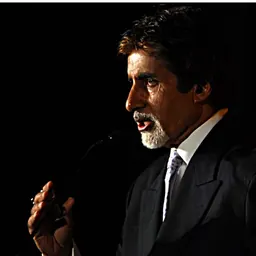
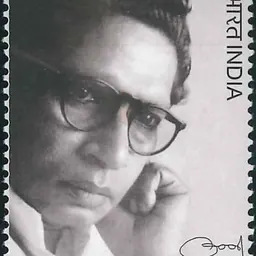
A Samadhi (memorial) of Raj Kapoor at their 125 acre family farm "Rajbaugh", also houses Privthiraj Kapoor and his wife's memorial. Rajbaugh lies on the banks of Mula-Mutha River in Loni Kalbhor, 30 km east of Pune. The Kapoor family sold a part of the farm to MIT World Peace University (MIT WPU) which houses a memorial for the Kapoor family on its campus. He shared a deep friendship with celebrated Hindi poet Harivansh Rai Bachchan, the father of Amitabh Bachchan.
Selected filmography
Be Dhari Talwar (1929) Cinema Girl (1930) Sher-e-Arab (1930) Prince Vijaykumar (1930) Alam Ara (1931) Draupadi (1931) - Arjuna Golibar (1931) Toofan (1931) Blood Feuds (1931) Namak Haram Kon (1931) Dagabaz, Ashiq (1932) Rajrani Meera (1933) - Rana Kumbh, King of Chitor Ramayan (1933) Seeta (1934) - Ram Daku Mansoor (1934) Inquilab (1935) Manzil (1936) - Suresh Vidyapati (1937) - King Shiva Singha Anath Ashram (1937) - Ranjit Milap (1937) President (1937) - Dewan Prithviraj Abhagin (1938) - Promode Dharti Mata (1938) Dushman (1938) Adhuri Kahani (1939) - Somnath Sapera (1939) Pagal (1940) - Dr. Vasant Sajani (1940) - Nanda Dipak Mahal (1940) Deepak (1940) Chingari (1940) Aaj Ka Hindustan (1940) Raj Nartaki (1941) - Prince Chandrakriti (Hindi version) Sikandar (1941) - Alexander the Great Ujala (1942) Chauranghee (1942) Ek Raat (1942) Gauri (1943) Aankh Ki Sharm (1943) Ishara (1943) Bhalai (1943) Vish Kanya (1943) Maharathi Karna (1944) - Karna Phool (1945) Vikramaditya (1945) - Vikramaditya Devdasi (1945) Shri Krishn Arjun Yuddha (1945) Valmiki (1946) Prithviraj Samyogita (1946) Azadi Ki Raah Par (1948) Dahej (1950) - Thakur (Chanda's dad) Hindustan Hamara (1950) - Himself Awaara (1951) - Justice Raghunath Anand Math (1952) - Satyananda Insaan (1952) Aag Ka Dariya (1953) Chhatrapati Shivaji (1952) Ehsan (1954) Pardesi (1957) - Mehmud Gawan Paisa (1957) Lajwanti (1958) Jagga Daku (1959) Mughal-e-Azam (1960) - Emperor Akbar Senapati (1961) - Senapati Pyaar Kiya To Darna Kya (1963) - Kunwar Saheb Harishchandra Taramati (1963) - King Harishchandra Rajkumar (1964) - Maharaja Zindagi (1964) - Rai Bahadur Gangasaran Jahan Ara (1964) - Shah Jahan Gazal (1964) - Nawab Bakar Ali Khan Janwar (1965) - Mr. Srivastava Aasmaan Mahal (1965) - Asmaan Khakaan (1965) Sikandar-e-Azam (1965) - Porus Lootera (1965) - Shah Zaman Jahan Sati Wahan Bhagwan (1965) - Maharaja Karamdham Shri Ram Bharat Milap (1965) - Raja Dashrath Shankar Khan (1966) - Safdar Khan Sher E Afghan (1966) Yeh Raat Phir Na Aaygi (1966) - Professor Daku Mangal Singh (1966) Lal Bungla (1966) - Police Sub-Inspector then S.P. Love And Murder (1966) - Inspector Insaaf (1966) - Judge Shamsheer (1967) Rustom Sohrab (1967) - Rustom Zabuli Shamsher (1967) Teen Bahuraniyan (1968) - Dinanath Balram Shri Krishna (1968) Bambai Raat Ki Bahon Mein (1968) - Himself Nai Zindagi (1969) Nanak Naam Jahaz Hai (1969, Punjabi movie) - Gurmukh Singh Insaf Ka Mandir (1969) - Judge Bombay by Nite (1969) - Lalaji Sati Sulochana (1969) - Param Shivbhakt Lankeshwar Ravan Nanak Dukhiya Sub Sansar (1970, Punjabi movie) - Giani Heer Raanjha (1970) - The King Ek Nannhi Munni Ladki Thi (1970) Gunah Aur Kanoon (1970) - Jamnadas Sher E Watan (1971) - Baadshah Hanibaal Padosi (1971) Kal Aaj Aur Kal (1971) - Diwan Bahadur Kapoor Sakshatkara (1971, Kannada) - Bhoopalayya Baankelal (1972) Naag Panchami (1972) - Maharaj Chandradhar Mele Mitran De (1972, Punjabi movie) Naya Nasha (1973) - Rana
Don’t just read it —
keep it.
Full-length biographies made to live with: read them, listen on the way to work, watch them tonight.
- E-book
- Audio
- Video
Instant download · yours to keep · every purchase keeps this site free
Important facts
Family & relationships
People in Prithviraj Kapoor's life
Named in this biography and alive at the same time


Related people
Same field, nearest in time





Contemporaries
People whose lives overlapped Prithviraj Kapoor's


Frequently asked questions
Who was Prithviraj Kapoor?
Indian actor (1906-1972)
When was Prithviraj Kapoor born?
Prithviraj Kapoor was born on 3 November 1906 in Faisalabad.
When did Prithviraj Kapoor die?
Prithviraj Kapoor died on 29 May 1972 in Mumbai.
What was Prithviraj Kapoor's occupation?
Prithviraj Kapoor was a politician, stage actor, film actor, film director, film producer and theatre manager.
What nationality was Prithviraj Kapoor?
Prithviraj Kapoor was Indian.
Sources & further reading
· Wikipedia: Prithviraj Kapoor
Cite this page
APA: Biography.guide. (2026). Prithviraj Kapoor. https://biography.guide/prithviraj-kapoor/
MLA: "Prithviraj Kapoor." Biography.guide, https://biography.guide/prithviraj-kapoor/.
Chicago: "Prithviraj Kapoor." Biography.guide. https://biography.guide/prithviraj-kapoor/.
Data last updated: 2026-09-23 · Spot an error? Report a correction.
Portrait: Wikimedia Commons · author & licence
Page generated 2026-09-27 05:07 UTC