
About Prežihov Voranc
Lived 1893 – 1950 (aged 56). Prežihov Voranc was a Yugoslav writer, politician and novelist.
Prežihov Voranc (10 August 1893 – 18 February 1950) was the pen name of Lovro Kuhar, a Slovene writer and communist political activist. Voranc's literary reputation was established during the 1930s with a series of Slovene novels and short stories in the social realist style, notable for their depictions of poverty in rural and industrial areas of Slovenia. His most important novels are Požganica and Doberdob (1940).
Biography
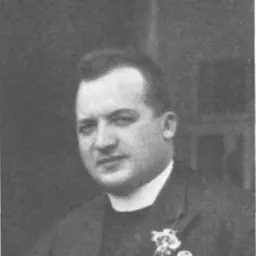
Formative years Prežihov Voranc was baptized Laurentius Kuhar in Podgora near Kotlje, a Slovene-speaking village in Carinthia, then part of Austria-Hungary. He was the son of tenant farmers who later acquired their own land. His younger brother, Alojzij Kuhar, became a renowned liberal conservative politician and historian. His pen name is a typical folk formulation derived from the estate name of the farm the family lived on (the Prežih farm) plus the Carninthian dialect form of the name Lovrenc (or Lovro); thus, Prežihov Voranc literally means 'Lovro from the Prežih farm'.
The steep mountain slopes of his homeland were hard to farm, and Voranc consistently returned to his childhood of drudgery and fortitude.
In 1930 his political activism in the illegal Communist Party of Yugoslavia resulted in a threat of arrest and Voranc absented himself from Carinthia and moved to Vienna and from there, Prague in 1931 and hence to Berlin in 1932. What appears to have been a period of instability in his life was also a period of active collaboration with other socialists in Europe and during the early thirties he also visited Romania, Bulgaria, Greece, Norway, and France. He edited the magazine Delo in Vienna from 1932 to 1934 but fell foul of the Austrian authorities, who imprisoned him in 1937. exhibits Voranc's unique style: realistic events of Slovenian life are described within the context of an impressionistic landscape. The characters are as large as the landscape in which they live and their language in vernacular and realistic. The story focuses on a downtrodden family who are in part despised by their better off neighbors, one of whom describes then as ‘polecats’. The family exists on the margins of Slovenian society, toiling the land in an endless fight for survival which some of them fail to achieve. Voranc depicts death and children fighting to survive into adulthood. Boj na požiralniku caused a literary sensation and five more stories followed in the years 1935 to 39 which were later collected together as Samorastniki. All deal with peasants lives in the Carinthian mountains, a region that had rarely featured in Slovene literature. The characters speak in the vernacular of the region, they are possessed of a resilient fortitude against the strife of their lives and whilst they are often overly superstitious, egotistical and obdurate Voranc also records them as: faithful, brave, honest and possessing of a religious faith that is true and sincere. The third version is mostly a string of anecdotes and meditations on the lives of the Slovenes. It is a fiercely nationalistic novel surrounding the Battle of Doberdò. Doberdò has become the central symbolic place of the Slovene victims of World War I in part because of Voranc's novel. His third novel, Jamnica, is set in a rural Carinthian village between the two wars at a period when the values of rural society are being challenged by increasing industrialization. It remained unpublished until 1946.
Axis annexation and the "cultural silence" In April 1941, following the invasion of Yugoslavia, Nazi Germany annexed northern Slovenia, while Ljubljana and Mokronog were annexed by the Italian troops (and then occupied in 1943 by the Germans). Voranc feared for his life and left Slovenia once again for the Croatian capital Zagreb and then to the Bosnian countryside. However, he seems to have had a change of heart and decided to return to Ljubljana for the duration of the war. He did not join the resistance movement, but on 11 September he met clandestinely with other writers to proclaim the self-imposed "cultural silence," which prohibited publication, exhibitions, and performances by Slovene artists for the duration of the war.
As a suspected communist sympathizer, Voranc was arrested in January 1943 and transported to the Sachsenhausen and Mauthausen-Gusen concentration camps. He returned to Ljubljana at the end of the war sick and depressed and unable to communicate with his family and comrades. He returned to his native village in Carinthia, where he ceased political activity and removed himself from the political actualities of the newly formed communist Yugoslavia. He worked on Solzice, a historical novel that remained unfinished at the time of his death in Maribor in 1950.
Themes in Voranc's writings
As a child and youth, Voranc experienced first hand the back-breaking drudgery of farming steep mountain slopes, and the theme of the farmer fighting the unyielding soil is recurrent in much of his writing. The mountains of Carinthia and the working-class people within them remained at the heart of Voranc's philosophical work. The beauty of the scenery is conveyed against the backdrop of shared toil and camaraderie. Voranc was drawn to the unfortunate and unjustly treated people he witnessed.
His experiences during World War I undeniably left a deep impression on his psyche. The reality of war on the mind is especially explored in his novel Doberdob. Voranc wished to convey to his reader the realism of the situation in which his characters lived and there is little that is sentimental about his depictions. Voranc preferred to write about the impoverished peasant and industrial working class against the impressionistic backdrop of a land that sometimes colludes against the peasant. His socialist leanings are key to understanding his later work. During the 1930s, while living away from his homeland, he became more aware of international socialism, although he adapted realism in his work to suit Slovene sensibilities.
Selected bibliography (Slovene) Boj na požiralniku (1935), Požganica (1939) Jamnica (1945) Doberdob (1940) Samorastniki (1940) consisting of a series of short stories that included: Jirs in Bavh, Vodnjak Ljubezen na odoru Pot na klop Prvi spopad, Odpustki in Samorastniki Vodnjak
Selected bibliography (English / German) Prežihov Voranc. 1983. The Self-Sown, Bilingual edition of a Slovene classic. New Orleans: Prometej. (English) Prežihov Voranc. 1994. Two short stories, "The Self-Sown" and "Passion above the Precipice." Translation and introduction by Irma Marija Ana Ožbalt. Ljubljana: Slovene Writers Association. (English) Prežihov Voranc. 2012. Winter in Klagenfurt. Drei Geschichten. Translated by Jozej Strutz. Klagenfurt: Kitab. (German) Vienna, Paris, Saualm. Stories and reports, from the Slovenian by Jozej Strutz, Drava-Verlag, Klagenfurt 2016. (German)
Don’t just read it —
keep it.
Full-length biographies made to live with: read them, listen on the way to work, watch them tonight.
- E-book
- Audio
- Video
Instant download · yours to keep · every purchase keeps this site free
Important facts
People in Prežihov Voranc's life
Named in this biography and alive at the same time
Related people
Same field, nearest in time



Contemporaries
People whose lives overlapped Prežihov Voranc's



Frequently asked questions
Who was Prežihov Voranc?
Slovenian writer (1893-1950)
When was Prežihov Voranc born?
Prežihov Voranc was born on 10 August 1893 in Ravne na Koroškem.
When did Prežihov Voranc die?
Prežihov Voranc died on 18 February 1950 in Maribor.
What was Prežihov Voranc's occupation?
Prežihov Voranc was a writer, politician and novelist.
What nationality was Prežihov Voranc?
Prežihov Voranc was Yugoslav.
Sources & further reading
Cite this page
APA: Biography.guide. (2026). Prežihov Voranc. https://biography.guide/prezihov-voranc/
MLA: "Prežihov Voranc." Biography.guide, https://biography.guide/prezihov-voranc/.
Chicago: "Prežihov Voranc." Biography.guide. https://biography.guide/prezihov-voranc/.
Data last updated: 2026-09-20 · Spot an error? Report a correction.
Page generated 2026-09-27 05:29 UTC