
About Preston Watson
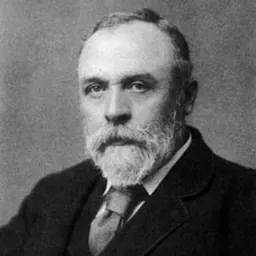
Lived 1880 – 1915 (aged 35). Preston Watson was an inventor, aeronaut and aviator.
Preston Albert Watson (17 October 1880 – 30 June 1915) was a Scottish aviation pioneer, who conceived his own original method of controlling an aeroplane in flight. This was his rocking wing method of lateral control, which consisted of a secondary smaller wing mounted above the main wing on an A-frame that could pivot about its longitudinal axis. Watson's method of lateral control was applied by him in three different aeroplanes; the first was built in late 1909, the second in July 1910 and his third in 1913.
On 16 March 1915, Watson gained his Royal Aero Club Certificate No. 1,117 (equivalent of a pilot's licence) with the London and Provincial School at the London Aerodrome, Hendon, having sought a commission with the Royal Naval Air Service with the outbreak of the First World War in 1914. On 30 June 1915 he was killed when the Caudron G.3 aeroplane he was flying disintegrated in flight and crashed in Dunlye Field, a few miles from the Cross-in-Hand Hotel near Heathfield, Sussex. Watson is buried in Dundee's Western Cemetery.
Preston Watson's achievements have been clouded by claims of powered flight before the Wright brothers. This originated from his younger brother James Watson, who brought it to the public's greater attention in an article published in the Manchester Guardian newspaper in December 1953. There was an article in The Scots magazine in October 1953 released by one J.D. Leslie, but it is dismissed owing to inaccuracies. Since then, Preston's name has been associated with this false claim and his actual work in promoting aviation is often overlooked. but the myth frequently reappears in Scottish newspaper articles and most recently in a book published in 2014 with the support of the Dundee Museum of Transport titled The Pioneer Flying Achievements of Preston Watson by Alistair W. Blair and Alistair Smith. His father was partner in Watson & Philip a wholesale food distributor in Dundee.
He was a pupil of the High School of Dundee and showed considerable interest in things mechanical from an early age. Young Preston possessed an analytical mind, and quite often, he, according to the Sunday, 27 October 1984 edition of The Courier and Advertiser newspaper;
It was whilst studying engineering at University College, Dundee that his interest in aeronautics flourished, but there was little to read on the emerging science of aviation. If aviation was to become the field in which he was going to start a career, he would have to do his own research.
Accepted in its entirety on 8 October 1908, by that time Watson's ideas on what constituted successful flight, and specifically how lift was achieved had changed dramatically from his patent. In July 1908 Watson published the pamphlet Power Necessary in Flight (John Leng & Co. Ltd. Dundee, 1908), which contained his theories on; "...the best curvature of an aerodrome [sic], and, further, the result of a calculation regarding the best proportion of the weight of wings to weight of structure for the attainment of flight with the least horse-power."
Influenced by Frederick William Lanchester's paper titled "Aerodynamics", constituting the first volume of a complete work on aerial flight published in December 1907, Watson's work contains an analytical approach to aerodynamics, far removed from the outlandish theories he expressed in his first patent. Watson's introduction mentions that he had read Lanchester's work, stating that their findings are similar, but that he arrived at his theories independently.
To execute a banked turn from flying straight and level, the rocking wing worked moderately effectively, but when the aeroplane's lateral equilibrium had been compromised, tipping the rocking wing in the opposite direction to the down-going wing to right itself had a tendency to yaw the aircraft in that direction. In effect, the rocking wing did not fully assist in correcting conditions of instability since the pilot had no means with which to induce or correct a yawing motion. Another possible reason behind the rocking wing idea not progressing beyond Watson's experiments was that it could only be applied to relatively light and small aircraft. the Watson No.1 had the upper wing being approximately one half the span of the lower wing. The main wings were in two separate sections, between which the pilot sat. He had no instrumentation of any sort. The upper wing was mounted at the apex of an "A" frame, with the main wing forming the cross bar of the "A" and with long skis being fitted at its base. having missed out on entering the event owing to a fractured propeller during its very first engine run. As with his first aeroplane, the No.2 was built by the Tay Motor Boat and Engine Company, in July 1910. although Watson carried out successful flying trials throughout August and September 1910.
Constructed from bamboo with its flying surfaces covered in canvas like his first aeroplane,
Don’t just read it —
keep it.
Full-length biographies made to live with: read them, listen on the way to work, watch them tonight.
- E-book
- Audio
- Video
Instant download · yours to keep · every purchase keeps this site free
Important facts
People in Preston Watson's life
Named in this biography and alive at the same time



Related people
Same field, nearest in time


Contemporaries
People whose lives overlapped Preston Watson's

Frequently asked questions
Who was Preston Watson?
Scottish aviation pioneer (1880–1915)
When was Preston Watson born?
Preston Watson was born on 17 May 1880 in Dundee.
When did Preston Watson die?
Preston Watson died on 30 June 1915 in Heathfield.
What was Preston Watson's occupation?
Preston Watson was an inventor, aeronaut and aviator.
Sources & further reading
Cite this page
APA: Biography.guide. (2026). Preston Watson. https://biography.guide/preston-watson/
MLA: "Preston Watson." Biography.guide, https://biography.guide/preston-watson/.
Chicago: "Preston Watson." Biography.guide. https://biography.guide/preston-watson/.
Data last updated: 2026-09-22 · Spot an error? Report a correction.
Page generated 2026-09-27 05:20 UTC