
About Pompeia Plotina
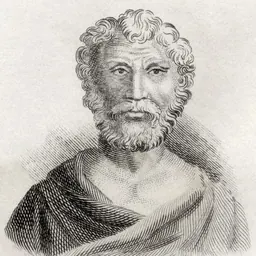
Lived AD 70 – 121 (aged 50–51). Pompeia Plotina was a Roman philosopher.
Pompeia Plotina (died 121/122) was Roman empress from 98 to 117 as the wife of Trajan. She was renowned for her interest in philosophy, and her virtue, dignity and simplicity. She was particularly devoted to the Epicurean philosophical school in Athens, Greece. She is often viewed as having provided Romans with fairer taxation, improved education, assisted the poor, and created tolerance in Roman society.
Early life Plotina was raised in Tejada la Vieja (Escacena del Campo) in the province of Hispania (modern Spain). She was possibly born in Nemausus (Nîmes) (southern France) during the reign of the Roman Emperor Nero (r. 54–68), however she could have been born in the 70s.
She was the daughter of Lucius Pompeius. Another woman from Nemausus named Pompeia L. f. Marullina may have been her relative; historian Christian Settipani proposed that they may have been sisters. Based on her cognomen Plotina her mother may have been named Plotia or similar. In Pompeii an inscription names an Ulpia Plotina, leading to the idea that Pompeia Plotina and Trajan were related. Little is known about Plotina's early life.
Marriage and life as Empress
Trajan married Plotina before he became emperor, and their marriage was happy; they had no known children.
Upon entering the imperial palace following Trajan's ascension, Plotina is said to have turned to those watching her and carefully announced, "I enter here the kind of woman I would like to be when I depart." She sought to dispel the memories of the domestic strife that had plagued the reign of Domitian and the Julio-Claudian dynasty. Plotina behaved in the manner of a traditional Roman matron, and she was associated with chaste goddesses such as Vesta (the guardian of Rome's sacred fire) and Minerva (goddess of war and wisdom). In 100, Trajan awarded her with the title of Augusta, but she did not accept the title until 105. Plotina did not appear on coinage until 112.
Death of Trajan and accession of Hadrian In 117, Trajan was on his deathbed at Selinus in Cilicia, where he was said to have written a letter in which he personally adopted Hadrian as successor to the Empire. The letter had been signed by the Empress Plotina, and when it arrived in Rome, it was suspect. Rumour named Attianus and Plotina as lovers—the two were very close to their ward Hadrian and the two had been present at Trajan's death—and they were rumoured to have forged Trajan's will to secure Hadrian's succession.
Annelise Freisenbruch dismisses this accusation: "Plotina, the silent spouse of the second century, thus joined Livia, Agrippina the Younger, and Domitia in the gallery of Roman imperial women accused of covering up or conspiring in their husband's deaths." Freisenbruch notes that there are many plausible explanations why Plotina's signature might legitimately be on this declaration: Trajan may have simply been too weak to sign the letter himself. Freisenbruch also notes these kinds of accusations have dogged the spouses of rulers through the centuries.
Along with Attianus and Matidia, the grieving widow Plotina accompanied Trajan's body to Seleucia and his ashes to Rome.
Plotina died of illness, and was deified. Her ashes joined Trajan's in the base of Trajan's Column. In 123, Hadrian built a basilica in her honor at Nîmes, in Provence.
Don’t just read it —
keep it.
Full-length biographies made to live with: read them, listen on the way to work, watch them tonight.
- E-book
- Audio
- Video
Instant download · yours to keep · every purchase keeps this site free
Important facts
Family & relationships
People in Pompeia Plotina's life
Named in this biography and alive at the same time


Related people
Same field, nearest in time





Contemporaries
People whose lives overlapped Pompeia Plotina's





Frequently asked questions
Who was Pompeia Plotina?
Roman Empress as the wife of Emperor Trajan
When was Pompeia Plotina born?
Pompeia Plotina was born in AD 70 in Nîmes.
When did Pompeia Plotina die?
Pompeia Plotina died in 121.
What was Pompeia Plotina's occupation?
Pompeia Plotina was a philosopher.
What nationality was Pompeia Plotina?
Pompeia Plotina was Roman.
Sources & further reading
Cite this page
APA: Biography.guide. (2026). Pompeia Plotina. https://biography.guide/pompeia-plotina/
MLA: "Pompeia Plotina." Biography.guide, https://biography.guide/pompeia-plotina/.
Chicago: "Pompeia Plotina." Biography.guide. https://biography.guide/pompeia-plotina/.
Data last updated: 2026-09-20 · Spot an error? Report a correction.
Page generated 2026-09-27 05:29 UTC