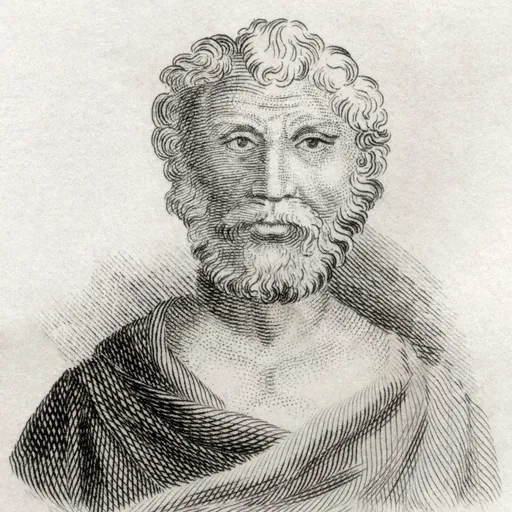
About Junius Rusticus
Lived 100 – 170. Junius Rusticus was a Roman philosopher, politician, military personnel and teacher.
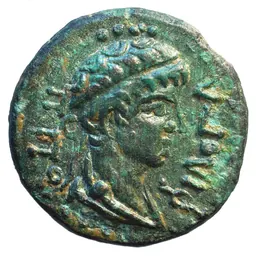
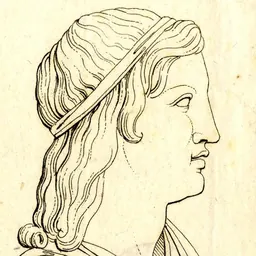
Quintus Junius Rusticus (c. 100 – c. 170 AD), was a Roman teacher and politician. He was probably a grandson of Arulenus Rusticus, who was a prominent member of the Stoic Opposition. He was a Stoic philosopher and was one of the teachers of the emperor Marcus Aurelius, whom Aurelius treated with the utmost respect and honour.
Rusticus held the political positions of Suffect consul in 133 and Consul ordinarius in 162. He served as urban prefect of Rome between 162 and 168. In this role he is notable for presiding over the trial of the Christian theologian Justin Martyr, which ended with Justin's conviction and execution.
According to Themistius, a 4th-century Roman philosopher and orator, Hadrian, Antoninus, and Marcus Aurelius "pulled Arrian and Rusticus away from their books, refusing to let them be mere pen-and-ink philosophers" and escorted them from the study of Stoic philosophy "to the general’s tent as well as to the speaker’s platform." Themistius lumps Arrian and Rusticus together in recounting their military achievements:
In their role as Roman generals, these men passed through the Caspian Gates, drove the Alani out of Armenia, and established boundaries for the Iberians and the Albani. For all these accomplishments, they reaped the fruits of the eponymous consulship, governed the great city [of Rome], and presided over the ancient senate. In his Meditations, Marcus thanks Rusticus for the Stoic training he received from him: From Rusticus I received the impression that my character required improvement and discipline; and from him I learned not to be led astray to sophistic emulation, nor to writing on speculative matters, nor to delivering little hortatory orations, nor to showing myself off as a man who practices much discipline, or does benevolent acts in order to make a display. Marcus also explains how it was from Rusticus that he first came to read the works of Epictetus: and I am indebted to him for being acquainted with the discourses of Epictetus, which he communicated to me out of his own collection. Three transcripts of the trial survive, of which the shortest is probably the most accurate.
Justin was denounced to the authorities after disputing with the Cynic philosopher Crescens, according to Tatian and Eusebius. Justin was tried together with six companions. The trial record indicates that Rusticus asked him several questions about Christian beliefs and practices, after which he affirmed the law that failure to sacrifice to the gods in submission to the Imperial decrees was a capital offence. When Justin and his companions refused to do so, Rusticus condemned him and he was beheaded, probably in 165. The martyrdom of Justin preserves the record of the trial.
Don’t just read it —
keep it.
Full-length biographies made to live with: read them, listen on the way to work, watch them tonight.
- E-book
- Audio
- Video
Instant download · yours to keep · every purchase keeps this site free
Important facts
People in Junius Rusticus's life
Named in this biography and alive at the same time



Related people
Same field, nearest in time




Contemporaries
People whose lives overlapped Junius Rusticus's
Frequently asked questions
Who was Junius Rusticus?
Stoic philosopher (100-170)
When was Junius Rusticus born?
Junius Rusticus was born in 100.
When did Junius Rusticus die?
Junius Rusticus died in 170.
What was Junius Rusticus's occupation?
Junius Rusticus was a philosopher, politician, military personnel and teacher.
What nationality was Junius Rusticus?
Junius Rusticus was Roman.
Sources & further reading
Cite this page
APA: Biography.guide. (2026). Junius Rusticus. https://biography.guide/junius-rusticus/
MLA: "Junius Rusticus." Biography.guide, https://biography.guide/junius-rusticus/.
Chicago: "Junius Rusticus." Biography.guide. https://biography.guide/junius-rusticus/.
Data last updated: 2026-09-23 · Spot an error? Report a correction.
Portrait: Wikimedia Commons · author & licence
Page generated 2026-09-27 05:06 UTC