
Pollie Anne Myers Pinkins
Civil rights activist (b. 1932, d. 2003)
About Pollie Anne Myers Pinkins
Lived 1932 – 2003 (aged 70). Pollie Anne Myers Pinkins was an American.
Pollie Anne Myers-Pinkins (; July 14, 1932 – March 17, 2003) was an American civil rights activist. She and Autherine Lucy were the first African Americans admitted to the University of Alabama in 1952, and both fought to desegregate the university. Pinkins and Lucy, working with the NAACP, sued the university for admission after it tried to revoke their acceptance. They fought their case up to the U.S. Supreme Court, which ordered the university to admit the two women. However, the university responded by rejecting Pinkins' admission under a new argument, and Pinkins' side did not restart legal challenges. Pinkins earned a master's degree in education from Wayne State University instead.
Early life Pinkins was born on July 14, 1932, to Alice Lamb and Henry Myers. She attended the historically black college of Miles College in Fairfield, Alabama. Pinkins became close friends with Autherine Lucy at school. Lucy decided to commit to the plan when she realized Myers was serious.
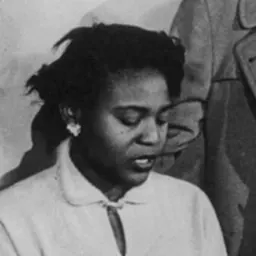
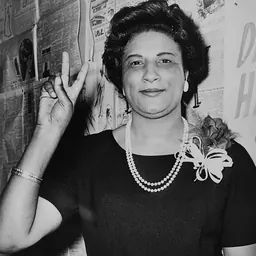
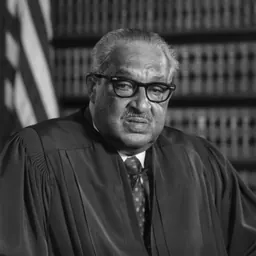
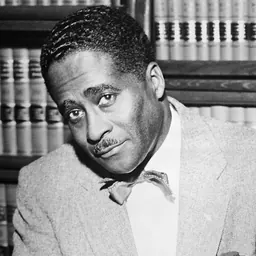
On September 24, 1952 Pinkins and Lucy applied to the University of Alabama without indicating their race and were accepted. The newspaper, the Birmingham World, which Pinkins worked at, celebrated their admission on the front page. Realizing who the applicants were, the University soon revoked the acceptance. Lucy and Pinkins's attorneys from the NAACP included renowned civil rights lawyers Constance Baker Motley, Arthur Shores and Thurgood Marshall. Their case, Lucy v. Adams, lasted three years. Partway through, Marshall helped win another case, Brown v. Board of Education, in front of the U.S. Supreme Court, making racial segregation in public schools illegal. This caused a federal court to side with Lucy and Pinkins against the university on June 29, 1955. Days later, the court amended the order to apply to all other African-American students seeking admission to the University of Alabama.
The university appealed the decision, and on October 10, 1955 the Supreme Court upheld the decision and ordered the University to admit the two women. The local Black community supported the pair, honoring them at a gathering at Birmingham's Sixteenth Street Baptist Church, where editor Emory Jackson of the Birmingham World introduced Lucy to the Reverend Dr. Martin Luther King Jr. The Jesse Smith Noyes Foundation gave Lucy and Pinkins full-ride scholarships, and Shores and Jackson helped the pair discuss registration day in advance with the dean of admissions at the university.
At least two sources have said that the board knew Pinkins had the original idea to apply and was more outgoing and confident than Lucy. Thus it hoped Lucy's individual acceptance would mean little or nothing to her, and she would voluntarily decide not to attend.
Desegregation and riot Pinkins and others strongly encouraged Lucy to attend alone, and on February 3, 1956, Lucy enrolled as a graduate student in library science, becoming the first African American ever admitted to a white public school or university in Alabama.
During this period, the Ku Klux Klan burned crosses each night on campus, and three days after Lucy's enrollment, mobs of white community members rioted against Lucy in the most violent anti-integration event post-Brown. This let the university suspend Lucy from school for the excuse of student safety, and spawned more court cases between her and the university.
When Marshall later asked that the complaint against the rioters be dropped, the charges against them were dismissed. The four responded by filing four damage suits totalling $4 million in March 1956, filed in Birmingham's Superior Court against Pinkins, Lucy, their lawyers Marshall, Motley, and Shores, and the NAACP. The rioters claimed that the desegregationists were trying to stir up "litigation and strife" for "their own financial gain," echoing the university's justifications for expelling Lucy.
Later life After her activism at the University of Alabama ended, Pinkins moved to Detroit in 1956 and went on to get a master's degree in education from Wayne State University.
Legacy The Black Alumni Association at the University of Alabama gives out a scholarship called the Pollie Anne Myers-Pinkins AAAN Endowed Scholarship in honor of Pinkins every year.
Don’t just read it —
keep it.
Full-length biographies made to live with: read them, listen on the way to work, watch them tonight.
- E-book
- Audio
- Video
Instant download · yours to keep · every purchase keeps this site free
Important facts
People in Pollie Anne Myers Pinkins's life
Named in this biography and alive at the same time




Contemporaries
People whose lives overlapped Pollie Anne Myers Pinkins's

Frequently asked questions
Who was Pollie Anne Myers Pinkins?
civil rights activist (b. 1932, d. 2003)
When was Pollie Anne Myers Pinkins born?
Pollie Anne Myers Pinkins was born on 14 July 1932.
When did Pollie Anne Myers Pinkins die?
Pollie Anne Myers Pinkins died on 17 March 2003.
What nationality was Pollie Anne Myers Pinkins?
Pollie Anne Myers Pinkins was American.
Sources & further reading
· Wikipedia: Pollie Anne Myers Pinkins
· DBpedia: Pollie Anne Myers Pinkins
Cite this page
APA: Biography.guide. (2026). Pollie Anne Myers Pinkins. https://biography.guide/pollie-anne-myers-pinkins/
MLA: "Pollie Anne Myers Pinkins." Biography.guide, https://biography.guide/pollie-anne-myers-pinkins/.
Chicago: "Pollie Anne Myers Pinkins." Biography.guide. https://biography.guide/pollie-anne-myers-pinkins/.
Data last updated: 2026-09-20 · Spot an error? Report a correction.
Page generated 2026-09-27 05:26 UTC