
About Pierre Sancan
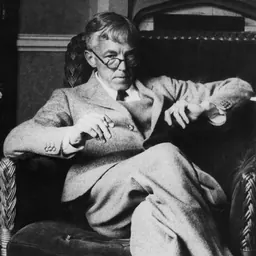
Lived 1916 – 2008 (aged 91). Pierre Sancan was a French classical pianist, composer, choreographer, conductor, university teacher and music educator.
Pierre Charles Sancan (24 October 1916 – 20 October 2008) was a French composer, pianist, teacher and conductor. Along with Olivier Messiaen and Henri Dutilleux, he was a major figure among French musicians in the mid-20th-century transition between modern and contemporary eras, but he is little known outside France.
Life Born in Mazamet in Tarn, Occitania, Sancan began his musical studies in Morocco and Toulouse before entering the Conservatoire de Paris, where he studied fugue with Jean Gallon, conducting with Charles Munch and Roger Désormière, piano with Yves Nat, and composition with Henri Büsser.
In 1943, Sancan won the Conservatoire's Prix de Rome for composition with his cantata La Légende de Icare, but he did not assume a regular teaching post there until 1956, when his former teacher Yves Nat retired. Sancan held this job until retiring in 1985. He lived another 23 years, to the age of 91, but his later years were compromised by Alzheimer's disease. He died in Paris.
Achievements As a pianist, Sancan was most prominently seen as the cellist André Navarra's accompanist. His recordings of Ravel's two piano concertos with conductor Pierre Dervaux and Mozart's four-hand concertos with Jean-Bernard Pommier were highly praised upon their release in the 1960s.
As a piano teacher, Sancan helped to train Olivier Cazal, Michel Béroff, Selman Ada, Abdel Rahman El Bacha, Emile Naoumoff, Géry Moutier, Jean-Bernard Pommier, Daniel Varsano, Jean-Efflam Bavouzet, Jacques Rouvier, Kristin Merscher, Eric Larsen, Jean-Marc Savelli, and Jean-Philippe Collard, who recorded Sancan's Piano Concerto. Sancan's Sonatine for flute and piano (1946) is his best-known work and has been a popular staple for flute players since its publication, but little else of his oeuvre is well known. Sancan also composed a violin concerto, at least three ballets, a Symphony for Strings (1961), and an opera, Ondine (1962). Some of his shorter piano pieces, such as Boîte à musique and the Toccata, have caught on as encores.
Sancan sought to reconcile contemporary performance techniques with the harmonic language of Debussy, a composer of whom Sancan was an expert interpreter.
Selected filmography The Misfortunes of Sophie (1946) Olivia (1951)
Don’t just read it —
keep it.
Full-length biographies made to live with: read them, listen on the way to work, watch them tonight.
- E-book
- Audio
- Video
Instant download · yours to keep · every purchase keeps this site free
Important facts
People in Pierre Sancan's life
Named in this biography and alive at the same time





Related people
Same field, nearest in time
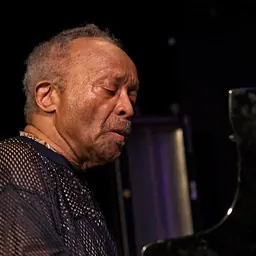
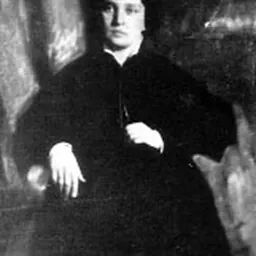
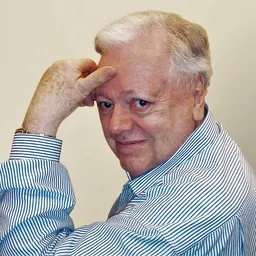
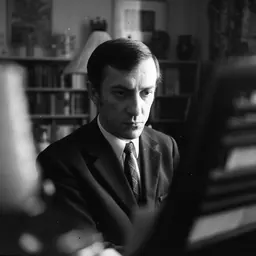
Contemporaries
People whose lives overlapped Pierre Sancan's





Frequently asked questions
Who was Pierre Sancan?
French musician (1916–2008)
When was Pierre Sancan born?
Pierre Sancan was born on 24 October 1916 in Mazamet.
When did Pierre Sancan die?
Pierre Sancan died on 19 October 2008 in 15th arrondissement of Paris.
What was Pierre Sancan's occupation?
Pierre Sancan was a classical pianist, composer, choreographer, conductor, university teacher and music educator.
What nationality was Pierre Sancan?
Pierre Sancan was French.
Sources & further reading
Cite this page
APA: Biography.guide. (2026). Pierre Sancan. https://biography.guide/pierre-sancan/
MLA: "Pierre Sancan." Biography.guide, https://biography.guide/pierre-sancan/.
Chicago: "Pierre Sancan." Biography.guide. https://biography.guide/pierre-sancan/.
Data last updated: 2026-09-20 · Spot an error? Report a correction.
Page generated 2026-09-27 04:59 UTC