
Pierre-Paul Émile Roux
French physician, bacteriologist and immunologist
About Pierre-Paul Émile Roux
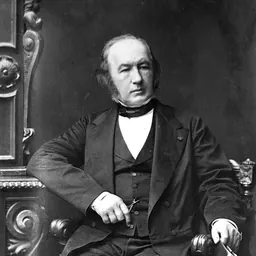
Lived 1853 – 1933 (aged 79). Pierre-Paul Émile Roux was a French bacteriologist, immunologist, photographer and physician, known for Diphtheria and Pasteur Institute.
Pierre Paul Émile Roux FRS (; 17 December 18533 November 1933) was a French physician, bacteriologist and immunologist. Roux was one of the closest collaborators of Louis Pasteur (1822–1895), a co-founder of the Pasteur Institute, and responsible for the institute's production of the anti-diphtheria serum, the first effective therapy for this disease. Additionally, he investigated cholera, chicken-cholera, rabies, and tuberculosis. Roux is regarded as a founder of the field of immunology.
Early years Roux was born in Confolens, Charente. It is believed that Roux had a fatherless childhood. He received his baccalaureate in sciences in 1871 and started his studies in 1872 at the Medical School of Clermont-Ferrand. He worked initially as a student assistant in chemistry at the Faculty of Sciences, under Émile Duclaux. From 1874 to 1878, he continued his studies in Paris and was admitted as clinical assistant at Hôtel-Dieu. Between 1874 and 1877, Roux received a fellowship for the Military School at Val-de-Grâce, but quit it after failing to present his dissertation in due time. It is also believed that Roux may have been dismissed from the military for some form of insubordination. Shedlock was a historical figure in her own right, being one of the first women medical students in Britain and Europe. Shedlock met Roux while both were in medical school in Paris. Shedlock died in 1879 of tuberculosis within days of Roux performing his critical experiments on chicken cholera vaccine. In an inaccurate biography, Roux's niece stated that Shedlock contracted tuberculosis from Roux. However, this is unlikely, given that Shedlock had symptoms before marrying Roux. According to his niece, Roux allegedly believed that marriage was an opportunity for women to satisfy their "deepest aspirations", while for men it was "mutilation". A few weeks later, all 50 sheep were injected with the anthrax bacillus. When it was clear that all 25 vaccinated sheep would survive, and all 25 unvaccinated sheep would die, Pasteur arrived to great fanfare.
Louis Pasteur and Émile Roux were sometimes in disagreement in their approach to disease. Pasteur was an experimental scientist, whereas Roux was more focused on clinical medicine. They also held different religious and political beliefs, with Pasteur being a right-leaning Catholic, and Roux being a left-leaning atheist. Given their many differences, they clashed often as they worked towards vaccines against anthrax and rabies. The main issues between Roux and Pasteur regarded the ethics of human experimentation. Specifically, the argued over the amount of evidence needed from animal experimentation in order to justify giving the rabies vaccine to humans. Roux was more reluctant to give the vaccine to humans without further evidence that it was safe in animals. He divided his time between biomedical research and administrative duties. In 1888, an important year in his career, he accepted the position of Director of Services, joined the editorial board of the Annales de l'Institut Pasteur, and established the first regular course on microbiological technique, which would become extremely influential in the training of many important French and foreign researchers and physicians in infectious diseases. The race to develop the diphtheria anti-toxin serum was considered a national rivalry, although each team of researchers adopted each other's experimental practices and built off of each other. In a controversy, the first Nobel Prize for Physiology and Medicine was given to Emil Von Behring for his work on the serum therapy for diphtheria. Roux had been nominated in 1888 for the isolation of the diphtheria toxin, but didn't win the prize in 1901 because his discovery was deemed to be too "old." Over the years, Roux came close to the Nobel Prize but never won.
Also in 1883, Roux published, with Alexandre Yersin, the first of his classical works on the causation of diphtheria by the Klebs-Loeffler bacillus, then an extremely prevalent and lethal disease, particularly among children. Diphtheria is contagious microbial disease marked by throat lesions, polyneuritis, myocarditis, low blood pressure, and collapse. He studied its toxin and its properties, and began in 1891 to develop an effective serum to treat the disease, following the demonstration, by Emil Adolf von Behring (1854–1917) and Kitasato Shibasaburō (1852–1931) that antibodies against the diphtheric toxin could be produced in animals. He successfully demonstrated the use of this antitoxin with Auguste Chaillou in a study with 300 diseased children in the Hôpital des Enfants-Malades and was henceforth hailed as a scientific hero in medical congresses throughout Europe. Asteroid 293366 Roux, discovered by French amateur astronomer Bernard Christophe in 2007, was named in his memory.
Gallery
Don’t just read it —
keep it.
Full-length biographies made to live with: read them, listen on the way to work, watch them tonight.
- E-book
- Audio
- Video
Instant download · yours to keep · every purchase keeps this site free
Important facts
People in Pierre-Paul Émile Roux's life
Named in this biography and alive at the same time
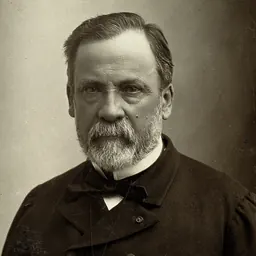

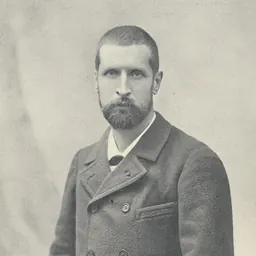
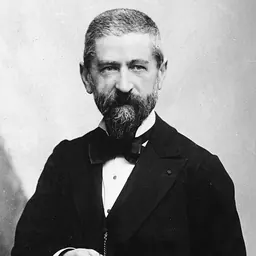
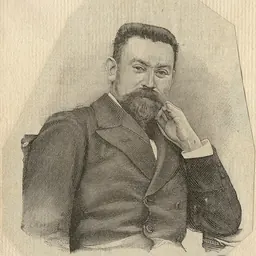
Related people
Same field, nearest in time


Contemporaries
People whose lives overlapped Pierre-Paul Émile Roux's




Frequently asked questions
Who was Pierre-Paul Émile Roux?
French physician, bacteriologist and immunologist (1853-1933)
When was Pierre-Paul Émile Roux born?
Pierre-Paul Émile Roux was born on 17 December 1853 in Confolens.
When did Pierre-Paul Émile Roux die?
Pierre-Paul Émile Roux died on 3 November 1933 in Paris.
What was Pierre-Paul Émile Roux's occupation?
Pierre-Paul Émile Roux was a bacteriologist, immunologist, photographer and physician.
What was Pierre-Paul Émile Roux known for?
Pierre-Paul Émile Roux was known for Diphtheria and Pasteur Institute.
What nationality was Pierre-Paul Émile Roux?
Pierre-Paul Émile Roux was French.
Sources & further reading
· Wikipedia: Pierre-Paul Émile Roux
Cite this page
APA: Biography.guide. (2026). Pierre-Paul Émile Roux. https://biography.guide/pierre-paul-emile-roux/
MLA: "Pierre-Paul Émile Roux." Biography.guide, https://biography.guide/pierre-paul-emile-roux/.
Chicago: "Pierre-Paul Émile Roux." Biography.guide. https://biography.guide/pierre-paul-emile-roux/.
Data last updated: 2026-09-26 · Spot an error? Report a correction.
Page generated 2026-09-27 05:15 UTC