
About Anton Weichselbaum
Lived 1845 – 1920 (aged 75). Anton Weichselbaum was an Austrian bacteriologist, university teacher, pathologist, politician and physician.
Anton Weichselbaum (8 February 1845 – 23 October 1920) was an Austrian pathologist and bacteriologist. He was among the first scientists to recognize the importance of bacteriology for the field of pathological anatomy.
Biography Weichselbaum was born on 8 February 1845, near the town of Langenlois.
In 1869, he received his medical doctorate in Vienna, and subsequently worked as an assistant to pathological anatomist Josef Engel (1816–1899). In 1885, he was appointed an associate professor of pathological histology and bacteriology, and from 1893 to 1916, he was director of the pathological-anatomical institute at the University of Vienna. In 1912, he became university rector.
Some of his better known assistants were serologist Karl Landsteiner (1868–1943), bacteriologist Anton Ghon (1866–1936) and dermatologist Josef Kyrle (1880–1926).
In 1887, he was the first to isolate the causative agent of cerebrospinal meningitis, a bacterium he named Diplococcus intracellularis meningitidis. He conducted important research involving tuberculosis, and is credited for founding the first Lungenheilstätte (pulmonary health institute) in Austria (Alland, Niederösterreich). Also, he provided the first comprehensive description of local bone erosion in arthritis.
Weichselbaum was a son-in-law to chemist Franz Schneider (1812–1897). Weichselbaumgasse, a thoroughfare in the Favoriten district of Vienna is named in his honor.
Written works Among his better known writings was Grundriss der pathologischen Histologie (1892), being later translated into English and published as "The Elements of Pathological Histology". Other noted works by Weichselbaum are the following: Über Entstehung und Bekämpfung der Tuberkulose, 1896 - On formation and control of tuberculosis. Parasitologie, in Handbuch der Hygiene, volume 9; Jena, 1899 - Parasitology Epidemiologie, in Handbuch der Hygiene, volume 9; Jena, 1899 - Epidemiology Diplococcus pneumoniae, in Handbuch der pathogenen Mikroorganismen, volume 3; Jena, 1903. Meningokokken, in Handbuch der pathogenen Mikroorganismen, volume 3; Jena, 1903 - Meningococcus. Pneumokokkenimmunität, in Handbuch der pathogenen Mikroorganismen, volume 4; Jena, 1904 - Pneumococcal immunity. Über die Infektionswege der menschlichen Tuberkulose, 1907 - On the modes of transmission of human tuberculosis. Über die Beziehungen zwischen Körperkonstitution und Krankheit, 1912 - On the relationship between physical condition and disease.
Don’t just read it —
keep it.
Full-length biographies made to live with: read them, listen on the way to work, watch them tonight.
- E-book
- Audio
- Video
Instant download · yours to keep · every purchase keeps this site free
Important facts
People in Anton Weichselbaum's life
Named in this biography and alive at the same time
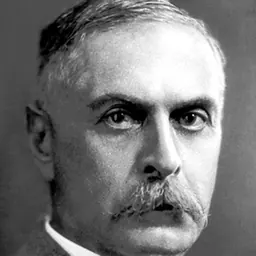



Related people
Same field, nearest in time


Contemporaries
People whose lives overlapped Anton Weichselbaum's


Frequently asked questions
Who was Anton Weichselbaum?
Austrian bacteriologist (1845-1920)
When was Anton Weichselbaum born?
Anton Weichselbaum was born on 8 February 1845 in Langenlois.
When did Anton Weichselbaum die?
Anton Weichselbaum died on 22 October 1920 in Vienna.
What was Anton Weichselbaum's occupation?
Anton Weichselbaum was a bacteriologist, university teacher, pathologist, politician and physician.
What nationality was Anton Weichselbaum?
Anton Weichselbaum was Austrian.
Sources & further reading
· Wikipedia: Anton Weichselbaum
Cite this page
APA: Biography.guide. (2026). Anton Weichselbaum. https://biography.guide/anton-weichselbaum/
MLA: "Anton Weichselbaum." Biography.guide, https://biography.guide/anton-weichselbaum/.
Chicago: "Anton Weichselbaum." Biography.guide. https://biography.guide/anton-weichselbaum/.
Data last updated: 2026-09-20 · Spot an error? Report a correction.
Page generated 2026-09-27 05:24 UTC