
Griffith Evans
Welsh bacteriologist
About Griffith Evans
Lived 1835 – 1935 (aged 100). Griffith Evans was a British bacteriologist, known for Trypanosoma evansi.
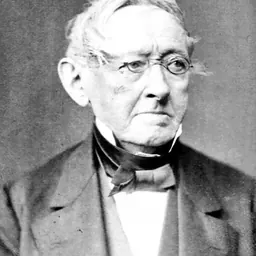
Griffith Evans (7 August 1835 – 7 December 1935) was a Welsh physician and veterinary pathologist who was the first to determine that a trypanosome parasite was responsible for surra disease in horses while serving in British India. Described as "the man who first saw a pathogenic trypanosome", he identified the causal organism as a haematozoon (blood parasite) in 1880 which was given the species name Trypanosoma evansi after him.
Biography Evans was born in Ty-mawr, Towyn, Wales, as the only son to Evan Evans (1801–1882) and Mary Jones (1809–1877). He returned to England in 1870. In 1871, he exchanged his service in the Royal Artillery with the Royal Army Service Corps. Initially posted in Woolwich, he worked variously at King's College London and the Royal Ophthalmic Hospital at Moorfields. He returned to Britain in 1885 and retired five years later.
He married Catherine Mary née Jones (1843–1923) in 1870 and they had a son and four daughters. He identified the disease, which was then called "Loodiana disease" (after the city Ludhiana) or "malignant fever," as anthrax. He reported his findings in The Veterinary Journal in 1878.
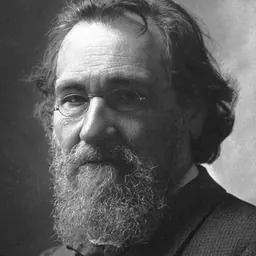
While identifying the anthrax bacteria from the horse blood under microscope, Griffith observed two other important pathological conditions. The first was that when he looked at the bacteria from fresh blood samples, the bacteria appeared to be surrounded more and more by certain white blood cells that were not present in the fresh samples. He had no means to further study this phenomenon, which is now known as phagocytosis, a cellular process by which white blood cells protect by devouring pathogens. The phenomenon was discovered in its full form by Russian zoologist Élie Metchnikoff in 1882, who received the 1908 Nobel Prize in Physiology or Medicine for the discovery that established the science of immunology.
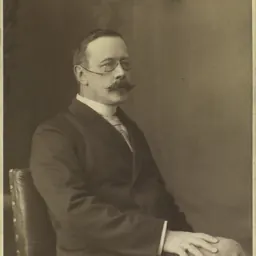
An additional observation of Griffith was that in some horses, some horses had parasites in their blood and respiratory tract. Those were roundworms, but he did not know them. He suggested them to be kinds of worms, as he reported:I saw [in the blood sample] what I thought were bacteria swarming in it. I made a rather hasty conclusion, because I was thinking of Anthrax, and as this disease is commonly identified with it, I was really looking for bacteria. On closer inspection, I thought they were more likely to be blood-crystals: they resembled very closely the small prismatic crystals of Haematoglobulin [ haemoglobin]. I have since come to the conclusion that they are worms in a very early stage of development... Now, I do not know what these things are,—whether they belong to the animal or vegetable kingdom. I call them worms, because they are worm-like. I know very little about parasites. He sent the infected puppy from which Lewis confirmed the presence of parasites in the blood similar to his discovery. Steel believed that the parasite was a type of spirochaete bacteria and named it Spirochaeta evansi, honouring the original discoverer. After returning to England, Griffith continued the research with Edgar Crookshank at King's College London. Crookshank identified the parasite as a kind of protozoan with similarity to the protozoan parasite of fish (Haematomonas Mitrophanow, described in 1883) and renamed it as Haematonomas evansi, but quickly changed it to Trichomonas evansi. The correct description and the name Trypanosoma evansi were given by a French veterinarian J. Chauvrat in 1896. Surra then was established as the first trypanosome disease (trypanosomiasis). The University of Wales conferred him honoris causa DSc degree in 1919. He received the first Hunterian medal of the Hunterian Society in 1932. He was conferred an honorary citizenship honour, freeman of the City of Bangor.
Don’t just read it —
keep it.
Full-length biographies made to live with: read them, listen on the way to work, watch them tonight.
- E-book
- Audio
- Video
Instant download · yours to keep · every purchase keeps this site free
Important facts
People in Griffith Evans's life
Named in this biography and alive at the same time

Related people
Same field, nearest in time


Contemporaries
People whose lives overlapped Griffith Evans's




Frequently asked questions
Who was Griffith Evans?
Welsh bacteriologist (1835-1935)
When was Griffith Evans born?
Griffith Evans was born on 7 August 1835 in Tywyn.
When did Griffith Evans die?
Griffith Evans died on 7 December 1935 in Bangor.
What was Griffith Evans's occupation?
Griffith Evans was a bacteriologist.
What was Griffith Evans known for?
Griffith Evans was known for Trypanosoma evansi.
What nationality was Griffith Evans?
Griffith Evans was British.
Sources & further reading
· DBpedia: Griffith Evans (bacteriologist)
Cite this page
APA: Biography.guide. (2026). Griffith Evans. https://biography.guide/griffith-evans/
MLA: "Griffith Evans." Biography.guide, https://biography.guide/griffith-evans/.
Chicago: "Griffith Evans." Biography.guide. https://biography.guide/griffith-evans/.
Data last updated: 2026-09-26 · Spot an error? Report a correction.
Page generated 2026-09-27 05:14 UTC