
About Pierre-Louis Ginguené
Lived 1748 – 1816 (aged 68). Pierre-Louis Ginguené was a French politician, journalist, diplomat, poet, historian and playwright.
Pierre-Louis Ginguené (25 April 1748 – 16 November 1816) was a French author.
Biography He was born at Rennes, in Brittany, and educated at a Jesuit college there. He came to Paris in 1772, and wrote criticisms for the Mercure de France. He also composed a comic opera, Pomponin (1777). The Satire des satires (1778) and the Confession de Zulmé (1779) followed. The Confession was claimed by several different authors and was very successful.
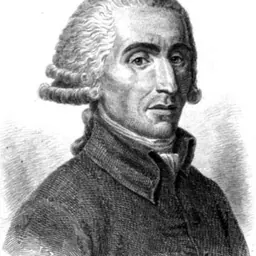
Ginguené's defence of Niccola Piccinni against the partisans of Gluck made him more widely known. He hailed the first symptoms of the French Revolution, and joined Giuseppe Cerutti, the author of the Mémoire pour le peuple français (1788), and others in producing the Feuille villageoise, a weekly paper addressed to the villages of France. He also celebrated in an indifferent ode the opening of the states-general. In his Lettres sur les confessions de J.-J. Rousseau (1791), he defended the life and principles of his author.
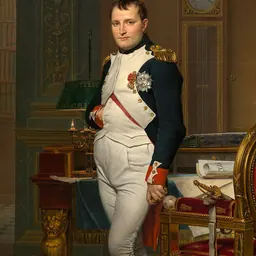
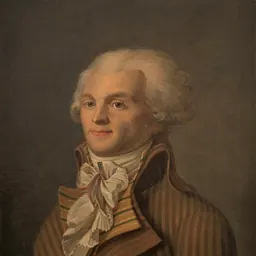
He was imprisoned during the Reign of Terror and escaped with life only by the downfall of Maximilien Robespierre. After his release he assisted, as director-general of the "commission exécutive de l'instruction publique", in reorganizing the system of public instruction, and he was an original member of the Institute of France. In 1797, the Directory appointed him minister plenipotentiary to the king of Sardinia. After seven months, Ginguené retired to his country house of St Prix, in the valley of Montmorency. He was appointed a member of the tribunate, but Napoleon, finding that he was not sufficiently tractable, had him expelled at the first "purge", and Ginguené returned to his literary pursuits.
Career He was one of the commission appointed to continue the Histoire littéraire de la France, and he contributed to the volumes of this series which appeared in 1814, 1817 and 1820. Ginguené's most important work is the Histoire littéraire d'Italie (14 vols., 1811–1835). He was putting the finishing touches to the eighth and ninth volumes when he died. The last five volumes were written by Francesco Salfi and revised by Pierre Daunou.
In the composition of his history of Italian literature he was guided for the most part by the great work of Girolamo Tiraboschi, but he avoids the prejudices and party views of his model.
Ginguené edited the Décade philosophique, politique et littéraire until it was suppressed by Napoleon in 1807. He contributed largely to the Biographie universelle, the Mercure de France and the Encyclopidie méthodique; and he edited the works of Nicolas Chamfort and of Lebrun. Among his minor productions are an opera, Pomponin on le tuteur mystifié (1777); La Satire des satires (1778); De l'autorité de Rabelais dans la revolution présente (1791); De M. Neckar (1795); Fables nouvelles (1810); Fables inédites (1814).
Legacy Ginguené is buried in the Père-Lachaise cemetery in Paris.
The Rue Ginguené in Rennes is named after him.
Works Pomponin, ou le tuteur mystifié, opéra bouffon en 2 actes, représenté au château de Fontainebleau en 1777 La Satire des satires, 1778 Épître au poète Le Brun pour l’engager à publier le recueil de ses poésies, avril 1785 Éloge de Louis XII, Père du peuple, discours qui a concouru pour le prix de l’Académie française in 1788 Ode sur les États généraux, 1789 De l’Autorité de Rabelais dans la révolution présente et dans la constitution civile du clergé, ou institutions royales, politiques et ecclésiastiques, tirées de "Gargantua" et de "Pantagruel", 1791 Lettres sur les Confessions de J.-J. Rousseau, 1791 Tableaux de la Révolution française, ou Collection de quarante-huit gravures, représentant les événements principaux qui ont eu lieu en France depuis la transformation des États généraux en Assemblée nationale, le 20 juin 1789, en collaboration avec l’abbé Claude Fauchet, Chamfort et Pagès, 1791–1804 De M. Necker, et de son livre intitulé : "De la révolution française", 1796 Notice sur la vie et les ouvrages de Nicolas Piccinni, 1800 Coup d’œil rapide sur le ″Génie du christianisme″, ou Quelques pages sur les cinq volumes in-8° publiés sous ce titre par François-Auguste Chateaubriand, 1802 Lettres de P.-L. Ginguené... à un académicien de l’Académie impériale de Turin [l’abbé Valperga de Caluso] sur un passage de la vie de Vittorio Alfieri, 1809 Fables nouvelles, 1810 Histoire littéraire d’Italie, 1811 Notice sur la vie et les ouvrages de M.-J. de Chénier, 1811 Les Noces de Thétis et de Pélée, poème de Catulle, traduit en vers français, 1812
Don’t just read it —
keep it.
Full-length biographies made to live with: read them, listen on the way to work, watch them tonight.
- E-book
- Audio
- Video
Instant download · yours to keep · every purchase keeps this site free
Important facts
People in Pierre-Louis Ginguené's life
Named in this biography and alive at the same time
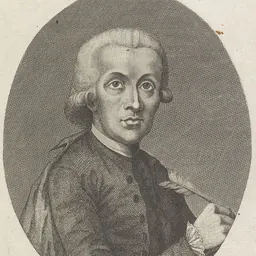
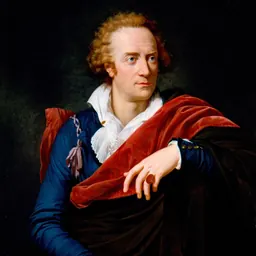
Related people
Same field, nearest in time
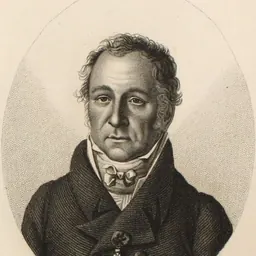



Contemporaries
People whose lives overlapped Pierre-Louis Ginguené's





Frequently asked questions
Who was Pierre-Louis Ginguené?
French author (1748-1816)
When was Pierre-Louis Ginguené born?
Pierre-Louis Ginguené was born on 25 April 1748 in Rennes.
When did Pierre-Louis Ginguené die?
Pierre-Louis Ginguené died on 16 November 1816 in former 11th arrondissement of Paris.
What was Pierre-Louis Ginguené's occupation?
Pierre-Louis Ginguené was a politician, journalist, diplomat, poet, historian and playwright.
What nationality was Pierre-Louis Ginguené?
Pierre-Louis Ginguené was French.
Sources & further reading
· Wikipedia: Pierre-Louis Ginguené
· DBpedia: Pierre-Louis Ginguené
Cite this page
APA: Biography.guide. (2026). Pierre-Louis Ginguené. https://biography.guide/pierre-louis-ginguene/
MLA: "Pierre-Louis Ginguené." Biography.guide, https://biography.guide/pierre-louis-ginguene/.
Chicago: "Pierre-Louis Ginguené." Biography.guide. https://biography.guide/pierre-louis-ginguene/.
Data last updated: 2026-09-25 · Spot an error? Report a correction.
Page generated 2026-09-27 05:13 UTC