
Pierre Kaan
Leader of the French Resistance
About Pierre Kaan
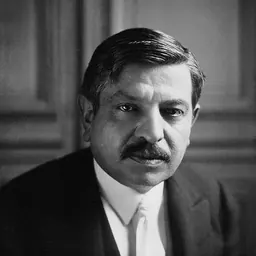
Lived 1903 – 1945 (aged 42). Pierre Kaan was a French politician, philosopher and french resistance fighter.
Pierre Kaan (French: [pjεʀ kɑ̃] 10 January 1903 – 18 May 1945) was a professor of philosophy, Marxist essayist, and prominent member of the French Resistance during World War II.
Activist, writer, teacher (1919–1939) Front cover of the Critique Sociale's 8th edition featuring articles by Pierre Kaan, George Bataille and Boris Souvarine. Pierre Kaan was born on 10 January 1903 in the 5th arrondissement of Paris. After a primary education often interrupted by health problems, Pierre Kaan entered in 1919 into khâgne, the preparatory classes for the entrance exams of École Normale Supérieure at the Lycée Louis-le-Grand. While at the Lycée Louis-le-Grand Kaan founded a literary review called la Gerbe du Quartier Latin, alongside fellow students Daniel Guérin, Georges Altman, and Paul Verdier. Pierre Kaan's attendance in the preparatory classes were interrupted when his parents sent him to Brittany to recover from recurring asthma attacks. Nevertheless, Pierre Kaan was awarded a diploma in philosophy by l'Academie de Paris in 1923, with a dissertation titled 'The sociological basis of Nietzsche's thought during his intellectualist period 1876–1882'.
Following a growing notoriety in French academic and Marxist circles in the early 1920s, Pierre Kaan was spotted by Boris Souvarine who placed him on the editing board of l'Humanité and shortly thereafter requested Kaan contribute as a writer and editor for the Bulletin Communiste.
During the 1920s Pierre Kaan contributed to a number of Jewish literary reviews. In 1925 Kaan began an editorial collaboration with Albert Cohen at the Revue Juive, a literary magazine founded by Cohen to review Jewish literature. And between 1927 and 1928, Pierre Kaan joined another literary review called Palestine, a Zionist literary review presided by Justin Godart, as its secretary.
Having passed the agrégation in philosophy in 1928, Pierre Kaan was named associate professor of literature and philosophy at a secondary school in Montargis. However, Kaan resigned from his position in September 1929 in order to fulfill his military obligations, which he completes in November and is thereby named professor in another secondary school, this time in Nogent-le-Rotrou.
At odds over the party's close relationship with the Soviet Union, Pierre Kaan quit the French Communist Party (PCF) in 1929 and joined Souvarine's new group, the Cercle Communiste Démocratique, whose members included Simone Weil, Georges Bataille, and Raymond Queneau.
In 1931 Pierre Kaan began his involvement with Boris Souvarine's La Critique Sociale joining Bataille, Weil, Queneau, Lucien Laurat and other writers, philosophers and economists to revue letters and ideas for what would become a widely read publication during the 1930s.
Résistant (1939–1944) Shortly after the speech made by Marshal Philippe Pétain on 17 June, Pierre Kaan unsuccessfully attempted to join the resistance group France Libre. Kaan thereby tasked himself of uniting and regrouping all those who shared the will to continue fighting against the Nazis. Alongside former comrades and old friends (Jean Cavaillès and Leo Hamon in Toulouse), Kaan participated in the founding of the group Libération-Sud. In February 1942, Pierre Kaan enlisted in the Forces Françaises Combattantes, handing his engagement personally to Jean Moulin and Leo Morandat when they arrived to visit him at his home in Montluçon. Kaan undertook a number of resistance operations with Libération-Sud around the Montluçon area alongside members of the entourage of Montluçon's Mayor, Marx Dormoy. Pierre Kaan's resistance activities in Montluçon ranged from painting anti-Nazi inscriptions on walls, coordinating the distribution of political tracts, compiling reports destined for headquarters of the Free French Forces in London, and during 1942, Kaan reconnoitered the surrounding territory to find appropriate landing zones for parachute operations and clandestine landings. On 6 January 1942, Kaan plays an important part in organising a large demonstration against the departure of workers following a speech made by Pierre Laval – the Nazi collaborating Prime Minister of the Vichy Régime. Following the success of his operations in Montluçon, Pierre Kaan is named Jean Moulin's deputy responsible for safeguarding transport and communication links between Lyon and the occupied half of France.
Honours and decorations In recognition of the operations Pierre Kaan led and undertook during the war, Kaan received three French and one British decoration. On 12 May 1948, the official journal of the French Government announced that Kaan had been posthumously decorated with Knight of the Legion of Honour, Medal of the Resistance with Rosette, War Cross with silver palm. In the same year, the British Government also decorated Kaan posthumously with the King's Military Commendation for Brave Conduct.
Publications
Articles Kaan, P., 1928. 'Étude sur l'ouvrage d'Henri de Man: Au-delà du Marxisme'. Bulletin Communiste, No. 27–28, April–July. Kaan, P., 1931. 'Dogme et verité'. La Critique Sociale, No. 2, July, pp. 53–55. Kaan, P., Laurat, L., 1931. 'A propos des lettres de Sorel'. La Critique Sociale, No. 3, October, pp. 107–?. Kaan, P., 1933. 'Matérialisme et communisme'. La Critique Sociale, No. 8, April, pp. 67–69. Kaan, P., 1939. 'La logique de l'irrationalisme'. In: François George ed. 1987. La Liberté de l'Esprit: Visages de la Résistance. Lyon, France: La Manufacture. Kaan, P., 1940. 'Stalinisme ou hitlérisme dans une Europe organisée'. Les Nouveaux Cahiers, April, No. 56. Reprinted in 1998 in Commentaire, 'Mémoire et oubli du communisme', p. 379.
Translations Kaan, P., Duff, A.B., 1926. l'Exemplar Humanae Vitae by Uriel Da Costa.
Don’t just read it —
keep it.
Full-length biographies made to live with: read them, listen on the way to work, watch them tonight.
- E-book
- Audio
- Video
Instant download · yours to keep · every purchase keeps this site free
Important facts
Family & relationships
People in Pierre Kaan's life
Named in this biography and alive at the same time


Related people
Same field, nearest in time





Contemporaries
People whose lives overlapped Pierre Kaan's
Frequently asked questions
Who was Pierre Kaan?
leader of the French Resistance (1903-1945)
When was Pierre Kaan born?
Pierre Kaan was born on 10 January 1903 in Paris.
When did Pierre Kaan die?
Pierre Kaan died on 18 May 1945 in extermination camp.
What was Pierre Kaan's occupation?
Pierre Kaan was a politician, philosopher and french resistance fighter.
What nationality was Pierre Kaan?
Pierre Kaan was French.
Sources & further reading
Cite this page
APA: Biography.guide. (2026). Pierre Kaan. https://biography.guide/pierre-kaan/
MLA: "Pierre Kaan." Biography.guide, https://biography.guide/pierre-kaan/.
Chicago: "Pierre Kaan." Biography.guide. https://biography.guide/pierre-kaan/.
Data last updated: 2026-09-20 · Spot an error? Report a correction.
Page generated 2026-09-27 05:19 UTC