
About Pierre Gardel
Lived 1758 – 1840 (aged 82). Pierre Gardel was a French dancer, choreographer, ballet master, ballet dancer and opera singer.
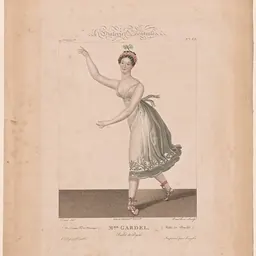
Pierre-Gabriel Gardel (; 4 February 1758, in Nancy, France – 18 October 1840, in Paris) was a French ballet dancer, ballet master, violinist, and composer. He was the son of Claude Gardel and the younger brother of Maximilien Gardel, seventeen years his senior. In 1795 he married the dancer Marie Miller, whom he showcased in many of his works.
Career Entering the school of the Opéra de Paris (Paris Opera) in 1772, he began his studies under his brother's watch. He became a soloist in 1780, but had to give up his performing career for health reasons, paired with the rising jealousy of his contemporary Auguste Vestris, who was a natural technician. Upon his brother Maximillien's death in 1787, Pierre took over as the Opera's ballet master.
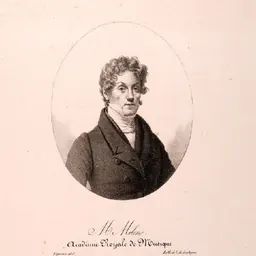
Assisted by Louis Milon, Gardel went on to head the Ballet de l'Opéra de Paris for 40 years, adapting to the turmoil of the French Revolution and the reign of Napoleon.
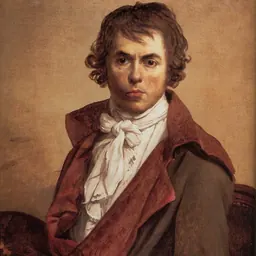
His first three ballets: Le Jugement de Pâris (1787), Psyché (1790), Télémaque (1790) drew upon classical myths and were considered compatible with the old regime. As the French Revolution caused a political upheaval, Gardel created patriotic dances which combined political content with neoclassical ideas. He collaborated with Jacques-Louis David, a painter who shared Gardel's views on showcasing the Revolution's ideas in works of art. In L'Offrande à la Liberté (1792) Gardel reproduced the events of the Revolution as an opera with music composed by François-Joseph Gossec. It included the revolutionary national anthem The Marseillaise, which was sung on stage.
Pierre Gardel argued that strong technical dancing was equally important to a ballet's story and theatrics. He was influenced by Noverre's reforms, although Gardel didn't see the need to limit technique when including pantomime. He kept mime to a minimum and cast those with natural dramatic ability. His choreography offered dancers what he saw as challenging and dramatic work. Outside of the Opera ballet masters were focusing on pantomime. It was at this time that Gardel enabled changes in the training to reflect his focus on expanding technique to encompass great bodily feats. Gardel allowed and encouraged the creation of divertissements for the dancers. Auguste Vestris was a principal dancer at this time and well known for pushing the boundaries of turning and jumping. The very thing that caused Gardel discomfort as a dancer became valuable once Gardel became the Opéra's ballet master.
The uniformity of training that the Opera is known for was first seen under his rule. Criticized for not allowing outside choreographers access to his dancers "he kept them in a type of artistic isolation." (Au 42) Some argue that Gardel's leadership was the reason that so few notable dancers emerged from the Opera during and in the years that followed his reign. A talented choreographer, he enthused the public from his first productions in 1790 right through to those just before his retirement. In 1820 he began lessening his work load, opting to create works for the operas, rather than full ballets. From 1820, the creation of ballets was transferred to Jean-Pierre Aumer, although Gardel didn't step down from his position and fully retire until 1827.
Main works All put on at the Opéra de Paris. 1784 : Dardanus 1786 : Les Sauvages 1790 : Télémaque dans l'île de Calypso 1790 : Psyché 1791 : Bacchus et Ariane 1793 : Le Jugement de Pâris 1800 : La Dansomanie 1802 : Le Retour de Zéphire 1803 : Daphnis et Pandore 1804 : Une demi-heure de caprice 1804 : Achille à Scyros 1806 : Paul et Virginie 1808 : Vénus et Adonis 1808 : Alexandre chez Apelles 1809 : La Fête de Mars 1810 : Vertumne et Pomone 1810 : Persée et Andromède 1812 : L'enfant prodigue 1814 : Le Retour des lys 1815 : L'Heureux Retour 1817 : Les Fiancé de Caserte 1818 : Proserpine 1818 : Zirphile 1818 : La Servante justifiée
Don’t just read it —
keep it.
Full-length biographies made to live with: read them, listen on the way to work, watch them tonight.
- E-book
- Audio
- Video
Instant download · yours to keep · every purchase keeps this site free
Important facts
People in Pierre Gardel's life
Named in this biography and alive at the same time


Related people
Same field, nearest in time




Contemporaries
People whose lives overlapped Pierre Gardel's




Frequently asked questions
Who was Pierre Gardel?
French ballet dancer and choreographer (1758-1840)
When was Pierre Gardel born?
Pierre Gardel was born on 4 February 1758 in Nancy.
When did Pierre Gardel die?
Pierre Gardel died on 18 October 1840 in Paris.
What was Pierre Gardel's occupation?
Pierre Gardel was a dancer, choreographer, ballet master, ballet dancer and opera singer.
What nationality was Pierre Gardel?
Pierre Gardel was French.
Sources & further reading
Cite this page
APA: Biography.guide. (2026). Pierre Gardel. https://biography.guide/pierre-gardel/
MLA: "Pierre Gardel." Biography.guide, https://biography.guide/pierre-gardel/.
Chicago: "Pierre Gardel." Biography.guide. https://biography.guide/pierre-gardel/.
Data last updated: 2026-09-20 · Spot an error? Report a correction.
Page generated 2026-09-27 05:31 UTC