
About Jean-Georges Noverre
Lived 1727 – 1810 (aged 83). Jean-Georges Noverre was a French dancer, choreographer, ballet master, ballet dancer, stage actor and librettist.
Jean-Georges Noverre (; 29 April 1727 19 October 1810) was a French dancer and ballet master, and is generally considered the creator of ballet d'action, a precursor of the narrative ballets of the 19th century. His birthday is now observed as International Dance Day.
His first professional appearances occurred as a youth in Paris at the Opéra-Comique, at Fontainebleau, in Berlin before Frederick II and his brother Prince Henry of Prussia, in Dresden and Strasburg. In 1747 he moved to Strasbourg, where he remained until 1750 before moving to Lyon. In 1751, he composed his first great work, Les Fêtes Chinoises for Marseilles. The work was revived in Paris in 1754 to great acclaim. In 1755, he was invited by Garrick to London, where he remained for two years.
Between 1758 and 1760 he produced several ballets at Lyon, and published his . It is from this period that the revolution in the art of the ballet for which Noverre was responsible can be dated. Prior to Noverre, ballets were large spectacles that focused mainly on elaborate costumes and scenery and not on the physical and emotional expression of the dancers. He was next engaged by Duke Karl Eugen of Württemberg, and later Austrian Empress Maria Theresa, until 1774. In 1776, he was appointed maître des ballets of the Paris Opera at the request of Queen Marie Antoinette. He returned to Vienna in Spring of 1776 to stage ballets there, but in June 1776 he returned again to Paris. He regained this post until the French Revolution reduced him to poverty. He died on 19 October 1810 at Saint-Germain-en-Laye. Noverre's fitting effect on the Paris ballet world would be preserved by the production of his tragic ballet Jason et Médée in 1763. In 1787, Pierre Gardel inherited the throne and Paris Opera, and carried out Noverre's ideas on costume and thoughts on ballet pantomime. (Chazin-Bennhaum) He composed Les Caprices de Galathée, for example, and garbed his dancers in tiger skins and shoes made of tree bark. His naturalist attitude towards costume placed him in the front rank of the French Enlightenment.
Les Lettres sur la danse et sur les ballets
Context Noverre's treatise on dancing and theater expressed his aesthetic theories on the production of ballets and his method of teaching ballet. Noverre wrote this text in London in 1756 and published it in 1760 in Lyon, France. He began his research for his essays in Drury Lane, London, where he choreographed for his own troupe of dancers at the Theatre Royal under the direction of David Garrick. It was in David Garrick's library that Noverre read modern French literature and ancient Latin treatises on pantomime. Noverre was inspired by the pantomimes that he thought stirred up the audience's emotions by the use of expressive movement. He proclaimed in his text that ballet should unfold through dramatic movement, and the movement should express the relationship between the characters. Noverre named this type of ballet, ballet d’action or pantomime ballet (International Dictionary of Ballet 1032). From 1757 to 1760, he produced thirteen new works with composer François Granier at the Lyon Opera. His lighter, colorful pantomime ballets like Les Caprices de Galathée, La Toilette de Vénus, and Les Jalousies du sérail, received great success.
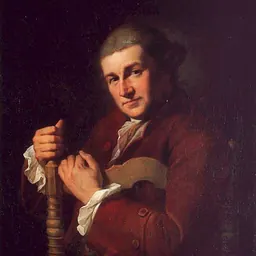
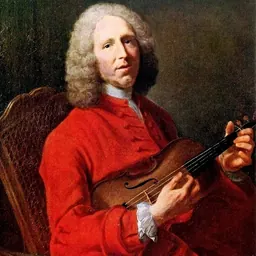
Inspiration Noverre was most immediately influenced by Jean-Philippe Rameau, David Garrick, and Marie Sallé. Rameau was a very influential French composer and music theorist, and Noverre was inspired by his dance music that combined programmatic and strongly individual elements. David Garrick was an actor and theatre director at the Theatre Royal. Noverre was inspired by his talent for "histrionics" and vivid mime work where Noverre wanted to shake from the traditional forms of Ballet. (The Encyclopedia of Dance and Ballet 695).
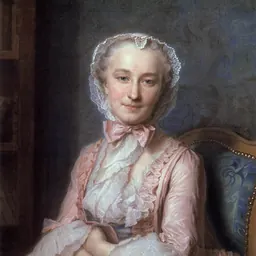
With the content that follows it is imperative to closer examine the profound influence of Marie Sallé on Jean-George Noverre. Sallé and Noverre had an intertwining history that began at the Paris Opera Ballet. Sallé had studied in Paris with Françoise Prévost, who was a known predecessor of dramatizing ballet with her virtuosic acting and expressive performance. * Salle had studied in Paris with Francoise Prevost who was an established predecessor of the dramatic style of ballet demonstrated through her virtuosic acting and expressive performances. When she returned to Paris in 1735, she choreographed and danced in scenes for Jean-Philippe Rameau's Opera-ballets. Although she retired from the public stage in 1741, she continued to influence the dance community through her coaching and choreographic innovations at Opéra-Comique in 1743, which happens to be when Noverre made his debut. because he felt the Paris Opera Ballet created ballets that were an isolated event within Opera lacking meaningful connection with the main theme of the Opera. He criticized the Paris Opera Ballet use of the mask because it restricted the dancer from showing facial expressions that could bear meaning on their characters. Noverre devoted the whole of his Ninth Letter to the subject of masks and wrote, " Destroy the masks and" he argued, "we shall gain a soul, and be the best dancers in the world." Noverre specifically dealt with seven major points in his treatise: Regarding the training of dancers, he emphasized that correctness in dance technique as laid down by Pierre Beauchamp and others must be held with sensitivity to the individual's anatomy. Of prime concern, the pedagogical consideration of the dancer's personality and style is prerequisite to artistic development. Noverre stressed that within a dramatic context, validity and sincerity of gestural expression are of the utmost importance in creating a ballet. Noverre called for the logical development of plots. According to Noverre, plots should be thematically integrated with movement. Additionally, all superfluous solos and irrelevant dance techniques should be omitted from the ballet. Noverre was adamant that music be appropriately suited to the dramatic development of the plot. He insisted that costumes, décor, and lighting be compatible with the introduction, plot, and climax of each act within the ballet. With the disappearance of masks in his own ballets, Noverre pronounced his advanced ideas on stage make-up for dancers that would allow for the dancer's expression to be seen rather than hidden behind a mask (Lee 111).
Impact Noverre's Les Lettres sur la danse et sur les ballets had lasting impact on ballet ideology as his text has been printed in almost every European language and his name is one of the most frequently quoted in the literature of dance (Lynham 13). Many of his theories have been implemented in dance classes today and remain a part today's ideology of dance. For example, his idea that a teacher should encourage students to profit from his or her own talents rather than to imitate a teacher or the style of a popular dancer is a present ideology of dance. Noverre did receive criticism from many of his prominent ballet contemporaries, however his theories have survived longer than any of his ballets, which have not been reproduced for at least two centuries (Lynham 127).
Lettres sur la Danse in English Lettres sur la danse was first published in English in 1782, where it was titled The Works of Monsieur Noverre translated from the French. The translator, Parkyns MacMahon, also translated Noverre's ballet Adela of Ponthieu, and was in touch with him while working on The Works of Monsieur Noverre. In 2014, MacMahon's translation was transcribed with commentary by Michael Burden and Jennifer Thorp, and published with eight essays by dance historians and musicologists as The Works of Monsieur Noverre Translated from the French: Noverre, His Circle, and the English Lettres sur la Danse (Hillsdale, New York: Pendragon, 2014). Although snippets appear in Letters on Dancing and Ballets (London: Beaumont, 1930), by Cyril Beaumont, the Burden and Thorp transcription is the only complete English translation.
The essays in the volume, which cover a number of aspects of Noverre's life and career in depth are as follows: Jennifer Thorp: From Les fêtes chinoises to Agamemnon revenged: Ange Goudar as commentator on the ballets of Jean-Georges Noverre; Samantha Owens: "Just as great as Noverre": the ballet composer Florian Johann Deller (1729–73) and music at the Württemberg court; Kathleen Kuzmick Hansell: Noverre in Milan: a turning point; Adeline Mueller: A peep into Mozart and Le Picq's Serraglio (Milan, 1772): Noverre's tragic reworking of a comic ballet; Edward Nye: Outrageous dancing and respectable Noverre; Bruce Alan Brown: Weiß und Rosenfarb: the end of Noverrian ballet in Vienna and the beginnings of the Wienerischer Musenalmanach; Michael Burden: Regular meetings: Noverre and Gallini in London, 1756-1795; Anna Karin Ståhle: Jean-Georges Noverre applying for jobs.
The Jean-Georges Noverre bicentenary To mark the bicentenary of the death of Jean-Georges Noverre, two academic meetings were held which explored aspects of biography, dance, and performance.
The first was ‘Celebrating Jean-Georges Noverre 1727-1810: his world, and beyond’, which was the 11th Annual Oxford Dance Symposium on 16–17 April 2010 at New College, Oxford. Some of the papers were included in Burden and Thorp (2014).
The second was the ‘Colloque International à l’occasion du bicentenaire de la mort de Noverre’, les jeudi 21, vendredi 22 et samedi 23 octobre 2010, A l’initiative de L’Association pour un Centre de recherches sur les Arts du spectacle aux XVIIe et XVIIIe siècles (ACRAS, société savante), at Centre National de la Danse, 1 rue Victor Hugo – 93500 Pantin, and Maison de la Recherche, 28 rue Serpente, 75006 Paris. The proceedings were published in the Revue Musicorum, X. Accueil
Major works
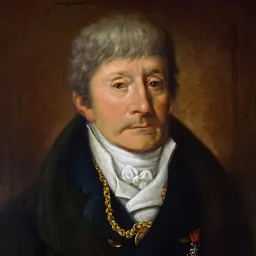
Les Fêtes Chinoises (Paris 1754) (mus. Jean-Philippe Rameau) La Fontaine de jouvence (Paris 1754) La Toilette de Vénus (Lyon 1757) (mus. François Granet) L'Impromptu du sentiment (Lyon 1758) La Mort d'Ajax (Lyon 1758) (mus. François Granet) Alceste (Stuttgart 1761Wien 1767) (mus. Christoph Willibald Gluck) La Mort d'Hercule (Stuttgart 1762) Psyché et l'Amour (Stuttgart 1762) (mus. Jean-Joseph Rodolphe) Hypermnestre (Stuttgart 1764) Diane et Endymion (Wien 1770) Don Chisciotte, alle nozze di Gamace (Wien 1772) (mus. Antonio Salieri) Le Judgement de Pâris (Wien 1771) Roger et Bradamante (Wien 1771) Agamemnon vengé (Wien 1772) Iphigénie en Tauride (Wien 1772) (mus. Christoph Willibald Gluck) Thésée (Wien 1772) Acis et Galathée (Wien 1773) Adèle de Ponthieu (Wien 1773London 1782) Alexandre et Campaspe de Larisse (Wien 1773) Les Horaces et les Curiaces (Wien 1774Paris 1777) Renaud et Armide (Milan 1775London 1782) Apelle et Campaspe (Paris 1776Lyon 1787) Les Caprices de Galatée (Paris 1776London 1789) Annette et Lubin (Paris 1778) Les petits riens (Paris 1778) (mus. Wolfgang Amadeus Mozart) Les Amours d'Énée et de Didon (Lyon 1781) La Fête du Sérail (Paris 1788) L'Amour et Psyché (London 1788) (mus. Jean-Joseph Rodolphe) La Fête de Tempé (London 1788) Admète (London 1789) La Bergère des Alpes (London 1794) La Vittoria (London 1794) Windsor Castle (London 1795)
Don’t just read it —
keep it.
Full-length biographies made to live with: read them, listen on the way to work, watch them tonight.
- E-book
- Audio
- Video
Instant download · yours to keep · every purchase keeps this site free
Important facts
People in Jean-Georges Noverre's life
Named in this biography and alive at the same time

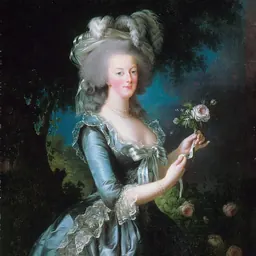
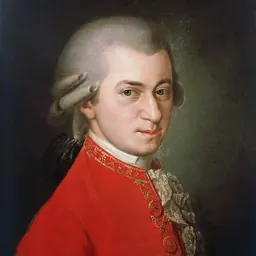

Related people
Same field, nearest in time
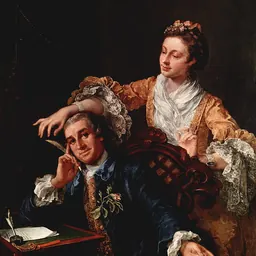




Contemporaries
People whose lives overlapped Jean-Georges Noverre's

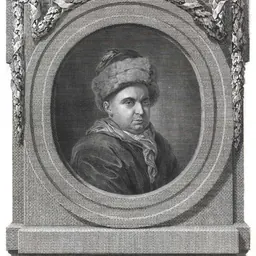


Frequently asked questions
Who was Jean-Georges Noverre?
French dancer (1727-1810)
When was Jean-Georges Noverre born?
Jean-Georges Noverre was born on 29 April 1727 in Paris.
When did Jean-Georges Noverre die?
Jean-Georges Noverre died on 19 October 1810 in rue de la Surintendance.
What was Jean-Georges Noverre's occupation?
Jean-Georges Noverre was a dancer, choreographer, ballet master, ballet dancer, stage actor and librettist.
What nationality was Jean-Georges Noverre?
Jean-Georges Noverre was French.
Sources & further reading
· Wikipedia: Jean-Georges Noverre
· DBpedia: Jean-Georges Noverre
Cite this page
APA: Biography.guide. (2026). Jean-Georges Noverre. https://biography.guide/jean-georges-noverre/
MLA: "Jean-Georges Noverre." Biography.guide, https://biography.guide/jean-georges-noverre/.
Chicago: "Jean-Georges Noverre." Biography.guide. https://biography.guide/jean-georges-noverre/.
Data last updated: 2026-09-27 · Spot an error? Report a correction.
Page generated 2026-09-27 05:16 UTC