
Pierre Étienne Louis Dumont
Genevan politician, theologian, diplomat and writer
About Pierre Étienne Louis Dumont
Lived 1759 – 1829 (aged 70). Pierre Étienne Louis Dumont was a French and Swiss politician, writer, translator and pastor.
Pierre Étienne Louis Dumont (18 January or 18 July 1759 – 29 September 1829), sometimes anglicised as Stephen Dumont, was a Swiss French political writer. He is chiefly remembered as the French editor of the writings of the English philosopher and social reformer Jeremy Bentham.
Early life Dumont was born in Geneva, the youngest in the family of six children of the jewellet Abraham David Dumont (died 1762) and his wife Louise-Esther Illens. His family had been citizens of good repute from the days of Calvin. He was educated for the ministry at the Collège de Genève, and in 1781 was chosen one of the pastors of the city. Then politics suddenly turned the course of his life. He belonged to the liberals or democrats, and the triumph of the aristocratic party, through the interference of the courts of France and Sardinia, made continued residence in Geneva impossible, though he was not among the number of the proscribed. He went to join his mother and sisters in St Petersburg. In this he was probably influenced in part by the example of his townsman Pierre Lefort, the first tutor, minister, and general of the Tsar. At St Petersburg he was for eighteen months pastor of the French church.
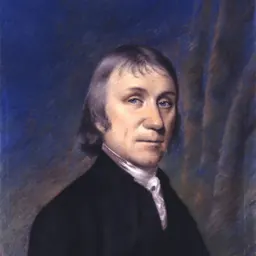
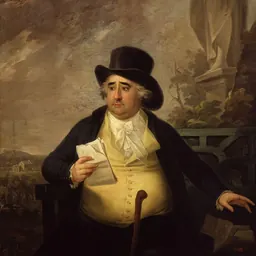
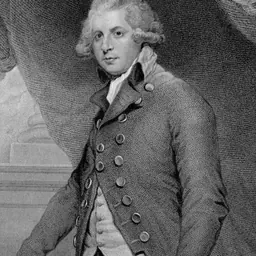
Move to England In 1785 he moved to London, the former prime minister Lord Shelburne, who had been created Marquess of Lansdowne the previous year, having invited him to undertake the education of his sons. In 1786, Dumont succeeded Joseph Priestley as Lansdowne's librarian. It was at Lansdowne's house, where he was treated virtually as member of the family, that he became acquainted with many illustrious men, including Charles James Fox, Richard Brinsley Sheridan, Lord Holland and Sir Samuel Romilly. With the last of these he formed a close and enduring friendship, which had an important influence on his life and pursuits. Letters in French written to Romilly by Dumont on the early stages of the French Revolution were translated by Romilly and James Scarlett, as originating from a fictitious German, "Henry Frederic Groenvelt", and published under the title Letters containing an Account of the late Revolution in France. Subsequently Romilly made attempts to suppress the book of these "Groenvelt Letters".
Final return to England Dumont returned from Paris to England in summer 1791, in the company of Tom Paine and Lord Daer. He had no time for Paine's politics: Achille François du Chastellet had approached him some months earlier with an placard by Paine against the French monarchy, and he had refused to have anything to do with it. When it was posted around Paris, the National Constituent Assembly denounced it.
Later life In 1802, with the Peace of Amiens, Dumont travelled over various parts of Europe with Lord Henry Petty. On his return to the United Kingdom he settled down to the editorship of Bentham's works. In 1814 the restoration of Geneva to independence induced him to return there, and he soon became leader of the supreme council. He devoted particular attention to the City's judicial and penal systems, and many improvements on both are due to him.
Dumont died at Milan while on an autumn tour on 29 September 1829. In places, Dumont was also prepared to oversimplify Bentham's ideas, and indeed to contradict them, for example where he considered that Bentham had been over-critical of the British constitution, or had expressed religious scepticism.
The following works of Bentham were published under Dumont's editorship: Traité de legislation civile et pénale (1802) Théorie des peines et des recompenses (1811) Tactique des assemblées legislatives (1815) Traité des preuves judiciaires (1823) De l'organization judiciaire et de la codification (1828)
Don’t just read it —
keep it.
Full-length biographies made to live with: read them, listen on the way to work, watch them tonight.
- E-book
- Audio
- Video
Instant download · yours to keep · every purchase keeps this site free
Important facts
People in Pierre Étienne Louis Dumont's life
Named in this biography and alive at the same time

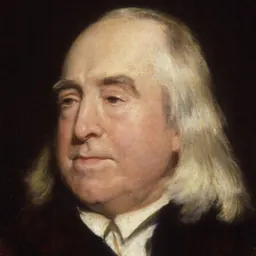

Related people
Same field, nearest in time

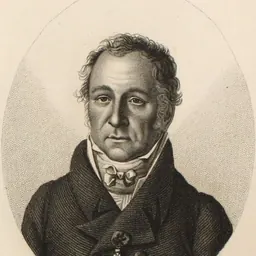


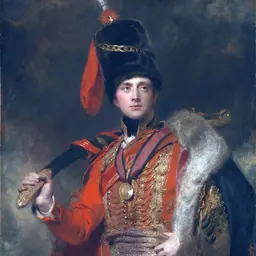
Contemporaries
People whose lives overlapped Pierre Étienne Louis Dumont's




Frequently asked questions
Who was Pierre Étienne Louis Dumont?
Genevan politician, theologian, diplomat and writer (1759-1829)
When was Pierre Étienne Louis Dumont born?
Pierre Étienne Louis Dumont was born on 18 July 1759 in Geneva.
When did Pierre Étienne Louis Dumont die?
Pierre Étienne Louis Dumont died on 29 September 1829 in Milan.
What was Pierre Étienne Louis Dumont's occupation?
Pierre Étienne Louis Dumont was a politician, writer, translator and pastor.
What nationality was Pierre Étienne Louis Dumont?
Pierre Étienne Louis Dumont was French and Swiss.
Sources & further reading
· Wikipedia: Pierre Étienne Louis Dumont
Cite this page
APA: Biography.guide. (2026). Pierre Étienne Louis Dumont. https://biography.guide/pierre-etienne-louis-dumont/
MLA: "Pierre Étienne Louis Dumont." Biography.guide, https://biography.guide/pierre-etienne-louis-dumont/.
Chicago: "Pierre Étienne Louis Dumont." Biography.guide. https://biography.guide/pierre-etienne-louis-dumont/.
Data last updated: 2026-09-20 · Spot an error? Report a correction.
Page generated 2026-09-27 05:22 UTC