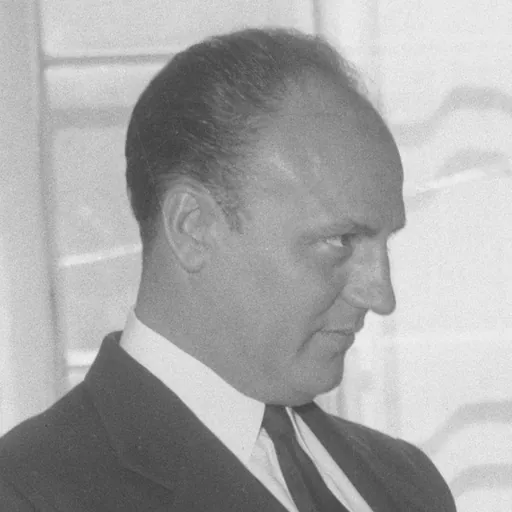
About Pierre Balmain
Lived 1914 – 1982 (aged 68). Pierre Balmain was a French grand couturier, costume designer and fashion designer, known for Balmain (fashion house).
Pierre Alexandre Claudius Balmain (; 18 May 1914 – 29 June 1982) was a French fashion designer and founder of leading post-war fashion house Balmain. He was one of the Big Four of 1950s haute couture, the others being Christian Dior, Jacques Fath and Jean Dessès.
Early life Balmain was born in Saint-Jean-de-Maurienne, an alpine community in southwest France. He was the only child of Maurice-Eugène, who owned a drapery business, and Françoise-Pierrette who, with her sisters, ran a fashion boutique called Galeries Parisiennes. His father died when he was seven and, at eleven, he won a scholarship to attend a boarding school at nearby Chambéry. On week-ends, an uncle would take him to Aix-les-Bains, a spa town half an hour away which, at the time, was the playground of the rich and famous. It was the Roaring Twenties, and members of high society from Europe, Britain and North America flocked to the town to enjoy the Grand Cercle Casino, the Aix-Les-Bains International tennis tournament, thermal spas and luxury hotels. Here, Balmain met many society women and was exposed to the dramatically changing fashions of the time. His inspirations were Madame Premet, Paul Poiret, Jean Patou, Coco Chanel and, especially, Jacques Doucet. In 1936, he was called for his mandatory military service, assigned first to the Air Force, then the Pioneers of the Foreign Legion and, at the outset of World War II, the Alpine defense force, Chasseurs Alpins with which he was mobilized in the Maurienne region. When France fell in 1940, he was demobilized and returned to Aix-les-Bains, where his mother now owned a boutique.
Career Edward Molyneux taught Balmain a crucial lesson of fashion design: "to strip away anything non-essential...any ornamental detail is valid only if it makes a constructive contribution to the dress." Having worked in fashion through one war, he was expert at managing tight supply chains. And he was a diplomat; when the Germans occupied Paris in 1940, it was Lelong who convinced them to keep the fashion houses open. Lelong did not design clothes; he hired designers and jump-started the careers of Christian Dior and Hubert de Givenchy, among others. These are the people Balmain was designing with and they were all learning from Lelong. It's telling that Balmain's most successful design while at Lelong was a simple black dress called "Petit Profit" ("Small Profit"), and that he carefully recorded that it was ordered by 360 clients. That collection was showcased in Vogue, and fashion writers wrote impressive reviews. Also promoting the collection was Balmain's closest friend, the American writer and art collector Gertrude Stein. They met in Aix-les-Bains in 1939, and Stein liked to tell people that, during the war, Balmain had made clothes for her. As an art collector, and host of famous artistic and literary salons, Stein brought with her a long list of wealthy clients. Thanks to Stein, Time printed a photo of one of his dresses, and he was being talked about—four clients to come from his first show were Josephine Baker, Helena Rubinstein, Wallis Simpson, Duchess of Windsor, and the wife of the King of Belgium, Lilian Baels. Balmain visited New York for the first time. Following Lelong's philosophy on promoting French culture, and at Stein's urging, he took the position that he was acting as an ambassador. For the rest of his life, he would travel to the US on business, but also to tour the country, giving lectures to clubs and girls’ colleges. He found the New York market "fascinating", opened his first New York store in 1949, and was soon creating lines specifically for American women, as well as adapting French fashion for them; in 1961, for example, his homespun Breton jacket became the "Manhattan Coat". Through the 1950s, Balmain's designs were seen world-wide as he established close relationships with women such as Ingrid Bergman, Vivien Leigh and Bronwen Astor, who became one of his muses—another was Gina Lollobrigida, who was partial to his beaded dresses. He designed the wedding gowns for Patrice Wymore when she married Errol Flynn, and for Audrey Hepburn when she married Mel Ferrer. In 1955, he employed 600 seamstresses in 12 ateliers.
In 1958, it was decided that Thailand's King Bhumibol Adulyadej and his wife, Queen Sirikit, would embark on a six-month tour of the United States and 15 European nations, with the goal of strengthening international relations and introducing Thai culture. At the time, Thailand had no "national costume", so Sirikit created "Chut Thai Phra Ratcha Niyom" (Royal Favored Thai Dress), a set of eight luxurious gowns which represented Thai women and cultural history. Balmain was chosen to create the gowns, and her entire wardrobe for the trip. Using Thai silks, he made tailored suits, cocktail dresses, and evening gowns, in addition to the Chut Thai. When the tour took place in 1960, the international media was captivated, with The New York Times writing that "Thailand has found a new language, elegance." It is estimated that over 1,000 photographs of the tour were printed in the western media.
By 1960, the age of the working woman was pushing out the age of glamour, and couture was no longer practical. Balmain focused on keeping his brand afloat. The sale of the fragrance division provided a much-needed cash infusion, and financing for the sportswear and ready-to-wear lines. In the '60s and '70s, he undertook several high-profile commercial projects; in 1968, he created the delegates' uniforms for the 1968 Winter Olympics in Grenoble. He also designed the new uniforms for the "Singapore Girls", the flight attendants of Singapore Airlines. In the '70s, he would design the uniform for Air France's first female pilot, Danielle Décuré, and the uniform for women in the French civil service. In 1971, he opened a menswear store in New York. In 1977, Balmain sold House of Balmain to Léo Gros, head of the knitwear company Montagut. Balmain stayed on as creative director until his death.
Personal life and death Balmain had three homes. In Paris, he lived in the Walter Buildings, at 6 Boulevard Suchet in the La Muette district. He also owned two country houses; a chateau in Croissy-sur-Seine and the modernist Villa Balmain in the village of Poggio on the Isle of Elba, which he designed in 1960 with architect Leonardo Ricci.
In 1947, Balmain hired an assistant, the young Danish designer Erik Mortensen (1926-1998). They became lovers and collaborators and would remain so for the rest of Balmain's life. Balmain died of liver cancer at the American Hospital of Paris in Neuilly-sur-Seine, age 68. His ashes were scattered by Mortensen, in the Maurienne valley, at the foot of the Saint-Sorlin-d'Arves glacier.
Costume design In 1947, Balmain began designing costumes for stage and screen, always for the films' leading ladies; in total, he dressed actresses for 88 films. In some cases, as with Nadia Gray and Lilli Palmer, it was at the request of the actress. He usually provided dresses and/or gowns; in some cases, he designed full wardrobes, as in The Deep Blue Sea for Vivien Leigh...And God Created Woman for Brigitte Bardot, and Station Six-Sahara for Carroll Baker. For the stage, Balmain was nominated for the Tony Award for Best Costume Design and won the Drama Desk Award for Outstanding Costume Design, both for Happy New Year (1980). Additional credits include costumes for Katharine Hepburn in the stage production of The Millionairess (1952) and Josephine Baker's 1964 revue. He also provided personal and performance wardrobes for the singers and style icons Dalida and Hildegard Knef.
Film
Madame et ses peaux-rouges (The Lady and Her Redskins), for Arletty 1948 Monseigneur, for Nadia Gray 1949 Amour et compagnie (Love and Companionship), for Gaby Sylvia 1950 Le Château de verre (The Glass Castle), for Michèle Morgan 1950 Night Without Stars, for Nadia Gray 1951 Identité judiciaire (Paris Vice Squad), for Odette Barencey 1951 Les miracles n'ont lieu qu'une fois (Miracles Only Happen Once), for Alida Valli 1951 L'étrange Madame X (The Strange Madame X), for Michèle Morgan 1951 Ombre et lumière (Shadow and Light), for Simone Signoret 1951 Dupont Barbès (Sins of Madeleine), for Madeleine Lebeau 1951 Le cap de l'espérance, for Edwige Feuillère 1951 Ma femme est formidable (My Wife Is Formidable), for Sophie Desmarets 1951 No Highway in the Sky, for Marlene Dietrich 1951 La Vérité sur Bébé Donge (The Truth About Bebe Donge), for Danielle Darrieux 1952 Les Sept Péchés capitaux (The Seven Deadly Sins), for Michèle Morgan 1952 Adorables créatures (Adorable Creatures), for Edwige Feuillère 1952 Le Fruit défendu (Forbidden Fruit), for Françoise Arnoul 1952 Le témoin de minuit (Midnight Witness), for Catherine Erard 1953 Alerte au sud (Alarm in Morocco), for Gianna Maria Canale 1953 Le Grand jeu, for Gina Lollobrigida 1953 L'amour d'une femme (The Love of a Woman), for Micheline Presle 1953 Destinées (Daughters of Destiny), for Claudette Colbert 1954 Quai des blondes (Quay of Blondes), for Barbara Laage & Madeleine Lebeau 1954 Le grand pavois (The Big Flag), for Marie Mansart 1954 Knave of Hearts, for Valerie Hobson & Joan Greenwood 1954 Bonnes à tuer (One Step to Eternity), for Danielle Darrieux 1954 Les fruits de l'été (Fruits of Summer), for Etchika Choureau 1955 The Deep Blue Sea, for Vivien Leigh 1955 Les Carnets du Major Thompson (The French, They Are a Funny Race), for Martine Carol 1955 Betrayed, for Lana Turner 1955 Teufel in Seide (Devil in Silk), for Lilli Palmer 1956 Et Dieu... créa la femme (...And God Created Woman), for Brigitte Bardot 1956 Rencontre à Paris (Meeting in Paris), for Betsy Blair 1956 Foreign Intrigue, for Geneviève Page 1956 La mariée est trop belle (The Bride Is Much Too Beautiful), for Micheline Presle & Brigitte Bardot 1956 Bonsoir Paris (Good Evening Paris), for Dany Robin 1956 Der Gläserne Turm (The Glass Tower) for Lilli Palmer 1956 Le Septième Commandement (The Seventh Commandment), for Edwige Feuillère 1957 The Happy Road, for Barbara Laage 1957 Tempestuous Love (Wie ein Sturmwind), for Lilli Palmer 1957 Sénéchal le magnifique (Sénéchal the Magnificent), for Nadia Gray 1957 Fire Down Below, for Rita Hayworth 1957 Sait-on jamais… (No Sun in Venice), for Françoise Arnoul 1957 The Parisian, for Brigitte Bardot 1957 La Seine a rencontré Paris (The Seine Meets Paris), for Models 1957 The Reluctant Debutante, for Kay Kendall 1958 Paris Holiday, for Anita Ekberg 1958 En cas de malheur (In Case of Adversity), for Edwige Feuillère & Brigitte Bardot 1958 Cette nuit là… (That Night), for Mylène Demongeot 1958 Toi, le venin (Blonde in a White Car), for Marina Vlady 1959 Expresso Bongo, for Yolande Donlan 1959 Le Vent se Lève (Time Bomb), for Mylène Demongeot 1959 Du rififi chez les femmes (The Riff Raff Girls), for Nadja Tiller 1959 The Millionairess, for Sophia Loren 1960 Le baron de l'écluse (The Baron of the Locks), for Micheline Presle 1960 Mr. Topaze, for Nadia Gray 1961 Frau Cheyney's Ende (The Last of Mrs. Cheyney), for Lilli Palmer 1961 The Happy Thieves, for Rita Hayworth 1961 The Roman Spring of Mrs. Stone, for Vivien Leigh 1961 Tender Is the Night, for Jennifer Jones & Joan Fontaine 1962 Adorable Julia, for Lilli Palmer 1962 Le rendez-vous de minuit, for Lilli Palmer 1962 La denonciation (aka The Immoral Moment), for Nicole Berger 1962 Two Weeks in Another Town, for Cyd Charisse 1962 The Chocolate Tree, for Carroll Baker 1963 Station Six-Sahara, for Carroll Baker 1963 Summer Holiday, for Paris Scenes 1963 The Paradise Suite, for Carroll Baker 1963 Come Fly with Me, for Dawn Addams 1963 In the Cool of the Day, for Constance Cummings & Jane Fonda 1963 Laissez tirer les tireurs, for Daphné Dayle 1964 Joy House, for Jane Fonda 1964 Här börjar äventyret, for Harriet Andersson 1965 Mona, l'étoile sans nom (The Nameless Star), for Marina Vlady 1966 Um 8 fängt unser Leben an, for Hildegard Knef 1966 Drop Dead Darling (aka Arrivederci, Baby!), for Rosanna Schiaffino 1966 Topaz, for Dany Robin & Karin Dor 1969 Hard Contract, for Lee Remick 1969 La Maison de campagne, for Danielle Darrieux 1969 Love Is a Funny Thing, for Annie Girardot 1969 Du blé en liasses, for Arlene Dahl 1969 Unter den Dächern von St. Pauli (Under the Roofs of St. Pauli), for Jean-Claude Pascal 1970 Children of Mata Hari, for Lilli Palmer 1970 Tam Lin, for Ava Gardner 1970 Sapho ou La fureur d'aimer, for Marina Vlady 1971 L'homme qui vient de la nuit, for Noëlle Adam 1971 Absences répétées (Repeated Absences), for Danièle Delorme 1972 Au théâtre ce soir - "Mademoiselle", for Dominique Blanc 1982
Stage
Le Petit Café, for Marie Dubas 1949 Le Voyage, for Yvonne Printemps 1950 Fric-Frac, for Jacqueline Porel 1950 Henry IV, for Margaretta Scott 1950 Judy Garland at the Palace "Two-A-Day", 1951 Mort d'un rat, for Mary Marquet 1951 Madame Sans-Gêne, for Béatrice Bretty 1951 The Millionairess, for Katharine Hepburn 1952 Les Compagnons de la marjolaine, for Melina Mercouri 1952 La Chanson du mal-aimé, for Léo Ferré 1954 Ce diable d'ange, for Viviane Romance & Geneviève Kervine 1955 Le Séducteur, for Emmanuelle Riva 1956 The Pleasure of His Company, for Cast 1958 Rape of the Belt, for Constance Cummings & Joyce Redman 1960 C'est ça qui m'flanqu'le cafard (Le Placard), for Cast 1963 Josephine Baker and Her Company, 1964 La Facture, for Jacqueline Maillan 1968 Le monde est ce qu'il est, for Cast 1969 Les Bonshommes, for Yvonne Clech 1970 Happy New Year, for Cast 1980 Mademoiselle, for Jacqueline Jehanneuf 1981
Television appearances and documentaries Balmain was a regular fixture in the media in Europe and in the US, where he appeared on the The Garry Moore Show and The David Frost Show. He was profiled in several television productions and was a main character in the 1970 documentary Gertrude Stein: When This You See, Remember Me. In 2024, he was portrayed by Thomas Poitevin in the streaming series The New Look.
World in Action: "The Fashion Houses", 1963 Kleiden, Kleider, Leute? (Do Clothes Make the Man?), 1964 Chroniques de France, 1964 Late Night Line-Up, 1964 Présence du passé: "Les cent jours: L'île d'Elbe", 1965 Paris aktuell, 1966 World in Action: "The Professional Dreamers", 1966 La haute couture: "Aujourd'hui Madame", 1970 Late Night Line-Up: "Two Faces of Fashion", 1970 Chroniques de France: "Le mode longue 70-71", 1970 Gertrude Stein: When This You See, Remember Me, 1970 Samedi soir, 1971 Samedi soir, 1973 Knef '73, 1973 Passez donc me voir, 1979 Thé dansant, 1980
Don’t just read it —
keep it.
Full-length biographies made to live with: read them, listen on the way to work, watch them tonight.
- E-book
- Audio
- Video
Instant download · yours to keep · every purchase keeps this site free
Important facts
People in Pierre Balmain's life
Named in this biography and alive at the same time




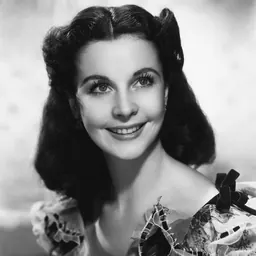
Related people
Same field, nearest in time
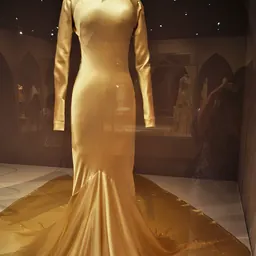

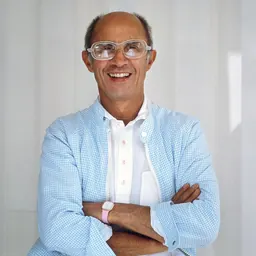
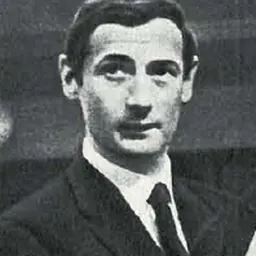

Contemporaries
People whose lives overlapped Pierre Balmain's



Frequently asked questions
Who was Pierre Balmain?
French fashion designer (1914–1982)
When was Pierre Balmain born?
Pierre Balmain was born on 18 May 1914 in Saint-Jean-de-Maurienne.
When did Pierre Balmain die?
Pierre Balmain died on 29 June 1982 in Neuilly-sur-Seine.
What was Pierre Balmain's occupation?
Pierre Balmain was a grand couturier, costume designer and fashion designer.
What was Pierre Balmain known for?
Pierre Balmain was known for Balmain (fashion house).
What nationality was Pierre Balmain?
Pierre Balmain was French.
Sources & further reading
Cite this page
APA: Biography.guide. (2026). Pierre Balmain. https://biography.guide/pierre-balmain/
MLA: "Pierre Balmain." Biography.guide, https://biography.guide/pierre-balmain/.
Chicago: "Pierre Balmain." Biography.guide. https://biography.guide/pierre-balmain/.
Data last updated: 2026-09-22 · Spot an error? Report a correction.
Portrait: Wikimedia Commons · author & licence
Page generated 2026-09-27 05:01 UTC