
About Phyllis Bottome
Lived 1884 – 1963 (aged 79). Phyllis Bottome was a British novelist, writer and biographer.
Phyllis Forbes Dennis ( ; 31 May 1882 – 22 August 1963 The Oxford Dictionary of National Biography said of her, "In her long career Bottome wrote on a wide range of subjects in several genres, producing popular, feminist novels and, in her non-fiction, raising the public's awareness of political dangers; her recurring theme was personal freedom."
Life and career Bottome was born in 1882, in Rochester, Kent, the daughter of an American clergyman, Rev. William MacDonald Bottome, and an Englishwoman, Mary (Leatham) Bottome.
In 1901, following the death of her sister Wilmett from tuberculosis, Bottome was diagnosed with the same disease. She travelled to St Moritz in the hope that this would improve her health as mountain air was perceived as better for patients with tuberculosis.
In 1917, in Paris, she married Alban Ernan Forbes Dennis, a British diplomat working, first, in Marseilles and then in Vienna as Passport Control Officer, a cover for his real role as MI6 Head of Station with responsibility for Austria, Hungary and Yugoslavia. They had met in 1904 at a villa in St Moritz, where Bottome was lodging.
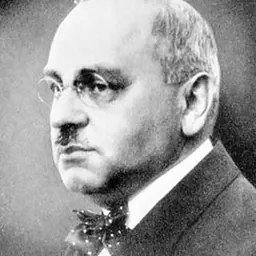
Bottome studied individual psychology under Alfred Adler, and was his patient, while in Vienna. Later, in 1939, she wrote a biography of him (Alfred Adler: Apostle of Freedom) at his behest: in her preface she writes, "I fully realize my lack of qualifications in undertaking the great task of writing Adler's life; but it was a task laid upon me by Adler himself."
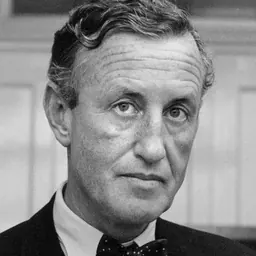
In 1924 she and her husband started a school in Kitzbühel in Austria. Based on the teaching of languages, the school was intended to be a community and an educational laboratory to determine how psychology and educational theory could cure the ills of nations. One of their more famous pupils was Ian Fleming, author of the James Bond novels. In 1960, Fleming wrote to Bottome, "My life with you both is one of my most cherished memories, and heaven knows where I should be today without Ernan." It has been argued that Fleming took the idea of James Bond from the character Mark Chalmers in Bottome's spy novel The Lifeline. Other pupils at Kitzbühel who went on to become authors included Ralph Arnold, Cyril Connolly (who wrote about his time there in The Unquiet Grave), and Nigel Dennis.
In 1935, her novel Private Worlds was made into a film of the same title. Set in a psychiatric clinic, Bottome's knowledge of individual psychology proved useful in creating a realistic scene. Bottome saw her share of trouble with Danger Signal, which the Hays Office forbade from becoming a Hollywood film.
Germany became Bottome's home in the late 1930s, and it inspired her novel The Mortal Storm, the film of which was the first to mention Hitler's name and be set in Nazi Germany, and openly criticized the Nazi regime. Film historian Pam Hirsch wrote, "Bottome's novel had unflinchingly shown the effects of the rise of Nazism, and also, to some extent, helped to explain why Jews had not immediately left Germany in the face of rising Nazi persecution." Bottome was an active anti-fascist. A New York Times report Bottome's visit to the city in October 1938 said, "The present government of Great Britain, according to Miss Bottome, is definitely pro-Nazi. She charged that Mr. Chamberlain had brought back from Germany dishonor without peace and that war would occur as soon as Germany asked for something Great Britain 'really wants.'"
In total, four of her works—Private Worlds, The Mortal Storm, Danger Signal, and The Heart of a Child—were adapted to film.
Bottome died in London on 22 August 1963. Forbes Dennis would die in July 1972 in Brighton.
There is a large collection of her literary papers and correspondence in the British Library acquired in 2000 (Add MSS 78832-78903). A second tranche, consisting of correspondence and literary manuscripts, was acquired by the British Library in 2005. The British Library also holds the Phyllis Bottome/Hodder-Salmon Papers consisting of correspondence, papers and press cuttings relating to Bottome.
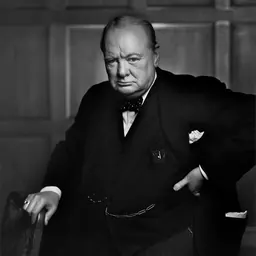
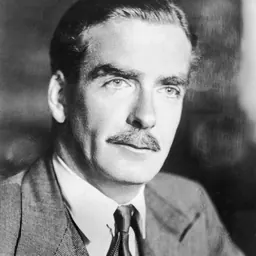
Books She wrote her first novel when she was just seventeen. Life, the Interpreter, 1902 The Master Hope, 1904 The Dark Tower, 1916 The Second Fiddle, 1917 The Derelict, 1917 (U.S.), 1923 (U.K.) Helen of Troy and Rose, 1918, The Century Company A Servant of Reality, 1919 Kingfisher, 1922 The Victim, and The Worm, 1923 The Perfect Wife, 1924 Life of Olive Schreiner, 1924 Old Wine, 1925 The Belated Reckoning, 1926 The Messenger of the Gods — The Story of a Girl of Today, 1927, George H. Doran Company The Rat, 1927, George H. Doran Company. Novelization of the 1924 play by Ivor Novello and Constance Collier Strange Fruit: Stories, 1928 Windlestraws, 1929 The Advances of Harriet, 1933 Private Worlds, 1934 Level Crossing, 1936 The Mortal Storm, Oct 1937 Alfred Adler: Apostle of Freedom (1939) Danger Signal, 1939 (original title: Murder in the Bud) Masks and Faces, 1940 Formidable to Tyrants, 1941 London Pride, 1941. A boy's experience of the Blitz and the Second World War. His family are separated by evacuation and a bombing raid destroys their home. After another raid he is injured and evacuated away from London. Mansion House of Liberty, 1941 Heart of a Child, 1942 Within the Cup, 1943 Survival, 1943 From the Life, 1944, London, Faber & Faber. Six studies of the author's friends Alfred Adler, Max Beerbohm, Ivor Novello, Sara Delano Roosevelt, Ezra Pound, Margaret MacDonald Bottome. The Lifeline, 1946 Innocence and Experience, 1947 Search for a Soul, 1947 Fortune's Finger, 1950 Under the Skin – Love Drew no Color Line when a White Woman entered a Negro's World, 1950 The Challenge, 1953 The Secret Stair, 1954 Against Whom? 1954. By chance a patient is brought to a sanatorium on the verge of death. How he not only recovers but manages to influence the lives of the scientists who have observed him is the subject of this novel. In the course of the book the principal characters find either that they must think of others and put that thought into practise or that those same 'others' will become their enemy and destroy, one by one, his most intimate relationships. Eldorado Jane, 1956 Walls of Glass, 1958 The Goal, 1962. Her autobiography. Our New Order or Hitler's? A Selection of Speeches by Winston Churchill, Archbishop of Canterbury, Anthony Eden & Others, ed. by Ph. Bottome, Penguin Books Middlesex, 1943
Don’t just read it —
keep it.
Full-length biographies made to live with: read them, listen on the way to work, watch them tonight.
- E-book
- Audio
- Video
Instant download · yours to keep · every purchase keeps this site free
Important facts
People in Phyllis Bottome's life
Named in this biography and alive at the same time



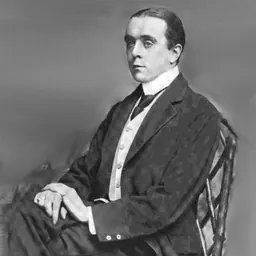
Related people
Same field, nearest in time

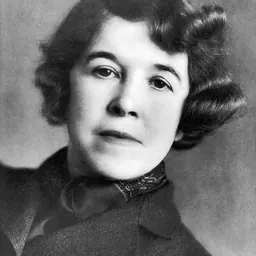
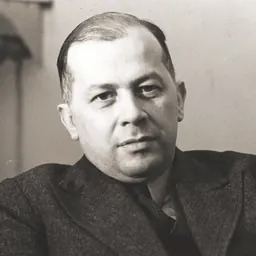

Contemporaries
People whose lives overlapped Phyllis Bottome's

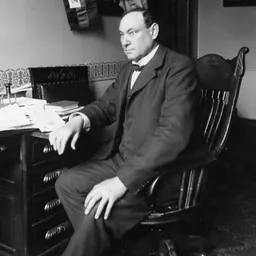


Frequently asked questions
Who was Phyllis Bottome?
British writer (1884–1963)
When was Phyllis Bottome born?
Phyllis Bottome was born on 31 May 1884 in Rochester.
When did Phyllis Bottome die?
Phyllis Bottome died on 22 August 1963 in London.
What was Phyllis Bottome's occupation?
Phyllis Bottome was a novelist, writer and biographer.
What nationality was Phyllis Bottome?
Phyllis Bottome was British.
Sources & further reading
Cite this page
APA: Biography.guide. (2026). Phyllis Bottome. https://biography.guide/phyllis-bottome/
MLA: "Phyllis Bottome." Biography.guide, https://biography.guide/phyllis-bottome/.
Chicago: "Phyllis Bottome." Biography.guide. https://biography.guide/phyllis-bottome/.
Data last updated: 2026-09-20 · Spot an error? Report a correction.
Page generated 2026-09-27 05:03 UTC