
About Philip Sansom
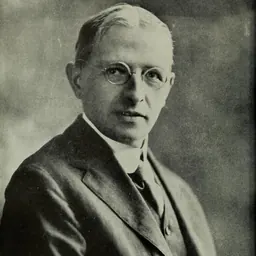
Lived 1916 – 1999 (aged 83). Philip Sansom was a British painter, conscientious objector, writer and editor.
Philip Richard Sansom (19 September 1916 – 24 October 1999) was an English conscientious objector, anarchist activist, surrealist, syndicalist, author, orator, cartoonist, editor and printer.
Early life and education Sansom was the son of John Sansom, lathe operator, and Lillian Sansom (née Underwood), occupation unknown, who lived in Hackney, London. He later lived in Wandsworth, London. After having been influenced by Education through art by Herbert Read, the art historian , he trained as a commercial artist in West Ham Technical College. Sansom (1987) recalled that at the time, in 1936, Read In the 1930s, Sansom worked as a commercial artist.
By the beginning of October 1944, Sansom and peace activist Laurie Hislam set off on a tour to promote Oldway's collection of drawings, The March to Death , which by the end of the war sold 10,000 copies. And, like Olday, he contributed articles and cartoons to War Commentary. However, Sansom also joined Berneri, her husband Vernon Richards, and John Hewetson to became one of its editors. After he did so, he served two prison sentences in the following year. Initially, he served a two-month sentence in Brixton Prison, having been charged with ‘being in possession of an army waterproof coat and for failing to notify a change of address’. Then, very shortly afterwards he, with the other editors of War Commentary, were arrested and tried at the Old Bailey, the Central Criminal Court, for the offence of "the dissemination of three seditious issues of War Commentary under Defence Regulation 39a", for which they were found guilty. Sansom was sentenced to nine months imprisonment, which he served in Wormwood Scrubs.
Post Second World War Sansom's problems with the state did not finish with his release from prison. On the day before his release he was served with a notice requiring him to attend at 9 o'clock the following morning, within an hour of his release, for a medical examination for the army. On 18 January 1946 the Freedom Press Defence Committee circulated a letter which was signed by George Orwell and twenty-five public figures requesting that the ministers responsible correct the injustice of his call-up for military service. The letter was published on 18 January 1946 in the Manchester Guardian, Peace News and Tribune, on 21 January by the Daily Herald, on 26 January by Freedom and in the February/March issue of the bulletin of the Freedom Press Defence Committee.
On 22 February 1946, Tribune published the following letter by Sansom:
In 1946, with the help of Berneri, Sansom produced the surrealist review Free Unions/Unions Libres, the brainchild of Simon Watson Taylor, at Express Printers in Whitechapel.
In 1951, Sansom produced the pamphlet Syndicalism: The workers’ next step. He recalled that, within a "few weeks" of March 1952, The Anarchist-Syndicalist Committee, which comprised himself, Albert Meltzer, Rita Milton and Albert Grace, launched The Syndicalist. Sansom described it as "a small but brightly coloured little paper" and stated that it included contributions from various industries, including the docks, mining and engineering. The Syndicalist was short-lived; it only lasted a year. And it was not a Freedom Press publication. Nevertheless, it was published with its blessing.
By 1953, the London Anarchist Group concluded that it needed a club. Sansom took a leading role in advancing the idea. And in the following February, Freedom announced that "it has been decided to call the club the Malatesta Club", after Errico Malatesta, the Italian anarchist. A cellar was located in Holborn, London. Chairs and tables were purchased, a cooker was installed, a sink was plumbed in and the cellar was painted. The club opened on 1 May 1954.
Sansom was a charismatic orator at Speakers' Corner in Hyde Park, London, and elsewhere in the 1950s and 1960s.
In 1978, Sansom enabled Freedom Press to publish the pamphlet Surrealism The hinge of history by Conroy Maddox, Pauline Drayson and John Welson. And he helped to run the London Gallery of the Belgian surrealist E.L.T. Mesens.
Don’t just read it —
keep it.
Full-length biographies made to live with: read them, listen on the way to work, watch them tonight.
- E-book
- Audio
- Video
Instant download · yours to keep · every purchase keeps this site free
Important facts
People in Philip Sansom's life
Named in this biography and alive at the same time






Related people
Same field, nearest in time
Contemporaries
People whose lives overlapped Philip Sansom's



Frequently asked questions
Who was Philip Sansom?
British anarchist (1916–1999)
When was Philip Sansom born?
Philip Sansom was born on 19 September 1916.
When did Philip Sansom die?
Philip Sansom died on 24 October 1999 in London.
What was Philip Sansom's occupation?
Philip Sansom was a painter, conscientious objector, writer and editor.
What nationality was Philip Sansom?
Philip Sansom was British.
Sources & further reading
Cite this page
APA: Biography.guide. (2026). Philip Sansom. https://biography.guide/philip-sansom/
MLA: "Philip Sansom." Biography.guide, https://biography.guide/philip-sansom/.
Chicago: "Philip Sansom." Biography.guide. https://biography.guide/philip-sansom/.
Data last updated: 2026-09-22 · Spot an error? Report a correction.
Page generated 2026-09-27 05:21 UTC