
About Philip Habib
Lived 1920 – 1992 (aged 72). Philip Habib was an American diplomat.
Foreign service career
Beginning in 1949, his foreign service career took him to Canada, New Zealand, South Korea (twice), and South Vietnam. He held the position of Deputy Assistant Secretary of State for East Asian and Pacific Affairs from 1967–1969 and was chief of staff for the U.S. delegation to the Paris Peace Talks from 1968 to 1971. In 1969, he was given the Rockefeller Public Service Award and the National Civil Service League's Career Service Award in 1970. Habib acquired increasingly important posts, serving as Ambassador to South Korea (1971–1974), Assistant Secretary of State for East Asian and Pacific Affairs (1974–1976), and Under Secretary of State for Political Affairs (1976–1978). He was also the one time president of the American Foreign Service Association. a sentiment shared by William H. Gleysteen. The CIA station chief in Korea at the time, Donald P. Gregg, remembered that Habib forcefully emphasized to the Park Chung-hee regime that keeping Kim in captivity would damage U.S.Korean relations. Habib called the kidnapping "stupid governmental thuggery." Kim later became the first opposition leader in South Korea to become president and also won the Nobel Peace Prize in 2000 for his reconciliation efforts with North Korea. Even after returning to Washington, Habib was a powerful advocate for human rights in South Korea. In 1974, Habib was chastised by Secretary of State Henry Kissinger for his continued calls for the end of political repression. He was presented the Distinguished Honor Award by Secretary Henry Kissinger for his "important role in the development of American foreign policy and furthering the county's interests overseas." That same year, a massive heart attack forced Habib to resign as Under Secretary, the top post possible for a career Foreign Service Officer. Habib oversaw the negotiations of a peace deal that allowed the PLO to evacuate from the besieged city of Beirut. In 1982, for his efforts he was awarded the Presidential Medal of Freedom—the highest official honor given to a U.S. citizen by the U.S. government.
Early in 1986, Reagan sent Habib to the Philippines to convince President Ferdinand Marcos to a power sharing compromise between him and Cory Aquino. In March 1986, Reagan appointed him as a special envoy to Central America with the intention of furthering U.S. interests in the conflict in Nicaragua. Administration hard-liners intended to use his fame and stature to advance a military solution, namely further funding of the Contras.
Deciding that the Contadora Plan had run its course, Óscar Arias, the newly elected president of Costa Rica, drew up a plan that focused on democratization. While he viewed the Arias plan as riddled with loopholes, Habib worked to help revise it, and promoted it to other Central American governments.
On August 7, 1987, the five Central American presidents, much to the shock of the rest of the world, agreed in principle to the Arias plan. Because further negotiating would require Habib to meet directly with Nicaragua's president, Daniel Ortega, President Reagan forbade him to travel. Believing he no longer had the confidence of the president, Habib resigned.
Death and legacy
While on vacation in France in 1992, Habib suffered a cardiac arrhythmia in Puligny-Montrachet and died on May 25 at age 72.
Former Secretary of State George Shultz spoke at his funeral in Belmont, California, and characterized Habib as "...a man who really made a difference." Speakers at his memorial service in Washington at the National Cathedral the following week included two former Secretaries of State, Henry Kissinger and Cyrus Vance, and a future one, former colleague Lawrence Eagleburger.
In 2006, Habib was featured on a United States postage stamp, one of a block of six featuring prominent diplomats. In 2013, the city of Junieh, Lebanon, unveiled a bust of Habib among other "national heroes" in Friendship Square.
Habib is the subject of the 1982 Warren Zevon song "The Envoy".
Don’t just read it —
keep it.
Full-length biographies made to live with: read them, listen on the way to work, watch them tonight.
- E-book
- Audio
- Video
Instant download · yours to keep · every purchase keeps this site free
Important facts
People in Philip Habib's life
Named in this biography and alive at the same time


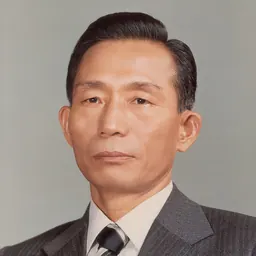

Related people
Same field, nearest in time

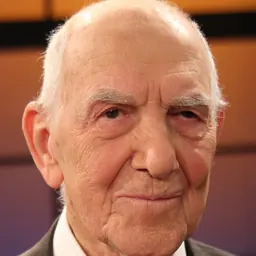
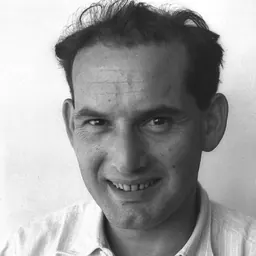
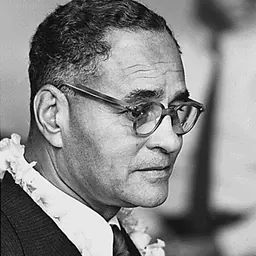
Contemporaries
People whose lives overlapped Philip Habib's




Frequently asked questions
Who was Philip Habib?
American diplomat (1920-1992)
When was Philip Habib born?
Philip Habib was born on 25 February 1920 in Brooklyn.
When did Philip Habib die?
Philip Habib died on 25 May 1992 in Puligny-Montrachet.
What was Philip Habib's occupation?
Philip Habib was a diplomat.
What nationality was Philip Habib?
Philip Habib was American.
Sources & further reading
Cite this page
APA: Biography.guide. (2026). Philip Habib. https://biography.guide/philip-habib/
MLA: "Philip Habib." Biography.guide, https://biography.guide/philip-habib/.
Chicago: "Philip Habib." Biography.guide. https://biography.guide/philip-habib/.
Data last updated: 2026-09-24 · Spot an error? Report a correction.
Page generated 2026-09-27 05:02 UTC