
About George Shultz
Lived 1920 – 2021 (aged 100). George Shultz was an American economist, military personnel, diplomat, university teacher, politician and entrepreneur.
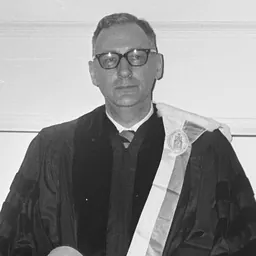
George Pratt Shultz ( ; December 13, 1920 – February 6, 2021) was an American economist, businessman, diplomat, and statesman who served in various positions under presidents Richard Nixon and Ronald Reagan. A member of the Republican Party, he is one of only two persons to have held four different Cabinet-level posts, the other being Elliot Richardson. As the 60th United States Secretary of State, Shultz played a major role in shaping the foreign policy of the Reagan administration, and conservative foreign policy thought thereafter.
Born in New York City, Shultz grew up in Englewood, New Jersey. After graduating from Princeton University, he served in the United States Marine Corps during World War II. After the war, Shultz earned a Doctor of Philosophy in industrial economics from the Massachusetts Institute of Technology (MIT). He taught at MIT from 1948 to 1957, taking a leave of absence in 1955 to take a position on President Dwight D. Eisenhower's Council of Economic Advisers. After serving as dean of the University of Chicago Graduate School of Business, he accepted President Nixon's appointment as United States Secretary of Labor.
As secretary of Labor, Shultz imposed the Philadelphia Plan on construction contractors who refused to accept black members, marking the first use of racial quotas by the federal government. In 1970, he became the first director of the Office of Management and Budget, and he served in that position until his appointment as United States Secretary of the Treasury in 1972. In that role, Shultz supported the Nixon shock, which sought to revive the ailing economy in part by abolishing the gold standard, and presided over the end of the Bretton Woods system. Shultz left Nixon's administration in May 1974 to become an executive at Bechtel. After becoming president and director of that company, he accepted President Reagan's offer to serve as secretary of state, holding that office from 1982 to 1989. Shultz pushed for Reagan to establish relations with Soviet leader Mikhail Gorbachev, which led to a thaw between the United States and the Soviet Union. He opposed the U.S. aid to Contras trying to overthrow the Sandinistas by using funds from an illegal sale of weapons to Iran. This aid led to the Iran–Contra affair.
Shultz retired from public office in 1989, upon the end of his tenure as secretary of State, but remained active in business and politics. He had already been an executive of the Bechtel Group, an engineering and services company, from 1974 to 1982. Shultz served as an informal adviser to George W. Bush and helped formulate the Bush Doctrine of preemptive war. He served on the Global Commission on Drug Policy, California governor Arnold Schwarzenegger's Economic Recovery Council, and on the boards of Bechtel and the Charles Schwab Corporation. Beginning in 2013, Shultz advocated for a revenue-neutral carbon fee and dividend as the most economically sound means of mitigating anthropogenic climate change. He was a member of the Hoover Institution, the Institute for International Economics, the Washington Institute for Near East Policy, and other groups. Shultz was also a board member of Theranos, with his grandson Tyler Shultz working at the company before becoming a whistleblower about its fraudulent technology. Shultz died at the age of 100 in February 2021.
Early life, education, and career George Pratt Shultz was born December 13, 1920, in New York City, the only child of Margaret Lennox ( Pratt) and Birl Earl Shultz. He grew up in Englewood, New Jersey. His great-grandfather was an immigrant from Germany who arrived in the United States in the middle of the 19th century. Contrary to common assumption, Shultz was not a member of the Pratt family associated with John D. Rockefeller and the Standard Oil Trust.
After attending the local public school, he transferred to the Englewood School for Boys (now Dwight-Englewood School), through his second year of high school. In 1938, Shultz graduated from the private preparatory boarding high school Loomis Chaffee School in Windsor, Connecticut. He graduated with honors in 1942. Later, he was attached to the U.S. Army's 81st Infantry Division during the Battle of Angaur (Battle of Peleliu).
In 1949, Shultz earned a PhD in industrial economics from the Massachusetts Institute of Technology. From 1948 to 1957, he taught in the MIT Department of Economics and the MIT Sloan School of Management, with a leave of absence in 1955 to serve on President Dwight D. Eisenhower's Council of Economic Advisers as a Senior Staff Economist. In 1957, Shultz left MIT and joined the University of Chicago Graduate School of Business as a professor of industrial relations, and he served as the Graduate School of Business Dean from 1962 to 1968. During his time in Chicago, he was influenced by Nobel Laureates Milton Friedman and George Stigler, who reinforced Shultz's view of the importance of a free-market economy. He left the University of Chicago to serve under President Richard Nixon in 1969.
Nixon administration (1969–1974) Secretary of Labor (1969–1970)
Shultz was President Richard Nixon's secretary of labor from 1969 to 1970. He soon faced the crisis of the Longshoremen's Union strike. The Lyndon B. Johnson Administration had delayed the walkout with a Taft–Hartley injunction that expired, and the press pressed him to describe his approach. He applied the theory he had developed in academia: he let the parties work it out, which they did quickly. He also imposed the Philadelphia Plan, which required Pennsylvania construction unions to admit a certain number of black members by an enforced deadline—a break with their past policy of largely discriminating against such members. This marked the first use of racial quotas in the federal government.
Daniel Patrick Moynihan, Nixon's first choice for Secretary of Labor, was deemed unacceptable by AFL–CIO President George Meany, which pushed to fill the position with Shultz, then Dean of University of Chicago's School of Business, (with prior experience in another GOP administration, on President Eisenhower's Council of Economic Advisers).
Office of Management and Budget (1970–1972) Shultz became the first director of the Office of Management and Budget, the renamed and reorganized Bureau of the Budget, on July 1, 1970. He was the agency's 19th director.
Secretary of the Treasury (1972–1974)
Shultz was United States Secretary of the Treasury from June 1972 to May 1974. During his tenure, he was concerned with two major issues, namely the continuing domestic administration of Nixon's "New Economic Policy", begun under Secretary John Connally (Shultz privately opposed its three elements), and a renewed dollar crisis that broke out in February 1973.
Shultz was instrumental in handling relations with Soviet Jewry.
Work as business executive (1974–1982) In 1974, he left government service to become executive vice president of Bechtel Group, a large engineering and services company. He was later its president and a director.
Under Shultz's leadership, Bechtel received contracts for many large construction projects, including from Saudi Arabia. In the year before he left Bechtel, the company reported a 50% increase in revenue.
U.S. Secretary of State (1982–1989) Shultz is one of only two individuals to have served in four United States Cabinet positions within the United States government, the other having been Elliot Richardson.
On July 16, 1982, Shultz was appointed by President Ronald Reagan as the 60th U.S. Secretary of State, replacing Alexander Haig, who had resigned. Shultz served for six and a half years, the longest tenure since Dean Rusk's. The possibility of a conflict of interest in his position as secretary of state after being in the upper management of the Bechtel Group was raised by several senators during his confirmation hearings. Shultz briefly lost his temper in response to some questions on the subject but was nevertheless unanimously confirmed by the Senate.
Shultz relied primarily on the Foreign Service to formulate and implement Reagan's foreign policy. As reported in the State Department's official history, "by the summer of 1985, Shultz had personally selected most of the senior officials in the Department, emphasizing professional over political credentials in the process [...] The Foreign Service responded in kind by giving Shultz its 'complete support,' making him one of the most popular Secretaries since Dean Acheson."
Diplomatic historian Walter LaFeber states that Shultz's 1993 memoir, Turmoil and Triumph: My Years as Secretary of State, "is the most detailed, vivid, outspoken, and reliable record we probably shall have of the 1980s until the documents are opened".
Relations with Europe and the Soviet Union President Reagan with British Prime Minister Margaret Thatcher, Vice President George H. W. Bush, Robert McFarlane and Shultz during a working luncheon at Camp David in December 1984 By the summer of 1982, relations were strained not only between Washington and Moscow but also between Washington and key capitals in Western Europe. In response to the imposition of martial law in Poland the previous December, the Reagan administration had imposed sanctions on a pipeline between West Germany and the Soviet Union. European leaders vigorously protested sanctions that damaged their interests but not U.S. interests in grain sales to the Soviet Union. Shultz resolved this "poisonous problem" in December 1982, when the United States agreed to abandon sanctions against the pipeline and the Europeans agreed to adopt stricter controls on strategic trade with the Soviets.
A more controversial issue was the NATO Ministers' 1979 "dual track" decision: if the Soviets refused to remove their SS-20 medium range ballistic missiles within four years, then the Allies would deploy a countervailing force of cruise and Pershing II missiles in Western Europe. When negotiations on these intermediate nuclear forces (INF) stalled, 1983 became a year of protest. Shultz and other Western leaders worked hard to maintain allied unity amidst anti-nuclear demonstrations in Europe and the United States. In spite of Western protests and Soviet propaganda, the allies began deployment of the missiles as scheduled in November 1983.
Following the missile deployment and the exercises, both Shultz and Reagan resolved to seek further dialogue with the Soviets.
When General Secretary Mikhail Gorbachev of the Soviet Union came to power in 1985, Shultz advocated that Reagan pursue a personal dialogue with him. Reagan gradually changed his perception of Gorbachev's strategic intentions in 1987, when the two leaders signed the Intermediate Range Nuclear Forces Treaty. The treaty, which eliminated an entire class of missiles in Europe, was a milestone in the history of the Cold War. Although Gorbachev took the initiative, Reagan was well prepared by the State Department to negotiate.
Two more events in 1988 persuaded Shultz that Soviet intentions were changing. First, the Soviet Union's initial withdrawal from Afghanistan indicated that the Brezhnev Doctrine was dead. "If the Soviets left Afghanistan, the Brezhnev Doctrine would be breached, and the principle of 'never letting go' would be violated", Shultz reasoned.
Middle East diplomacy
In response to the escalating violence of the Lebanese civil war, Reagan sent a Marine contingent to protect the Palestinian refugee camps and support the Lebanese Government. The October 1983 bombing of the Marine barracks in Beirut killed 241 U.S. servicemen, after which the deployment came to an ignominious end.
During the First Intifada (see Arab–Israeli conflict), Shultz "proposed ... an international convention in April 1988 ... on an interim autonomy agreement for the West Bank and Gaza Strip, to be implemented as of October for a three-year period". By December 1988, after six months of shuttle diplomacy, Shultz had established a diplomatic dialogue with the Palestine Liberation Organization, which was picked up by the next Administration. In 1983 testimony before Congress, he said that the Sandinista government in Nicaragua was "a very undesirable cancer in the area". He was also opposed to any negotiation with the government of Daniel Ortega: "Negotiations are a euphemism for capitulation if the shadow of power is not cast across the bargaining table."
Later life Shultz (far left) in 2007 with Polish president Lech Kaczyński and his wife, Maria Kaczyńska, as well as former U.S. First Lady Nancy Reagan (center, second from right)
After leaving public office in 1989, Shultz became a faculty member at Stanford University's Graduate School of Business, where he taught international economics. He called the war on drugs a failure,
Shultz was an early advocate of the presidential candidacy of George W. Bush, whose father, George H. W. Bush, was Reagan's vice president and his successor to the presidency. In April 1998, Shultz hosted a meeting at which George W. Bush discussed his views with policy experts including Michael Boskin, John Taylor, and Condoleezza Rice, who were evaluating possible Republican candidates to run for president in 2000. At the end of the meeting, the group felt they could support Bush's candidacy, and Shultz encouraged him to enter the race.
He then served as an informal advisor for Bush's presidential campaign during the 2000 election Shultz supported the 2003 invasion of Iraq, writing in support of U.S. military action months before the war began.
In a 2008 interview with Charlie Rose, Shultz spoke out against the U.S. embargo against Cuba, saying that U.S. sanctions against the island country were "ridiculous" in the post-Soviet world and that U.S. engagement with Cuba was a better strategy.
In 2003, Shultz served as co-chair (along with Warren Buffett) of California's Economic Recovery Council, an advisory group to the campaign of California gubernatorial candidate Arnold Schwarzenegger.
In later life, Shultz continued to be a strong advocate for nuclear arms control. The four created the Nuclear Threat Initiative to advance this agenda, focused on both preventing nuclear terrorist attacks and a nuclear war between world powers. In 2010, the four were featured in the documentary film Nuclear Tipping Point, which discussed their agenda.
In January 2011, Shultz wrote a letter to President Barack Obama urging him to pardon Jonathan Pollard. He stated, "I am impressed that the people who are best informed about the classified material Pollard passed to Israel, former CIA Director James Woolsey and former Chairman of the Senate Intelligence Committee Dennis DeConcini, favor his release".
Shultz was a prominent advocate of efforts to fight anthropogenic climate change.
Theranos scandal
From 2011 to 2015, Shultz was a member of the board of directors of Theranos, a health technology company that became known for its false claims to have devised revolutionary blood tests. He was a prominent figure in the ensuing scandal. After joining the company's board in November 2011, he recruited other political figures, including former secretary of state Henry Kissinger, former secretary of defense William Perry, and former U.S. senator Sam Nunn. Shultz also promoted Theranos founder Elizabeth Holmes at major forums, including Stanford University's Institute for Economic Policy Research (SIEPR), and was on record supporting her in major media publications. This helped Holmes in her efforts to raise money from investors.
Shultz's grandson, Tyler Shultz, joined Theranos in September 2013 after graduating from Stanford University with a degree in biology. Tyler was forced to leave the company in 2014 after raising concerns about its testing practices with Holmes and his grandfather. George Shultz initially did not believe Tyler's warnings and pressured him to keep quiet. Shultz continued to advocate for Holmes and Theranos.
When media reports exposed controversial practices there in 2015, the company moved their non-technical directors like Shultz to a "Board of Counselors" and replaced them with a technical board. In 2016 Theranos' "Board of Counselors" was "retired". Theranos was shut down on September 4, 2018. In a 2019 media statement, Shultz praised his grandson for not having shrunk "from what he saw as his responsibility to the truth and patient safety, even when he felt personally threatened and believed that I had placed allegiance to the company over allegiance to higher values and our family. ... Tyler navigated a very complex situation in ways that made me proud." Shultz was chairman of JPMorgan Chase's international advisory council. He was honorary chairman of the Israel Democracy Institute. Shultz was a member of the advisory board of Spirit of America, a 501(c)(3) organization.
Shultz served on the board of directors of the Bechtel Corporation until 1996. Shultz sat on the board of directors of Xyleco and Accretive Health.
Together again with former secretary of defense William Perry, Shultz was serving on the board of Acuitus at the time of his death. And he has been member of the advisory board of the Peter G. Peterson Foundation.
Personal life While on a rest and recreation break in Hawaii from serving in the Marines in the Asiatic-Pacific Theater during World War II, Shultz met military nurse lieutenant Helena Maria O'Brien (1915–1995). They married on February 16, 1946, and had five children. O'Brien died of pancreatic cancer in 1995.
In 1997, Shultz married Charlotte Mailliard Swig, a prominent San Francisco philanthropist and socialite. They remained married until his death. Shultz was a member of an Episcopal church.
Death Shultz died at age 100 at his home in Stanford, California, on February 6, 2021. He is buried next to his first wife at Dawes Cemetery in Cummington, Massachusetts.
President Joe Biden reacted to Shultz's death by saying, "He was a gentleman of honor and ideas, dedicated to public service and respectful debate, even into his 100th year on Earth. That's why multiple presidents, of both political parties, sought his counsel. I regret that, as president, I will not be able to benefit from his wisdom, as have so many of my predecessors."
Honors and prizes
2016 – Presidential Medal of Honor, San Francisco State University 2014 – Honorary Reagan Fellow Award of Eureka College 2013 – Honorary Silver Medal of Jan Masaryk 2012 – Henry A. Kissinger Prize of the American Academy in Berlin 2011 – Honorary Officer of the Order of Australia 2010 – California Hall of Fame 2007 – Truman Medal for Economic Policy 2008 – Rumford Prize 2007 – Emma Lazarus Statue of Liberty Award 2006 – National World War II Museum, American Spirit Award 2004 – American Whig-Cliosophic Society, James Madison Award for Distinguished Public Service 2004 – American Economic Association, Distinguished Fellow 2003 – Lifetime Contributions to American Diplomacy Award, American Foreign Service Association 2002 – Reagan Distinguished American Award
American Philosophical Society 1970 – Fellow of the American Academy of Arts and Sciences
Honorary degrees Honorary degrees were conferred on Shultz from the universities of Columbia, Notre Dame, Loyola, Pennsylvania, Rochester, Princeton, Carnegie Mellon, City University of New York, Yeshiva, Northwestern, Technion, Tel Aviv, Weizmann Institute of Science, Baruch College of New York, Williams College, Hebrew University of Jerusalem, Tbilisi State University in the Republic of Georgia, and Keio University in Tokyo. The U.S. and Central America: Implementing the National Bipartisan Commission Report: Report to the President from the Secretary of State, U.S. Department of State (Washington, D.C.), 1986. Risk, Uncertainty, and Foreign Economic Policy, D. Davies Memorial Institute of International Studies, 1981. (With Kenneth W. Dam) Economic Policy beyond the Headlines, Stanford Alumni Association, , 1977. Shultz, George P. Leaders and Followers in an Age of Ambiguity, New York University Press (New York), , 1975. (With Albert Rees) Workers and Wages in an Urban Labor Market, University of Chicago Press, , 1970. (With Arnold R. Weber) Strategies for the Displaced Worker: Confronting Economic Change, Harper (New York), 1966. (Editor and author of introduction, with Robert Z. Aliber) Guidelines, Informal Controls, and the Market Place: Policy Choices in a Full Employment Economy, University of Chicago Press (Chicago), 1966. (Editor, with Thomas Whisler) Management Organization and the Computer, Free Press (New York), 1960. Automation, a new dimension to old problems by George P. Shultz and George Benedict Baldwin (Washington: Public Affairs Press, 1955). (Editor, with John R. Coleman) Labor Problems: Cases and Readings, McGraw (New York), 1953. Pressures on Wage Decisions: A Case Study in the Shoe Industry, Wiley (New York), 1951. (With Charles Andrew Myers) The Dynamics of a Labor Market: A Study of the Impact of Employment Changes on Labor Mobility, Job Satisfaction, and Company and Union Policies, Prentice-Hall (Englewood Cliffs, NJ), ,1951.
Don’t just read it —
keep it.
Full-length biographies made to live with: read them, listen on the way to work, watch them tonight.
- E-book
- Audio
- Video
Instant download · yours to keep · every purchase keeps this site free
Important facts
Family & relationships
People in George Shultz's life
Named in this biography and alive at the same time




Related people
Same field, nearest in time


Contemporaries
People whose lives overlapped George Shultz's




Frequently asked questions
Who was George Shultz?
American politician (1920–2021)
When was George Shultz born?
George Shultz was born on 13 December 1920 in New York City.
When did George Shultz die?
George Shultz died on 6 February 2021 in Stanford.
What was George Shultz's occupation?
George Shultz was an economist, military personnel, diplomat, university teacher, politician and entrepreneur.
What nationality was George Shultz?
George Shultz was American.
Sources & further reading
Cite this page
APA: Biography.guide. (2026). George Shultz. https://biography.guide/george-shultz/
MLA: "George Shultz." Biography.guide, https://biography.guide/george-shultz/.
Chicago: "George Shultz." Biography.guide. https://biography.guide/george-shultz/.
Data last updated: 2026-09-20 · Spot an error? Report a correction.
Page generated 2026-09-27 05:19 UTC