
Petros Koulaxidis
Executed Greek serial killer
About Petros Koulaxidis
Lived 1880 – 1932 (aged 51–52).
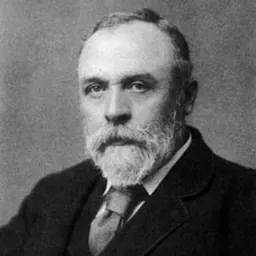
Petros Koulaxidis (; 1880 – August 3, 1932), known as The Vampire of Hamilos , was a Russian-born Greek serial killer and bigamist who killed at least five wives and girlfriends in Central Macedonia from 1917 to 1930. Confessing only to the final killing, which he claimed was done in the heat of the moment, Koulaxidis was convicted on all counts, sentenced to death and subsequently executed in 1932.
Early life Biographical information about Koulaxidis' early life is scarce. A Pontic Greek born in an undetermined region of the Russian Empire circa 1880, he was described as a charming and charismatic man, but also a womanizer with a very volatile personality and callous temper. It is claimed that Koulaxidis possibly claimed his first victims in Russia, since several of his love interests had died there - including a rich woman named Dubova in Kherson Oblast who kicked him out of the house and mysteriously died two weeks later, and a dancer named Marouska who was forced into prostitution in Kiev and then vanished - but as no official investigation took place, this remains speculatory.
Following the Russian Revolution, Koulaxidis emigrated to Greece, initially settling in Kavala, but he then started frequently moving around various settlements in Thessaloniki, Kilkis and Serres. During his stay at a small village in Kilkis, he married a woman named Kyriakoula and settled in a small house, but soon got involved in a fight with a fellow villager and was arrested. For this, he was sentenced to 3.5 years imprisonment, but was released early for good behavior. The villagers believed his claims and no further investigation took place. Six months later, Koulaxidis married Despina, the daughter of the village priest, but soon afterwards, she too died from what an autopsy determined was abdominal pains. This time, Koulaxidis claimed that his new wife died from stomach cancer, and since there was no evidence could disprove his claims, the matter was soon forgotten.
In 1930, Koulaxidis married again, this time to a woman named Efthymia. The newlyweds soon moved to , a small village near the border with Bulgaria, where they lived together in relative peace for a short time. However, his prospective father-in-law considered him way too mysterious and suspicious, and out of curiosity went around asking various villagers, policemen and farmers if they knew anything about him. When he inquired about him to the head of the local police department, the man was informed that an arrest warrant for murder had been issued in Koulaxidis' name. With this information, he led the authorities to Theodosia, where Koulaxidis was finally arrested. The first two confirmed were two women named Christina and Anatolia, who had supposedly died from influenza and another virus, respectively. There were also allegations that he had married and possibly killed numerous other women, perhaps as far back as his time living in Russia, but this could not be proven with certainty.
Koulaxidis denied most of the charges, with the only exception being the murder of his final wife, Efthymia, as his cousin Iakovos - who had helped him move the body - had already confessed to his part in the crime. However, Koulaxidis claimed that the murder was not premeditated, as he had caught her sleeping with their wedding's best man. In his closing statement, the prosecutor said that "society can only prosper when it is ruthlessly purged of such criminal bastards". Soon afterwards, Koulaxidis was transferred to the Heptapyrgion, which effectively served as the country's death row at the time. He reportedly spent his last day in prison singing patriotic songs and hymns, and while he was being escorted to the execution grounds, he sang a hymn dedicated to statesman Eleftherios Venizelos. Contemporary accounts claimed that Koulaxidis remained stoic and emotionless throughout the preparations, and that he had no final words.
It is claimed that for many years after his death, villagers in the region continued to be haunted by Koulaxidis's vicious acts and that the story of the "Vampire of Hamilos" continues to be told to this day.
Don’t just read it —
keep it.
Full-length biographies made to live with: read them, listen on the way to work, watch them tonight.
- E-book
- Audio
- Video
Instant download · yours to keep · every purchase keeps this site free
Important facts
People in Petros Koulaxidis's life
Named in this biography and alive at the same time
Contemporaries
People whose lives overlapped Petros Koulaxidis's


Frequently asked questions
Who was Petros Koulaxidis?
executed Greek serial killer
When was Petros Koulaxidis born?
Petros Koulaxidis was born in 1880 in Russian Empire.
When did Petros Koulaxidis die?
Petros Koulaxidis died on 3 August 1932 in Florina (regional unit), Greece.
Sources & further reading
· Wikipedia: Petros Koulaxidis
Cite this page
APA: Biography.guide. (2026). Petros Koulaxidis. https://biography.guide/petros-koulaxidis/
MLA: "Petros Koulaxidis." Biography.guide, https://biography.guide/petros-koulaxidis/.
Chicago: "Petros Koulaxidis." Biography.guide. https://biography.guide/petros-koulaxidis/.
Data last updated: 2026-09-20 · Spot an error? Report a correction.
Page generated 2026-09-27 04:57 UTC