
About Petro Stebnytsky
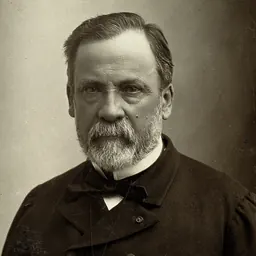
Lived 1862 – 1923 (aged 60–61). Petro Stebnytsky was a Russian politician, writer, opinion journalist and diplomat.
Petro Stebnytsky (1862–1923) was a Ukrainian political and public figure, diplomat and statesman. He most notably serving as Minister of Public Education and Arts in the Lyzohub Government in 1918 for the Ukrainian State, where he signed the decree establishing the National Academy of Sciences of Ukraine. He also briefly served as Supreme Judge of the UNR, before being arrested by the Bolsheviks.
Early life Stebnytsky was born on 25 November 1862 in the village of Horenychi, which was then part of the Kiev Governorate in the Russian Empire. He was born into a religious family, as his father J. Stebnytskyi ran the local parish and literacy school. Petro was initially educated at the local parish school, before attending the First Kyiv Gymnasium. In 1886, he graduated from Kyiv University with a degree in mathematics and physics, and afterwords he moved to the city of Saint Petersburg. Initially, he gave private lectures to the public of the city, before entering government service in the Ministry of Finance. He worked in this department until 1904, rising to the rank of collegiate councillor. He then switched to the Main Directorate of Posts and Telegraphs, where he headed the commercial department of the directorate until 1917. In Saint Petersburg, he became a leading member of the Ukrainian community, directing the Charitable Society for Publishing Generally Useful and Cheap Books, supporting Ukrainian books and pamphlets, and helping organize the Society of Ukrainian Progressives.
Political career Following the February Revolution, he was nominated as a representative of the Ukrainian Central Rada to the Provisional Government. However, he resigned due to conflicts with Russian democratic leaders, and he moved permanently back to Ukraine in June 1918. In Ukraine, he was appointed Senator of the Administrative General Court in July 1918, and then later became Minister of Public Education and Arts in the Lyzohub Government, replacing Mykola Vasylenko. As minister, he signed the decree that established the Ukrainian Academy of Sciences. In January 1919, he was appointed Supreme Judge of the UNR, but was soon after arrested by the Bolsheviks. However, he was released after public pressure. During his final years under repression, he was very poor and spent his last months in a military hospital in Pechersk, then at his home on Volodymyrska Street in Kyiv within the Ukrainian SSR, where he died in 1923.
Don’t just read it —
keep it.
Full-length biographies made to live with: read them, listen on the way to work, watch them tonight.
- E-book
- Audio
- Video
Instant download · yours to keep · every purchase keeps this site free
Important facts
People in Petro Stebnytsky's life
Named in this biography and alive at the same time

Related people
Same field, nearest in time





Contemporaries
People whose lives overlapped Petro Stebnytsky's




Frequently asked questions
Who was Petro Stebnytsky?
Russian politician and writer (1862-1923)
When was Petro Stebnytsky born?
Petro Stebnytsky was born on 25 November 1862 in Horenychi.
When did Petro Stebnytsky die?
Petro Stebnytsky died in 1923 in Kyiv.
What was Petro Stebnytsky's occupation?
Petro Stebnytsky was a politician, writer, opinion journalist and diplomat.
What nationality was Petro Stebnytsky?
Petro Stebnytsky was Russian.
Sources & further reading
Cite this page
APA: Biography.guide. (2026). Petro Stebnytsky. https://biography.guide/petro-stebnytsky/
MLA: "Petro Stebnytsky." Biography.guide, https://biography.guide/petro-stebnytsky/.
Chicago: "Petro Stebnytsky." Biography.guide. https://biography.guide/petro-stebnytsky/.
Data last updated: 2026-09-26 · Spot an error? Report a correction.
Page generated 2026-09-27 05:16 UTC