
About Mykola Vasylenko
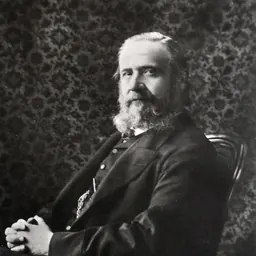
Lived 1866 – 1935 (aged 69). Mykola Vasylenko was a Russian and Ukrainian diplomat, historian, lawyer, politician and jurist.
Mykola Prokopovych Vasylenko (; ; 14 February 1866 – 3 October 1935) was a Ukrainian scholar and public figure. He briefly served as temporary Otaman of the Council of Ministers (a post akin to that of Prime Minister), later holding the post of Minister of Education and Director of the All-Ukrainian Academy of Sciences (a predecessor to the modern National Academy of Sciences).
Biography Mykola Vasylenko was born on in the village of Esman (today a small settlement of Hlukhiv Raion). He finished a progymnasium in Glukhov and a full gymnasium in Poltava. After graduation Vasylenko studied at the history and philology faculty of the Imperial Dorpat University. In 1890 he defended his dissertation, "A critical overview of literature on the history of Zemskie Sobory", becoming a Kandidat nauk in Russian history.
Since 1890 Vasylenko worked as a teacher of history in Kiev gymnasiums, simultaneously working for the Historical society of Nestor the Chronicler. At the same time he attended the lectures of Volodymyr Antonovych, Vladimir Ikonnikov, Oleksandr Lazarevsky and others at the St. Vladimir Imperial University of Kiev. Vasylenko also was co-editor and published his scientific works in the journal Kievskaya starina (Kiev of old). In 1893-94 there appeared his first fundamental scientific works, particularly the monograph "The question of servitude in the Southwestern Krai".
During 1903-05 Vasylenko was a researcher for the Statistics Committee of the Kiev Governorate. He also was a member of yiev Old Hromada as well as other public and cultural societies. Vasylenko sympathised with the 1905 Russian Revolution, and during the period he edited a newspaper, Kievskie otkliki. For his illegal fundraising to help workers of Saint Petersburg and Kiev, support of the 1905 uprising of the sappers in Kiev, connections with revolutionary leaders and the publication of articles of "anti-state" content in his newspaper, Vasylenko was convicted to a year in prison which he served in the Kresty Prison in Saint Petersburg. During his imprisonment Vasylenko studied law, eventually passing the examinations of the Law faculty of the Imperial Novorossiya University.
In 1909 he was admitted to the St. Vladimir Imperial University of Kiev as a privatdozent. At the time Vasylenko was a member of secret public organization and political alliance, the . In 1910 he received the academic degree of Master of Law. However, due to "political unreliability" the Imperial administration prohibited him to teach in higher educational institutions. Therefore, Vasylenko worked as a fellow barrister for the Odessa court chamber.
Around that time in 1910 Vasylenko joined the Constitutional Democratic Party (the Kadets), which agreed to the use of the Ukrainian language in schools, courts, churches, although they promoted only the cultural autonomy of Ukraine. His affiliation with the Kadets negatively affected relationships of Vasylenko with activists of Ukrainian national-liberation movement.
After the February Revolution, on the initiative of Mykhailo Hrushevsky, Mykola Vasylenko was invited to the Central Council of Ukraine as deputy chairman, but he did not actively participate in the council's sessions. On March 24, 1917 the Russian Provisional Government appointed Vasylenko as a curator of the Kiev school district and on August 19, 1917 he became the Deputy Minister of Education in the Russian Provisional Government. Vasylenko was a supporter of an evolutionary development of the system of Ukrainian national education, a position that did not correspond to the policy of Ukrainisation of education developed by the I and II All-Ukrainian Teachers congresses and carried out by the General Secretariat of Education.
Don’t just read it —
keep it.
Full-length biographies made to live with: read them, listen on the way to work, watch them tonight.
- E-book
- Audio
- Video
Instant download · yours to keep · every purchase keeps this site free
Important facts
Family & relationships
People in Mykola Vasylenko's life
Named in this biography and alive at the same time

Related people
Same field, nearest in time

Contemporaries
People whose lives overlapped Mykola Vasylenko's



Frequently asked questions
Who was Mykola Vasylenko?
Ukrainian diplomat, historian and lawyer (1866-1935)
When was Mykola Vasylenko born?
Mykola Vasylenko was born on 2 February 1866 in Esman.
When did Mykola Vasylenko die?
Mykola Vasylenko died on 3 October 1935 in Kyiv.
What was Mykola Vasylenko's occupation?
Mykola Vasylenko was a diplomat, historian, lawyer, politician and jurist.
What nationality was Mykola Vasylenko?
Mykola Vasylenko was Russian and Ukrainian.
Sources & further reading
Cite this page
APA: Biography.guide. (2026). Mykola Vasylenko. https://biography.guide/mykola-vasylenko/
MLA: "Mykola Vasylenko." Biography.guide, https://biography.guide/mykola-vasylenko/.
Chicago: "Mykola Vasylenko." Biography.guide. https://biography.guide/mykola-vasylenko/.
Data last updated: 2026-09-20 · Spot an error? Report a correction.
Page generated 2026-09-27 05:21 UTC