
About Petro Fedun
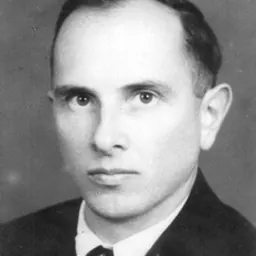
Lived 1919 – 1951 (aged 32). Petro Fedun was a Ukrainian and Polish politician.
Petro Mykolaiovych Fedun (; 23 February 1919 – 23 December 1951), also known by the literary pseudonym of Petro Poltava , was a Ukrainian revolutionary writer, journalist, and politician. Ideologically a Ukrainian nationalist and social democrat, he was one of the leaders of the reformist faction of the Organisation of Ukrainian Nationalists' Banderite wing from 1945 until his 1951 death in battle against officers of the Soviet Ministry of State Security.
Born in rural Galicia, Fedun joined the OUN as a teenager. He was conscripted into the Red Army following the Soviet annexation of Eastern Galicia and Volhynia, and captured during Operation Barbarossa. After being released, Fedun soon returned to the OUN (now split between anti-Nazi and collaborationist wings), and was involved in the group's anti-Nazi underground in the cities of Lviv and Brody. After the German defeat in Galicia, Fedun rapidly rose through the ranks of the OUN, being appointed director of the Main Propaganda Cell in 1946. With the beginning of the Ukrainian Insurgent Army's anti-Soviet insurgency, Fedun became an ideologue for reformist OUN members opposed to the leadership of Stepan Bandera, writing influential works on social democracy and democratic socialism. He became the leader of the reformists in December 1951, but was killed the same month.
Early life and activities
Petro Mykolaiovych Fedun was born on 23 February 1919, in the Galician village of Shnyriv, the middle child between elder sister Hanna and younger brother Vasyl. His parents, Mykola and Paraskova, were both peasants. At the time, the village was under the rule of the Ukrainian People's Republic. It would later become part of the Second Polish Republic after the Polish–Soviet War via the 1921 Treaty of Riga.
Fedun began studying at the gymnasium in Brody in 1931. Fedun's Red Army service remains a matter of ongoing debate in Ukrainian historiography, particularly regarding his role in the Winter War. According to one claim, Fedun briefly took part in the war, but historian Mykhailo Romaniuk has disputed this, noting that the war ended on 13 March 1940, at a time when Fedun was still listed as a student at the University of Lviv. According to Romaniuk, citing the recollections of an individual named Ya. Roshkovych, Fedun instead served in the city of Pavlohrad, in southern Ukraine.
At the beginning of Operation Barbarossa, Fedun held an officer rank in the Red Army. In the summer that marked the offensive's beginning, he was captured by Nazi Germany and placed in a prisoner-of-war camp. He remained imprisoned until being released prior to October 1941. Two different versions exist as to the cause of his release, with one stating that his parents spent money to ensure his release and another stating that he was allowed to walk free due to his fluency in German.
After joining the OUN-B (Banderite) underground, Fedun became head of the OUN Youth in western Ukraine.
Fedun's rise within the OUN-B and UPA ranks continued throughout 1944. He began working as editor of three different propaganda journals, and travelled into the Carpathian Mountains to train young members of the OUN in ideology. He additionally became a member of the focusing on political education. For Fedun and other members of the OUN-B and UPA, however, the war was far from at an end. Fedun became leader of the Main Propaganda Cell and Information Service. , also a historian, has disputed this, saying that Fedun was appointed as head of the Main Propaganda Cell and the information service of the Main Military Staff upon the 1945 deaths of Busel and propagandist . Hinda states that at this time Fedun had acquired a reputation among members of the OUN underground for his oratical and journalistic skills.
Fedun also took aim at illiteracy among the UPA's ranks, particularly in propaganda, creating one person to proofread such works. Fedun further encouraged the adoption of the 1946 Soviet Ukrainian textbook by among the UPA, editing it to remove elements of Russification from Ukrainian. Other works produced by Fedun during this time period, among them The Concept of a Self-Governing Ukraine and the Basic Tendency of the Modern World's Ideological-Political Development (1946), Ukraine is Dying! Who is to Blame for This? (1948), and Why the USSR Must Be Rebuilt on the Principle of Independent National States (1950), would become hallmarks of ideological propaganda distributed to soldiers of the UPA at this time. Fedun's activities in organising the printing and publication of pro-UPA materials throughout Galicia was also remarkably successful - around one hundred printing houses were under his control, with one Drohobych Oblast printer having a circulation of 300,000 in the winter of 1949–1950 alone. Prior to 1951 Fedun had sought to place himself as a mediator to other members of the OUN and UPA, such as Shukhevych. In particular, he advocated for what he described as a compromise on the renaming of the OUN, a cause pursued by reformists. Rather than removing the term "nationalists" from the name, as reformists desired, he sought to suffix the group's name with the slogan "Independence, Socialism, Democracy".
Death Hinda states that Who are the Banderites and What are They Fighting For? led the Soviet government to focus on eliminating Fedun. A criminal case into Fedun began in 1949, overseen by the Ministry of State Security (MGB) and given the codename of Operation Jackal. Operation Jackal's scope was broadened in 1950, with a 20-man team being tasked with finding and killing Fedun. Several attempts were unsuccessfully made to capture Fedun prior to his death, including one case in which case MGB agents posed as the deceased Shukhevych.
Political positions Self-described as a socialist, Fedun was an ideologue of the principles of social democracy and democratic socialism present in the OUN-B's reformist wing. In a 28 January 1946 internal memo on propaganda, Fedun expressed opposition to specifically using the term "red" as a pejorative against the Soviets and instead advocated for the Soviets to be described as opponents of real socialism. In the same memo, he also positively assessed the electoral victories of the British Labour Party and the French Section of the Workers' International, viewing them as ideological contemporaries because "we are for the destruction of people's exploitation of people, for the destruction of the capitalist system."
Don’t just read it —
keep it.
Full-length biographies made to live with: read them, listen on the way to work, watch them tonight.
- E-book
- Audio
- Video
Instant download · yours to keep · every purchase keeps this site free
Important facts
People in Petro Fedun's life
Named in this biography and alive at the same time
Related people
Same field, nearest in time






Contemporaries
People whose lives overlapped Petro Fedun's


Frequently asked questions
Who was Petro Fedun?
Ukrainian revolutionary (1919–1951)
When was Petro Fedun born?
Petro Fedun was born on 23 February 1919 in Shnyriv.
When did Petro Fedun die?
Petro Fedun died on 23 December 1951 in Rohatyn Raion.
What was Petro Fedun's occupation?
Petro Fedun was a politician.
What nationality was Petro Fedun?
Petro Fedun was Ukrainian and Polish.
Sources & further reading
Cite this page
APA: Biography.guide. (2026). Petro Fedun. https://biography.guide/petro-fedun/
MLA: "Petro Fedun." Biography.guide, https://biography.guide/petro-fedun/.
Chicago: "Petro Fedun." Biography.guide. https://biography.guide/petro-fedun/.
Data last updated: 2026-09-20 · Spot an error? Report a correction.
Page generated 2026-09-27 05:21 UTC