
About Peter Hardeman Burnett
Lived 1807 – 1895 (aged 87). Peter Hardeman Burnett was an American judge, lawyer, jurist and politician.
Peter Hardeman Burnett (November 15, 1807 – May 17, 1895) was an American politician, the first elected governor of California from December 20, 1849, to January 9, 1851. Burnett was elected Governor almost one year before California's admission to the Union as the 31st state on September 9, 1850.
Raised in a slave-owning family in Missouri, Burnett moved westward after his business career left him heavily in debt. Efforts by federal negotiators to preserve some Native land rights were fought by the administration of Burnett, who favored the elimination of California's indigenous peoples.
He was appointed to serve on the Supreme Court of California in 1857. In this capacity, Burnett unsuccessfully ordered the extradition of Archy Lee, a formerly enslaved man living in Sacramento, back to Mississippi.
Early life and career Burnett was born on November 15, 1807, in Nashville, Tennessee. He was the eldest son of George and Dorothy Hardeman Burnet. It was during his time in Oregon that Burnett, a traditional Southern Protestant, began to question the practices of his faith, his religious views drifting more to Catholicism. By 1846, Burnett and his family completely transitioned from Protestant to Catholic.
While in the Legislature, and later as Provisional Supreme Judge, Burnett signed Oregon's first exclusion laws. Under an 1844 law passed by the provisional government—just after the same government abolished slavery—slave owners could continue to enslave people for up to three years, after which all African Americans, free or enslaved, had to leave Oregon Country or face flogging. a city ideally suited due to its closeness to the Sierra Nevada and the neighboring Sacramento River's navigability for large ships.
In 1848, Burnett was among those who founded the city of Oregon City in Butte County, California.
Governorship of California
In 1849, Burnett announced his intentions to return to politics. 1849 saw the first California Constitutional Convention in Monterey, where territorial politicians drafted documents suitable to admit California as a state in the United States. During the 1849 referendum to adopt the California Constitution, Burnett, now with name recognition in Sacramento and San Francisco and a resume that included the Oregon Provisional Legislature, decided to run for the new territory's first civilian governor, replacing the string of military governors and bureaucracy from the US military. Burnett easily won the election over four other candidates, including John Sutter, and was sworn in as California's first elected civilian governor on December 20, 1849, in San Jose in front of what would soon (after statehood in 1850) become the California State Legislature.
Burnett administration In the first days of the Burnett administration, the governor and the California Legislature set out to create the organs of a state government, creating state cabinet posts, archives, executive posts and departments, subdividing the state into 27 counties and appointing John C. Fremont and William M. Gwin as California's senators to the federal US Senate. Despite home proclamations and bureaucratic reorganizations that recognized California now as a US state, the US Congress and President Zachary Taylor had not signed authorization of statehood for California. Part of this miscommunication was due to California's relative remoteness to the rest of the US during the time and to over-enthusiastic attitudes by politicians and the public alike to get California into the Union as quickly as possible. Following long contentious debates in the US Senate, California was admitted as a (non-slave) state on September 9, 1850, as part of the Compromise of 1850. Californians did not learn of their official statehood until one month later, when on October 18, the steamer Oregon entered San Francisco Bay with a banner strapped to her rigging reading "California Is a State".
During those advancements into statehood, Burnett's popularity among the legislature, the press, and the public plummeted. Relations between the legislature and Burnett began to sour in early 1850, when bills pressing for the incorporation of Sacramento and Los Angeles as city municipalities, with Los Angeles being a special incorporation due to its earlier pueblo status during the previous Spanish and Mexican rule, passed the State Assembly and Senate. Burnett vetoed both bills, citing special incorporation bills as unconstitutional and that reviews for municipal incorporation were best left to county courts. The legislature failed to override Burnett's veto of the Los Angeles bill but succeeded in overriding the Sacramento bill, making it California's first incorporated city.
For California's legal system, Burnett recommended to the first session of the state legislature that California should implement a hybrid legal system mixing significant elements of both civil law and common law. He advocated for enacting California versions of the Louisiana Civil Code and the Louisiana Code of Practice (Louisiana's name for what Americans would call a code of civil procedure) and adopting American common law for crimes, evidence, and commercial law. This touched off an uproar among the American lawyers who had flocked to California, with the majority pushing for common law and a minority (led by John W. Dwinelle) advocating the adoption of civil law. The Senate Judiciary Committee, chaired by Elisha Oscar Crosby, published a report in February 1850 recommending the adoption of the common law through the enactment of a reception statute; Burnett signed the resulting bill into law on April 13, 1850.
Characterized as an aloof politician with little support from the Legislature by the San Francisco, Sacramento, and Los Angeles press, Burnett grew frustrated as his agenda ground to a halt, and his governance style was increasingly criticized. He became a regular fixture of ridicule in the state's newspapers and on the floor of the Legislature. With little over a year in office, Burnett, the state's first governor, became the first to resign, announcing his resignation in January 1851. Burnett cited personal matters for his departure. Lieutenant Governor John McDougal replaced Burnett as the Governor of California on January 9.
Burnett's policies Burnett photographed when he served as president of Pacific Bank. Recollections and opinions of an old pioneer (1880), authored by Burnett.
As Governor, Burnett pushed for the exclusion of African Americans from California, raising the ire of pro-slavery supporters who wanted to import the Southern slave system to the West Coast, but his proposals were defeated in the Legislature. From Burnett's First Annual Message to the Legislature, December 21, 1849:
Similarly, Burnett also pushed for heavy taxation on foreign immigrants. The 1850 Foreign Miners Tax Act, signed into law by Burnett, required every miner of non-American origin to pay US$20 (~$ in ). Burnett also argued heavily for increased taxation and the expansion of capital punishment to include larceny.
Post-governorship
One year after leaving the governorship, Burnett could finally repay the heavy debts he had incurred in Missouri nearly two decades before. He entered several careers, serving briefly as a justice in the California Supreme Court between 1857 and 1858, the Sacramento City Council, as well as becoming a San Jose-based lawyer, a noted proponent of Catholicism during the Victorian period, and then the president of the Pacific Bank of San Francisco. Although never venturing into politics much after the 1860s, Burnett actively supported the federal Chinese Exclusion Act of 1882. In 1880, he published an autobiography, Recollections and Opinions of an Old Pioneer. He died May 17, 1895, at 87, in San Francisco and is buried in the Santa Clara Mission Cemetery in Santa Clara, California.
Legacy Burnett's legacy is racist and exclusionary. While regarded as one of the fathers of modern California in the state's early days, his racist attitudes toward African Americans, Chinese Americans, and Native Americans have tarnished his name today. Burnett's period in the Oregon Provisional Legislature helped facilitate the exclusion of black people from the state until 1926. In 1844, one of his Oregon proposals was to force free black people to leave the state and to institute floggings of any who continued to remain. From Burnett's Second Annual Message to the Legislature, January 7, 1851:
San Francisco's Burnett Avenue near Twin Peaks is named after him. The Burnett Child Development Center, a predominantly black San Francisco neighborhood preschool, had been named for Burnett. However, when his racist positions were rediscovered, the school was renamed in 2011 as Leola M. Havard Early Education School, in honor of San Francisco's first African American principal. Similarly, Peter H. Burnett Elementary School in Long Beach was renamed in 2014 due to Burnett's views. It is now named after Bobbi Smith, the first African American member of the Long Beach Unified School District's board. In 2019, Peter Burnett Middle School in San Jose was renamed Muwekma Ohlone Middle School in honor of the original inhabitants of that area. In July 2020, Peter Burnett Elementary School in Hawthorne was renamed 138th Street Elementary School. In June 2023, Peter Burnett Elementary School in Sacramento was renamed Suy:u (SOO-yoo) Elementary School.
By the 21st century, Burnett was considered an obscure figure in California history. Journalist Ailsa Chang described him as a "footnote" in the state's history. According to Burnett's biographer R. Gregory Nokes, little in-depth material has been written about Burnett, and he notes that Burnett is the only source available for much of his early and later life.
Don’t just read it —
keep it.
Full-length biographies made to live with: read them, listen on the way to work, watch them tonight.
- E-book
- Audio
- Video
Instant download · yours to keep · every purchase keeps this site free
Important facts
Family & relationships
People in Peter Hardeman Burnett's life
Named in this biography and alive at the same time


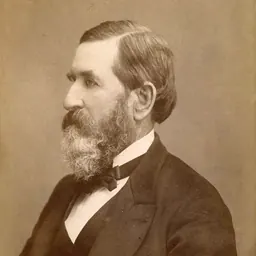


Related people
Same field, nearest in time
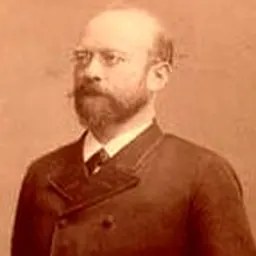
Contemporaries
People whose lives overlapped Peter Hardeman Burnett's





Frequently asked questions
Who was Peter Hardeman Burnett?
American judge, governor of California, slave owner (1807–1895)
When was Peter Hardeman Burnett born?
Peter Hardeman Burnett was born on 15 November 1807 in Nashville.
When did Peter Hardeman Burnett die?
Peter Hardeman Burnett died on 17 May 1895 in San Francisco.
What was Peter Hardeman Burnett's occupation?
Peter Hardeman Burnett was a judge, lawyer, jurist and politician.
What nationality was Peter Hardeman Burnett?
Peter Hardeman Burnett was American.
Sources & further reading
· Wikipedia: Peter Hardeman Burnett
· DBpedia: Peter Hardeman Burnett
Cite this page
APA: Biography.guide. (2026). Peter Hardeman Burnett. https://biography.guide/peter-hardeman-burnett/
MLA: "Peter Hardeman Burnett." Biography.guide, https://biography.guide/peter-hardeman-burnett/.
Chicago: "Peter Hardeman Burnett." Biography.guide. https://biography.guide/peter-hardeman-burnett/.
Data last updated: 2026-09-25 · Spot an error? Report a correction.
Page generated 2026-09-27 05:13 UTC