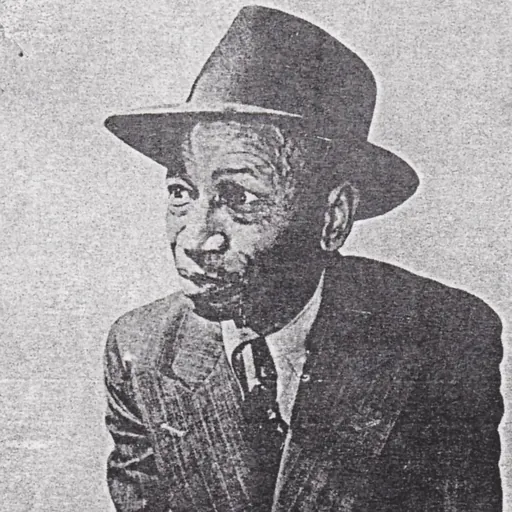
About Perry Bradford
Lived 1893 – 1970 (aged 77). Perry Bradford was an American composer, pianist, singer and musician.
Perry Bradford (February 14, 1893, Montgomery, Alabama – April 20, 1970, New York City) was a composer, songwriter, and vaudeville performer. His most well known songs include "Crazy Blues", "That Thing Called Love," and "You Can't Keep A Good Man Down".
Early life Bradford grew up in Atlanta, where his family moved when he was six. Prior to Bradford's influence, African-American artists recorded in a style that was closely similar to those of white dance orchestras. There was little to no trace of African-American musical characteristics present in their recordings. Bradford persevered in getting the recording industry to value recordings of African-American artists recording in the style of their own subculture.
As a pianist, singer, dancer and composer, Bradford worked in theatre circuits throughout the South and into the North for the next decade (1908–1919) in a song and dance act billed as "Bradford and Jeanette". While in New York City, Bradford convinced Frederick W. Hager, of Okeh Records, to record Mamie Smith and became her musical director. Smith starred in Bradford's show Made in Harlem (1918). Bradford was also responsible for Smith being the first African-American blues singer to appear on record (singing his "Crazy Blues") in 1920.
Bradford claimed that his revue, Made in Harlem, was the first stage production that offered blues matter to the large, northern audience in Harlem. Bradford was able to organize the first recording session, "That Thing Called Love," that highlighted an African-American artist, accompanied by a white studio band, performing material specific to the African-American culture. The office building included offices rented out to prominent black people in the music business, such as Bill Robinson, Eubie Blake, Shelton Brooks, and W.C. Handy; the building was nicknamed "Uncle Tom's Cabin" by George M. Cohan.
Bradford toured and recorded with Smith, worked with Alberta Hunter and also headed seven recording sessions of his own during 1923–1927. Among Bradford's sidemen were Johnny Dunn, Bubber Miley, Garvin Bushell, Louis Armstrong (on two numbers in 1925), Buster Bailey, and James P. Johnson. Armstrong's session with Bradford was his last session in New York City before his return to Chicago.
Bradford continued to promote blues and jazz recordings by publishing and managing. Bradford's influence in the recording industry was negatively affected by the crash of the stock market in 1929, as well as by changes in the character of jazz and African-American songs. He was an irregular participant after the 1940s.
In 1965, Bradford's autobiography Born With the Blues was published (New York: Oak Publications) with a foreword by Noble Sissle.
Don’t just read it —
keep it.
Full-length biographies made to live with: read them, listen on the way to work, watch them tonight.
- E-book
- Audio
- Video
Instant download · yours to keep · every purchase keeps this site free
Important facts
People in Perry Bradford's life
Named in this biography and alive at the same time


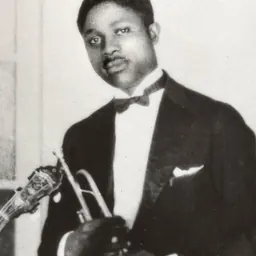
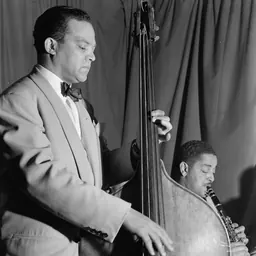

Related people
Same field, nearest in time

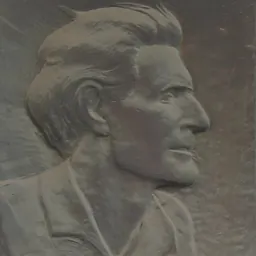
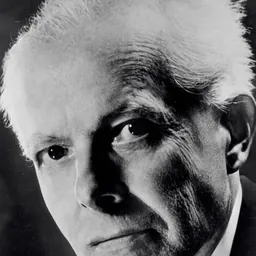


Contemporaries
People whose lives overlapped Perry Bradford's

Frequently asked questions
Who was Perry Bradford?
American musician (1893–1970)
When was Perry Bradford born?
Perry Bradford was born on 14 February 1893 in Montgomery.
When did Perry Bradford die?
Perry Bradford died on 20 April 1970 in Queens.
What was Perry Bradford's occupation?
Perry Bradford was a composer, pianist, singer and musician.
What nationality was Perry Bradford?
Perry Bradford was American.
Sources & further reading
Cite this page
APA: Biography.guide. (2026). Perry Bradford. https://biography.guide/perry-bradford/
MLA: "Perry Bradford." Biography.guide, https://biography.guide/perry-bradford/.
Chicago: "Perry Bradford." Biography.guide. https://biography.guide/perry-bradford/.
Data last updated: 2026-09-23 · Spot an error? Report a correction.
Portrait: Wikimedia Commons · author & licence
Page generated 2026-09-27 05:05 UTC