
About Percy Jocelyn
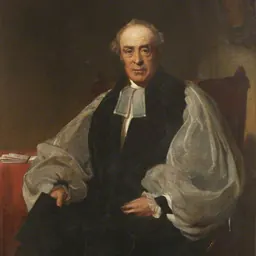
Lived 1764 – 1843 (aged 78). Percy Jocelyn was an anglican priest.
Early life He was the third son of The 1st Earl of Roden, whose family estates were in Castlewellan, County Down, by his wife Lady Anne Hamilton. He graduated with a B.A. from Trinity College Dublin. At Trinity, he was regarded as something of a bookworm, spending much of his time in his rooms on Library Square. He was later described as "a tall thin young man with a pale, meagre and melancholy countenance, and so reserved in his manners and recluse in his habits that he was considered by everybody to be both proud and unsociable".
Career He was rector of Tamlaght, archdeacon of Ross (1788–1790), treasurer of Armagh (1790–1809), a prebend of Lismore (1796–1809), and bishop of Ferns and Leighlin (1809–1820) before becoming bishop of Clogher.
1811 scandal In 1811, James Byrne (who had been a coachman for Jocelyn's brother, John) accused him of "taking indecent familiarities" and of "using indecent or obscene conversations with him". Byrne was sued for criminal libel by Bishop Jocelyn and on conviction was sentenced to two years in gaol and also to public flogging. After he recanted his allegations at the prompting of the bishop's agent, the floggings were stopped. A public subscription was raised to raise money for James Byrne, whose 1811 conviction was now recognised as a miscarriage of justice.
Bishop Jocelyn was the most senior British or Irish churchman to be involved in a public homosexual scandal in the 19th century. It became a subject of satire and popular ribaldry, resulting in more than a dozen illustrated satirical cartoons, pamphlets, and limericks, such as:
The Devil to prove the Church was a farce Went out to fish for a Bugger. He baited his hook with a Soldier's arse And pulled up the Bishop of Clogher.
(This rhyme is dependent on the English reader's ignorance of the pronunciation of Irish placenames; the see is pronounced like "KLAW-er" or "KLOH-er.")
The scandal was so great, that in the days following, "it was not safe for a bishop to show himself in the streets of London", according to Charles Manners-Sutton, Archbishop of Canterbury at the time. In August 1822, The 2nd Marquess of Londonderry (better known to history as Lord Castlereagh), who was both the Foreign Secretary and Leader of the House of Commons, had an audience with King George IV where he said that he was being blackmailed, and that "I am accused of the same crime as the Bishop of Clogher". Lord Londonderry committed suicide shortly afterwards and was thought to have been in a paranoid state at the time.
Legacy After Bishop Jocelyn's death, it was reported that he had been living quietly for four years at Salisbury Place, Edinburgh, under the assumed name Thomas Wilson, and had previously lived in Glasgow. The plate on his coffin carried no inscription except (in Latin): "Here lie the remains of a great sinner, saved by grace, whose hopes rest in the atoning sacrifice of the Lord Jesus Christ".
However, some years ago the Jocelyn family vault in Kilcoo Parish Church in Bryansford, County Down, Northern Ireland, was opened and it was discovered that it contained one more coffin than the number of grave markers indicated, and that the extra coffin was unmarked. This extra coffin may be that of the dethroned Bishop of Clogher.
For 178 years after the scandal, the Church of Ireland refused to let historians see its papers on the affair. In the 1920s, Archbishop D'Arcy of Armagh ordered that they be burned, but this order was not obeyed. The files were released for Matthew Parris's research for his book The Great Unfrocked.
Don’t just read it —
keep it.
Full-length biographies made to live with: read them, listen on the way to work, watch them tonight.
- E-book
- Audio
- Video
Instant download · yours to keep · every purchase keeps this site free
Important facts
Family & relationships
People in Percy Jocelyn's life
Named in this biography and alive at the same time
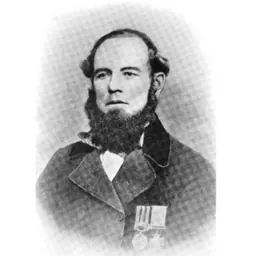



Related people
Same field, nearest in time
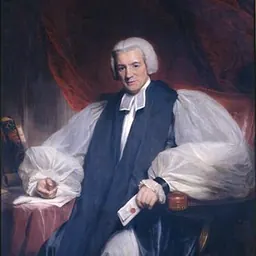
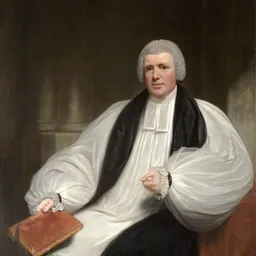

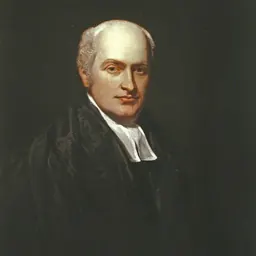

Contemporaries
People whose lives overlapped Percy Jocelyn's





Frequently asked questions
Who was Percy Jocelyn?
Irish Anglican bishop
When was Percy Jocelyn born?
Percy Jocelyn was born on 29 November 1764.
When did Percy Jocelyn die?
Percy Jocelyn died on 3 September 1843.
What was Percy Jocelyn's occupation?
Percy Jocelyn was an anglican priest.
Sources & further reading
Cite this page
APA: Biography.guide. (2026). Percy Jocelyn. https://biography.guide/percy-jocelyn/
MLA: "Percy Jocelyn." Biography.guide, https://biography.guide/percy-jocelyn/.
Chicago: "Percy Jocelyn." Biography.guide. https://biography.guide/percy-jocelyn/.
Data last updated: 2026-09-20 · Spot an error? Report a correction.
Page generated 2026-09-27 05:29 UTC