
Percy Charles Pickard
RAF officer
About Percy Charles Pickard
Lived 1915 – 1944 (aged 28). Percy Charles Pickard was a British airman.
Group Captain Percy Charles "Pick" Pickard, (16 May 1915 – 18 February 1944) was an officer in the Royal Air Force during the Second World War. He served as a pilot and commander, and was the first officer of the RAF to be awarded the DSO three times during the war. He flew over a hundred sorties and distinguished himself in a variety of operations requiring coolness under fire.
In 1941 he was asked to participate in the making of the Crown film Target for To-night. Attention from the film made him a public figure in the UK. Later that year he led the squadron of Whitley bombers that carried paratroopers to their drop for the Bruneval raid.
Through most of 1943 he commanded 161 Squadron, the secretive unit that flew SOE agents in and out of occupied France. He was a very active commanding officer, and flew many of the missions himself. In late 1943 Pickard was made the commander of a new unit, 140 Wing, a ground attack formation whose three squadrons had converted to the Mosquito. On 18 February 1944 Pickard led a group of Mosquitos on the Amiens prison raid to destroy the walls of a Gestapo prison and free the prisoners inside. He was killed in this operation. Pickard was one of the RAF's most highly regarded bomber pilots of the war, ranking among the likes of Guy Gibson and Leonard Cheshire.
Early life Pickard was born in Handsworth, Sheffield, in the West Riding of Yorkshire, England. He was the youngest of five children, with an older brother and three older sisters. His father was Percy Charles Pickard, a Yorkshireman who moved to London and started a catering company. Having the same name as his father and being the youngest of five in the family, he was affectionately referred to as 'Boy', and the family nickname persisted, even as he grew to be 6' 4". His older brother, Walter, joined the RAF and became an officer. His oldest sister, Helena Pickard, became an actress; she married the actor Cedric Hardwicke. Though bright and engaging, Pickard struggled with reading and writing. There is some evidence to suggest he struggled with dyslexia. Nevertheless, he was an enthusiastic classmate, and was active in school sports. He developed into an excellent shot, and captained his house rifle team. His favourite activity was riding. A farm in British East Africa was owned by the family of another student. To encourage their son in coming to Africa they offered to board one of his classmates when he came down to the farm; Pickard took the offer. After a couple of years the classmate returned to England, but Pickard stayed on. The vast grasslands provided ample opportunity for riding, and Pickard excelled as a Polo player, earning a 3 handicap. While there Pickard enlisted in the King's African Rifles as a reservist. He then applied to the Royal Air Force, who were in the midst of a massive expansion, and was accepted. He was granted an RAF short service commission in January 1937, completing his pilot training programme with an "above average" rating. He was posted to 214 Squadron, equipped with the Handley Page H.P.54 Harrow bomber. He received a commission as acting pilot officer 25 January 1937. During this period he began seeing Dorothy Hodgkin. Her family did not approve but they wed anyway. He gave his bride the present of an Old English Sheepdog to keep her company while he was away; they named the large dog 'Ming'. Aircraft service crews grew accustomed to Pickard and Broadley returning in an aircraft that had been peppered with flak and night fighter damage. It is an airplane that is "easy to fly, but difficult to fly well". After a hard period of missions a favourite activity of Pickard's was to take up the Tiger Moth and lose himself in flying.
Pickard was awarded the Distinguished Flying Cross in July 1940 for services rendered over Norway. As an officer, Pickard was mild mannered, approachable and humorous, but on missions he was a very determined pilot. With the release of the film Pickard became a public figure. Widely known as the pilot of the bomber “F-Freddie”, he was the living symbol of Bomber Command's night war against Germany. He was also awarded the Czech Cross.
Second tour with 9 Squadron His 'rest period' completed, on 14 May 1941 Pickard was assigned to 9 Squadron based at RAF Honington. Here he was flying the Vickers Wellington again. He was soon joined by Broadley, who by now had become a commissioned officer. In the summer of 1941 over the night skies of Germany, Pickard flew another 33 sorties with Broadley, bringing his total to 64 by the end of August. Crews who had completed a second tour of twenty were considered to have “done their part”, and were rotated away to non-combat roles.
With the end of his second tour Pickard was assigned to 3 Group headquarters, tasked with flying senior command officers between airbases. Broadley was assigned to 138 Squadron.
The target German radar station was situated on a 400 ft bluff overlooking the French coast. Pickard was confident the flying aspect of the mission would not be difficult, but dropping these men into occupied France with no sure way out seemed to him quite risky. In fact, R. V. Jones had gone home that afternoon wondering to himself how many he would ever see again. Just before the paratroopers boarded Pickard pulled Frost aside and told him "I feel like a bloody murderer." Whatever reservations Pickard may have had, he did not let it show to the men. In fact, a number of officers reported after the fact that the sight of him standing by his aircraft, calmly puffing away on his pipe, and the sight of his crews all waiting patiently in their relaxed way, was reassuring.
Pickard's flight of Whitleys were to be masked by Bomber Command missions to the continent, but these had to be scrubbed due to the poor weather. At 2200 they were cleared to go, and Pickard's Whitley led off from RAF Thruxton. The aircraft formed up, twelve aircraft in three groups of four, with 5 minutes between each group. They headed southeast for RAF Tangmere in strict radio silence. Pickard had allowed 30 minutes for unforeseen problems. Arriving over the fighter base he circled the area to burn off the extra time, and then led out to Selsey Bill where they left the coast, heading across the Channel.
Pickard was waiting on board the command ship HMS Prins Albert for the paratroopers' return. He is posed here with a group of paratroopers and an enemy helmet taken during the raid against the German radar station at Bruneval. Halfway across the Channel they ran into heavy cloud, and were forced down below 200 metres. They continued on their heading to Fécamp, 16 kilometres north of Bruneval, climbing to 400 metres. Picked up by the Freya radar station at Bruneval, their presence was radioed down to the Würzburg tracking station, who began tracking their movement. The Würzburg radar crew watched the group of bombers approach Fécamp till they got within 5 km, then saw them suddenly turn south and seemingly head directly for them. The crew turned off their set and rushed into their bunkers. In actuality, Pickard's bombers were flying parallel to the coast, trying to pick out landmarks to ensure their position. Flak came up from four flak ships off Yport and two aircraft, including Pickard's, were hit, but no serious damage was done.
They travelled off the shore for 5 kilometres, then turned to port, climbed to 500 metres and crossed the coast. Another turn to port and they were heading north for the drop zone. As they approached they dropped down to 100 metres and slowed to 160 kilometres per hour. The first two aircraft, Pickard's and another, got slightly off course and dropped their sticks 2 kilometres south of the drop zone. These men had been assigned to overcome the beach defences from behind and hold the beach till the team could be taken off. Though they had to figure out where they were and then quick march up the road to get to the beach, they arrived just as the assault was going in. The other ten aircraft delivered their sticks right over the drop zone.
Increasing speed and continuing on northward, the bombers again came under fire from the Flak batteries protecting the Freya station. Past these was the lighthouse and the coast. Pickard dropped down to 15 metres and headed home, following the same route that had brought them there. Upon returning to base Pickard debriefed, got a short rest and then drove down to Portsmouth and the command ship HMS Prins Albert to be on hand when the paratroopers made it back from France. The mission upon the German Würzburg radar station had been a complete success, with vital parts of the radar device recovered for examination.
Following the raid, the King and Queen visited Dishforth. Pickard led them on a tour of the base. When they arrived at the officer's lounge, the King noted a number of footprints on the ceiling, and inquired how they came to be there. Pickard had a party piece of drinking beer while being held upside down, and confessed the post-raid party had led to some hi-jinks and the footprints were his.
In May 1942 Pickard was awarded a second DSO for his part in the Bruneval raid, represented by a bar to the first DSO.
161 (Special Duties) Squadron On 1 October 1942 Pickard was posted as CO of the No. 161 Squadron, a clandestine special duties squadron involved in supporting the resistance movement in occupied Europe. Pickard took over from Edward Fielden who was moved to station commander of the airfield they were operating out of, RAF Tempsford. In taking over 161 Squadron Pickard had a significant load of administrative duties. These he directed his aide to handle, giving his aide responsibility for all his official correspondence and reports. They had the goal of making their pick-up operations as reliable as a London taxi service.
When the number of people needed to be picked up was more than three, 161 Squadron would send two Lysanders in missions they called "a double." The required coordination was difficult to do at night in radio silence, and necessarily placed the second aircraft at increased risk. Consideration was given to making use of a larger aircraft. Sticky Murphy had already done a pick-up using an Anson borrowed from a training unit, but the type was deemed underpowered and inappropriate for pick-ups. The squadron also had available a Lockheed Hudson brought over from the King's Flight. The twin-engined aircraft had a range greater than the Lysander, and was faster. It allowed use of a navigator, taking the burden of navigation off the shoulders of the pilot. Most importantly, it had the capacity to carry ten passengers, instead of the Lysander's three. On the down side the Hudson's greater weight and higher stall speed required a much larger field to land on.
The use of the Hudson for pick-up missions was developed by Pickard and Hugh Verity. By trial flights Pickard had learned the Hudson's stall speed was actually some 20 mph slower than what was stated in the plane's manual. Pickard showed Verity how to land a Hudson short, and together they worked out the operating procedures that enabled this aircraft to operate over occupied France. The Hudson was 11 tons to the Lysander's 4 tons, and took 1,000 yards to land versus the 500 yards needed for the Lyzzie. To accommodate this, the flare path was extended to 450 yards by adding two lamps. Pickard executed the first Hudson operation on the night of 13/14 February, flying five agents into a field by Charolles near the River Loire. The development of the Hudson as a pick-up aircraft gave the squadron the ability to carry in and bring out groups of as many as ten people using a single aircraft. Once committed to an operation he was doggedly determined to complete it. On 13 January 1943 he flew a Lysander pick-up mission, made difficult by poor weather and visibility. After two and a half hours of fighting the weather he arrived over the target field, but he did not receive the recognition signal from the ground. Not wanting to return empty handed, he began circling. He continued to do so for the next two hours, till he was getting very near the limit of his fuel for the return flight, all while he searched in vain for the signal. Finally the operator flashed him the recognition signal. Pickard flashed back the day's Morse letter response and immediately brought his aircraft down. He was only on the ground for three minutes before he was back up in the air and headed for home. Normally he never questioned his passengers, but he had to ask why it had taken so long for them to arrive at the field. They replied they had been there the whole time, but thought the airplane was supposed to signal them first! Thinking the aircraft they heard overhead might be German, they just waited. Unfortunately the delay put them all in a tight spot as far as fuel was concerned. Pickard decided their best chance was to head to the closest airfield, at Predannack on the southern tip of England. Nearly across the Channel and with the airfield in sight, he heard the engine sputter and then cut out for lack of fuel. Pickard feathered the propeller and hoped for the best. With no chance to do a circuit, he brought the aircraft straight in and executed a perfect dead stick landing. Unfamiliar with air travel, his passengers were completely unaware of the danger, and thought a landing performed with the engine killed and propeller feathered was their normal operation!
Pickard, Sqn Ldr William Blessing and Gp Capt. Leonard Cheshire at their investiture at Buckingham Palace, 28 July 1943. Of the three, only Cheshire would survive the war Pick-up pilots had to have individual initiative. As Pickard was fond to say, "There's always bloody something!" On the night of 23/24 February 1943 Pickard took a Hudson to a field in the Tournais/Cuisery region of central France. Flying in very poor weather, the target field was covered in low cloud and fog. Pickard circled overhead searching, and made no less than twenty attempts to get down through the weather. After some two hours of trying he was finally successful, but landed hard and off the signal path. At the end of his landing run the aircraft became stuck in mud. In his rough French Pickard called out to the crowd: "Qui est le chef de cette bande de sauvages?!" (Fr: Who is in charge of this band of savages?!) One operator raised his hand, to whom Pickard added: "Well you've got nothing to be proud about. Not only have you landed me in the back of a brick yard, but in the center of a bog into the bargain." The plane's crew and passengers jumped out, and with the reception team they worked for a half hour before getting the aircraft free. Taxiing back toward the A lamp they had travelled no more than a quarter of the distance before becoming stuck again. This time they were in deep and could not get out. After two hours, it looked like they were going to have to burn the airplane and try to get back on foot, when about fifty Frenchmen from the village showed up with a horse. With the horse pulling and the aircraft at full throttle, they were just able to get the aircraft free. Their troubles were not over though, as the wet and muddy field made it difficult for the Hudson to get up enough speed to get airborne. Running down the field at full throttle, Pickard just barely got the aircraft airborne, when from out of the fog and darkness loomed a tree. Flying just above stall speed, there was no pulling back on the stick. They had to just keep flying and hope for the best. The left wing whacked through the outstretched branches, but the aircraft stayed aloft. The outer wing tip was damaged, a bit of garland was strewn along the leading edge, and the auto pilot was knocked out of operation. Otherwise, they were in good shape. They cleared the French coast as dawn was breaking, and arrived back at Tempsford at 8:00 in the morning, at the end of a -hour trip. At their debriefings pick-up pilots were asked to grade the operator and the field he had selected. Regarding the target field, Pickard wrote: "As far as I know there is nothing wrong with the field they selected, but I should like to hear from the reception committee where I actually landed."
For his work at 161 squadron Pickard was honoured with his third DSO, awarded as a second bar to his first DSO. The description in the citation was rather vague due to the nature of the operations of 161 Squadron. The award made him the first officer of the RAF to be awarded a third DSO in course of the Second World War.
During the early planning for Operation Chastise, Guy Gibson sought Pickard's help to plan the route for the mission. 617 Squadron's commander valued Pickard's experience in low level flights over the continent. Pickard was able to provide Gibson with details of the position of the fixed German flak batteries, along with their tendencies in the positioning of flak ships and flak rail cars. Gibson greatly valued the information, and believed it allowed him to plot a course that avoided the majority of the German flak.
Station commander, RAF Lissett Wg Cdr Thomas Hope, Gp Capt. Charles Pickard with 'Ming', and Squadron Adjutant Flt Lt Johnson at RAF Lissett, 1943 Following the completion of his tour with 161 Squadron, Pickard was made station commander at RAF Lissett, taking the post in July 1943. The base was home to 158 Squadron, equipped with the Halifax. While there Pickard did his first familiarisation flight in a de Havilland Mosquito on 1 August. Administrative duties were not to his liking, and he was soon searching for a post with operations.
No. 140 Wing By late 1943 the RAF was making preparations for a return of Allied forces to the continent. Basil Embry, the commanding officer of the Second Tactical Air Force, commanded the light daylight bombing force. He wanted his force to perform precision attacks on the continent, and was pushing hard to get Mosquitos to replace the Ventura and Mitchell bombers a number of his squadrons were equipped with. The Ventura, in particular, was not liked by crews. Said Pickard "It had the flying characteristics of a suitcase, and the elegance of a turnip." 487 Squadron had flown the Ventura on the disastrous Operation Ramrod 16, which resulted in 10 of the 12 aircraft sent being lost, while another was written off afterwards due to damage. The losses reduced the squadron pilots to half strength, and there were no aircraft left for them to fly. Said Flight Lieutenant Charles Patterson "The Ventura must have been quite the worst aircraft ever sent into operation. Not only was it extremely limited from an operational standpoint, but it was also an absolute devil to fly, being heavy, cumbersome and unmanoeuverable."
Other light bomber squadrons equipped with the Ventura were 21 Squadron RAF and the Australian 464 Squadron RAAF. Patterson continues "Due to the dynamic drive and determination of Basil Embry, all three Ventura squadrons were re-equipped with the Mosquito FB VI fighter-bomber. A conversion flight formed at RAF Sculthorpe under Sq Ldr George Parry. We converted all three squadrons to Mosquitos in about six weeks. 464 and 487 got their Mosquitos in August, and 21 Squadron got theirs in September." Embry had his Mosquito Wing. He had been a very active CO, and continued to fly on operations, usually in the 3 spot in formation and flying under the name of "Wing Commander Smith".
On the afternoon of 19 November 1943, Pickard returned to Framlingham, arriving on the Parham airfield. The Framlingham old boy had become a hero at the school. Each time Pickard was invested with another decoration from the King, the headmaster of the school had let all the boys off for a celebratory holiday. Now, the boy who had been a near washout returned to the college to address the boys there. He spoke for two hours, remarking on his experiences flying, but mostly commenting on the Mosquito and its utility as a marking aircraft and a precision daylight bomber. He was reported to have delivered this talk with "a most interesting and unvarnished account of his experiences, delivered in a notably human and intimate style and of absorbing interest". The circumstances involving the request and the true purpose of the mission remain among the secrets of the war.
Basil Embry, commanding officer of the Second Tactical Air Force, was given the job of breaching the prison. The walls of the prison were three feet thick and 20 feet high. Initially rocket firing Typhoons were to be deployed to break holes into the prison walls, but Embry soon changed this to Mosquitos, dropping bombs at low altitude.
Embry was present for the mission briefing. Pickard described the purpose of the mission and the particulars as to how it was to be carried out. A model of the prison was presented to provide a visual representation of the target. To keep below enemy radar, the mission would be flown entirely at low level, 50 feet or less both inbound and homebound.
At the start of the mission, pilot Bill Sugden noted:
One by one, they lifted off into a swirling white mass of cloud and snow. They could not fly formation, and were lucky to avoid flying into one another. Two Mosquitos of 21 Squadron aborted, as did one from 487 Squadron.
487 Squadron arrived over Littlehampton with visibility still poor. Failing to see any escorting fighters, they headed out over the Channel. Shortly thereafter they broke through the cloud and were soon flying in bright sunlight. They crossed low over the wave tops. Late to the rendezvous, the Typhoons of 174 Squadron assigned to cover the first group did not link up. They flew out over the Channel anyway, taking a short cut across the route to try to catch up. Behind them, the fighters of 245 Squadron linked with the second group as planned, but with two less aircraft then slated, as they had been forced to abort. The four remaining Typhoons flew out across the channel with their bombers. 3 Squadron never got airborne. There was a whiteout over their airfield, and their commander refused to allow them to take off in such conditions. French farmers on the ground witnessed the brief air battle and attested to the events. Broadley is buried in plot 3, row A, grave 11 of the same cemetery. 140 Wing lost a second Mosquito on the raid when it was hit by flak on the way out, and two Typhoon aircraft failed to return as well. However Basil Embry declined to support the citation. He knew Pickard was a fine pilot and an excellent leader. However, the low level bombing mission he died on was a task typical for 140 Wing, and other than flying through very bad weather, there was nothing unusual in Pickard's conduct during the mission. Good men flew off and failed to come back all the time. This was the daily experience of life in Bomber Command. Embry was very sorry for it, but Pickard's loss was a cost of war, one of many they had to bear.
Pickard's log book records that he flew nearly 2200 hours during his RAF career, piloting 41 different aircraft, and not counting those missions he flew with the Czechs and those he flew with 138 while on leave, he carried out bombing raids and clandestine operations against the enemy on 103 occasions.
Honours Distinguished Flying Cross 30 July 1940 Distinguished Service Order 7 March 1941 Czechoslovak War Cross 1939–1945 15 July 1941 Distinguished Service Order, 26 March 1943
Don’t just read it —
keep it.
Full-length biographies made to live with: read them, listen on the way to work, watch them tonight.
- E-book
- Audio
- Video
Instant download · yours to keep · every purchase keeps this site free
Important facts
People in Percy Charles Pickard's life
Named in this biography and alive at the same time





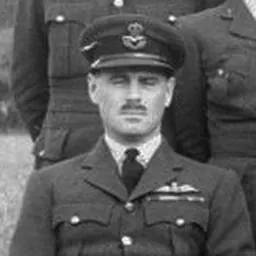
Related people
Same field, nearest in time


Contemporaries
People whose lives overlapped Percy Charles Pickard's




Frequently asked questions
Who was Percy Charles Pickard?
RAF officer (1915–1944)
When was Percy Charles Pickard born?
Percy Charles Pickard was born on 16 May 1915 in Handsworth.
When did Percy Charles Pickard die?
Percy Charles Pickard died on 18 February 1944 in Amiens.
What was Percy Charles Pickard's occupation?
Percy Charles Pickard was an airman.
What nationality was Percy Charles Pickard?
Percy Charles Pickard was British.
Sources & further reading
· Wikipedia: Percy Charles Pickard
Cite this page
APA: Biography.guide. (2026). Percy Charles Pickard. https://biography.guide/percy-charles-pickard/
MLA: "Percy Charles Pickard." Biography.guide, https://biography.guide/percy-charles-pickard/.
Chicago: "Percy Charles Pickard." Biography.guide. https://biography.guide/percy-charles-pickard/.
Data last updated: 2026-09-20 · Spot an error? Report a correction.
Page generated 2026-09-27 05:27 UTC