
About Penny J. White
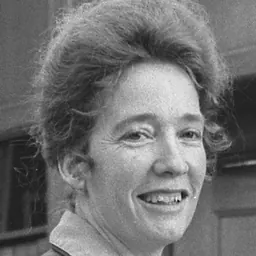
Born 1956. Penny J. White is an American lawyer and judge.
Penny J. White (born May 3, 1956) is an American attorney and former judge who served as a judge on Tennessee's First Judicial Circuit, a judge for the Tennessee Court of Criminal Appeals, and a justice on the Tennessee Supreme Court. she was the second woman to serve on the Tennessee Supreme Court. White was removed from office in a judicial retention election in 1996 as the only justice to lose a retention election in Tennessee under the Tennessee Plan. White's father, Carmen White born in 1919, was an employee of Eastman Base Mountain Construction Company as an electrician. While at University of Tennessee College of Law, White was the editor of the Tennessee Law Review.
Attorney Penny J. White was an attorney after graduating from the University of Tennessee College of Law at Richard Pectol & Associates, a private practice in Johnson City, TN, from 1981 to 1983.
Private practice After obtaining her Doctor of Jurisprudence degree at the University of Tennessee, Penny J. White worked as a private practice attorney between 1981 and 1983 in Johnson City, TN at Richard Pectol & Associates. As an attorney, White gained status after arguing Houston v. Lack before the United States Supreme Court and left an impression on the Supreme Court justices. White served as a judge on every level of Tennessee's court system after leaving the private practice of law. White ran to be on the First Judicial District when Judge Jack Music announced his retirement. In the Tennessee Judicial Conference, Judge White had a mentor Judge George Garret from Sullivan County, TN. Justice John Byers retired from the Tennessee Court of Criminal Appeals when Penny J. White filled his seat. The process of assisted appointment consists of a governor-selected nominee out of three finalists being confirmed by the Tennessee General Assembly. The workload of the Tennessee Court of Criminal Appeals was significantly different from the First Judicial District. She was the second woman ever to serve on the state's highest court. Her appointment filled the seat of retired Justice Charles O'Brien. McClellan was found guilty of sexual harassment during his teaching in the Department of Health, Physical Education, and Recreation at Middle Tennessee State University. The Court of Appeals and the Tennessee Supreme Court upheld this ruling. McClung's husband, the plaintiff, sought relief from the defendants, owners, operators, and tenants for negligence of not providing parking lot security. The Court reviewed Rule 23 in its application to actions that cause injury to property in deciding the potential reasons for action and the adequate amount of damages caused by the action. Tennessee did not charge the death penalty. The trial jury found Phipps guilty sentencing him to life imprisonment. The plaintiff, Ramsey, and his mother were parked when his mother exited the vehicle to check the mailbox. The Court concluded that without a continuance motion, there would not be reasonable time to prepare for trial for the defense counsel even with due diligence. The plaintiff was a benefits recipient of Aid for Dependent Children.
The Tennessee Plan In 1994, the same year that Justice White was appointed, the General Assembly of Tennessee changed the judicial selection process in Tennessee for the Supreme Court to a merit selection process called the Tennessee Plan. The fifteen members of the Judicial Selection Commission, appointed by the speaker of the Tennessee House and Senate, are nominated by several lawyer groups in Tennessee.
Controversy under the Tennessee Plan The reforms to the Tennessee Plan positioned Justice White's judicial selection amongst controversy. White was the first merit-selected justice to stand in a retention election. The Tennessee Conservative Union, a Republican anti-tax group, led the smear campaign against White. Their goal in removing White was for Republican Governor Sundquist to make a Republican-favored appointment to the Tennessee Supreme Court. Sundquist promised Tennesseans to only appoint judges who support the death penalty if given the opportunity. Former Justice White confirms capital punishment as the established precedent in her law review article "A Survey of the Tennessee Supreme Court Death Penalty Cases in the 1990s" written for the Tennessee Law Review. His son, Mike McWherter, has recounted that his father did not like the concept of capital punishment, but that he was committed to upholding the law and the state constitution. White was restrained from campaigning on her own behalf by the judicial code of ethics, but her opponents "flooded the state" with materials urging her defeat. The voter turnout of her retention election was 19%. The attack on Justice White began on June 13, 1996, when the Nashville Banner wrote an article about State v. Odom claiming that the Tennessee Supreme Court did not consider the crime heinous enough for the death penalty. The justices agreed there were procedural errors that warranted a new sentencing hearing. Governor Sundquist subsequently appointed Justice Janice Holder to fill the vacated seat. for = 239614 against = 294781 turnout =
Impact on the judiciary In the retention election, Justice White's retention election "Just say NO!" campaign from the conservatives is perceived as an attack on judicial independence comparable to the retention election of California Supreme Court Justice Rose Bird. This perception of the judiciary following Justice White's retention election has led to increased efforts for visibility through judicial outreach due to the challenges that come with partisan and non-partisan elections. Her removal from the judicial system politicized judicial elections. The executive director of the Death Penalty Information Center, Richard Dieter, references Penny J. White's case in saying when judges find mistakes in criminal trials and death penalty cases, the judge is not supposed to make a ruling based on popular opinion but whether due process and the law was followed. In 2007, Penny J. White gave the keynote address at the National Conference for the National Association of Women Judges. She was invited by the National Association of Women Judges at give the address while a professor at the University of Tennessee School of Law and while she was serving as the Interim Director at the university's Center for Advocacy. White has written opinion pieces in The Tennessean about the fairness of chancery court systems. And Then There Were Yellow Roses, UTK Law Faculty Publications (Spring 2019) The Other Costs of Judicial Elections, 67 DePaul L. Rev. 369 (Winter 2018) Treated Differently in Life but not in Death: The Execution of the Mentally Retarded After Atkins v. Virginia, 76 Tenn. L. Rev. 685 (2009) Using Judicial Performance Evaluations to Supplement Inappropriate Voter Cues and Enhance Judicial Legitimacy, 74 U. Mo. L. Rev. 635 (2009) The Appeal to the Masses, 86 U. Denver L. Rev. 251 (2008) A Matter of Perspective, 3 University of North Carolina First Amendment L. Rev. 5 (Winter 2004) Errors and Ethics: Dilemmas in Death, 29 Hofstra L. Rev. 1265 (Summer 2001) A Response and Retort, 33 Conn. L. Rev. 899 (Spring 2001) Newly Available, Not Newly Discovered, 2 J. of App. Prac. and Proc. 7 (Winter 2000) Can Lightning Strike Twice? Obligations of State Courts After Pulley v. Harris, 70 Col. L. Rev. 813 (Summer 1999) Master, Justice, Chancellor Kent: His Legacy For Today's Judges, 74 Chi-Kent L. Rev (1999) If Justice Is For All, Who Are Its Constituents?, 64 Tenn. L. Rev. 259 (1997) "It's a Wonderful Life," or Is It? America Without Judicial Independence, 27 U. Mem. L. Rev. 1 (1996), partial reprint in 80 Judicature 174 (Jan. - Feb. 1997) Yesterday's Vision, Tomorrow's Challenge: Alternative Dispute Resolution in Tennessee, 26 U. Mem. L. Rev. 957 (1996) A Survey of Tennessee Supreme Court Death Penalty Cases in the 1990s, 61 Tenn. L. Rev. 733 (1994) A Noble Idea Whose Time Has Come, 18 Mem. State L. Rev. 223 (1988) (master's thesis)
Books
Tennessee Capital Case Handbook (Tennessee Association of Criminal Defense Lawyers) (rev'd. edition 2014) Tennessee Capital Case Handbook (Tennessee Association of Criminal Defense Lawyers) (2010)
Chapters in books
Introduction to Gideon v. Wainwright, in Readings in Persuasion: Briefs that Changed the World (2012) Tennessee's New Abolitionists, Chapter 6, Judicial Independence and the Death Penalty (University of Tennessee Press) (2010) Presiding Over a Capital Case: A Benchbook for Judges, Chapter 1, Capital Cases and Federal Constitutional Issues; Chapter 10, Federal Habeas Corpus (William J. Brunson, et al., eds., National Judicial College) (2009) Introduction to Capital Litigation: Overview and History of Capital Jurisprudence in the United States Supreme Court, Chapter 1, Capital Litigation Improvement Initiative Benchbook for State Trial Judges (2009) Review of State Death Sentenced by Federal Courts: The Impact of Federal Habeas Corpus on State Death Penalty Cases, Chapter 10, Capital Litigation Improvement Initiative Benchbook for State Trial Judges (2009) Judicial Independence and Capital Punishment in Tennessee, Chapter 6, Tennessee's New Abolitionists: The Fight Against the Death Penalty in the Volunteer State (2009) Several Chapters in Encyclopedia of American Civil Liberties and Rights (Otis H. Stephens & John Scheb, eds.)(2006) The Improvement of the Administration of Justice, Chapter 33, The Continuing Evolution of the Federal Rules of Evidence (7th ed. 2001) Employee Rights From the Government Perspective: An Overview From the Practicing Attorney's Viewpoint, in Communicating Employee Responsibilities and Rights (Osigweh ed., 1987)
Publications for state court judges
Tennessee's Municipal Court Judges Benchbook (2004–2006) Tennessee General Sessions Court Judges Benchbook (2002- 2005) Post-Conviction Manual for Trial Judges (National Judicial College, university ofNevada 2001) Tennessee Trial Judges Benchbook (2000) Sentencing Manual for State Court Judges, National Judicial College (1998–99)
Personal life Penny J. White met her husband, Mike Okun, while teaching at the University of North Carolina. Mike Okun has a focus on labor and employment law in his teaching at the university level. They travel together. White was very involved with taking care of her elderly parents until their deaths. White spends time outdoors in the mountains and on the lake, and with her nieces and nephews.
Don’t just read it —
keep it.
Full-length biographies made to live with: read them, listen on the way to work, watch them tonight.
- E-book
- Audio
- Video
Instant download · yours to keep · every purchase keeps this site free
Important facts
People in Penny J. White's life
Named in this biography and alive at the same time




Related people
Same field, nearest in time


Contemporaries
People whose lives overlapped Penny J. White's

Frequently asked questions
Who is Penny J. White?
American judge and legal scholar
When was Penny J. White born?
Penny J. White was born on 3 May 1956.
What is Penny J. White's occupation?
Penny J. White is a lawyer and judge.
What nationality is Penny J. White?
Penny J. White is American.
Sources & further reading
Cite this page
APA: Biography.guide. (2026). Penny J. White. https://biography.guide/penny-j-white/
MLA: "Penny J. White." Biography.guide, https://biography.guide/penny-j-white/.
Chicago: "Penny J. White." Biography.guide. https://biography.guide/penny-j-white/.
Data last updated: 2026-09-20 · Spot an error? Report a correction.
Page generated 2026-09-27 05:29 UTC