
About Pedro Muguruza
Lived 1893 – 1952 (aged 58). Pedro Muguruza was a Spanish architect, politician and goalkeeper (association football).
Pedro Muguruza Otaño (1893–1952) was a Spanish architect and Falangist politician.
Biography Born in Madrid on 25 May 1893, his family came from Elgoibar (Gipuzkoa). He earned an architecture degree from the School of Architecture of Madrid in 1916, where he met other future notable architects such as Secundino Zuazo, Leopoldo Torres Balbás or Luis Gutiérrez Soto. He gained a reputation as an exceptional draughtsman when he studied at the School of Architecture. A sports enthusiast, he played goalkeeper for Atlético de Madrid.
In 1917, soon after graduating, Muguruza started to work as lecturer at the School of Architecture thanks to a proposal by Ricardo Velázquez Bosco, and, in March 1920, he finally obtained a Chair of "Projects of Architectural and Ornamental Details".
He married Mercedes Peironcely y Puig de la Bellacasa in 1921. They had no issue.
Among the projects he authored in the 1920s: the France Station in Barcelona (1923), the Palacio de la Prensa in the Gran Vía (1925), the 40-metre high monument to the sacred Heart of Jesus in Bilbao (topped by a sculpture of Lorenzo Coullaut Valera) or the housing project for the Plaza de Rubén Darío (1929). He also led the projects for the restoration of the Monastery of El Paular and the Prado Museum.
During the Second Republic he authored some markets, such as Santa María de la Cabezas's (1933) or Maravillas (1935).
After the outbreak of the Civil War in 1936, Muguruza fled from the Republican area and joined the Francoist side. Franco entrusted him the task or reorganizing the architecture in the territory controlled by the rebels. Muguruza assumed as member of the Real Academia de Bellas Artes de San Fernando in 1938. In June 1939, only 3 months after the Francoist victory in the war, he presided over the Assembly of architects in Madrid, setting the ideological foundations behind the architecture of the new regime. Already Chief of the Services of Architecture of FET y de las JONS, he was appointed to the leadership of the Directorate General for Architecture, structured along totalitarian lines. Muguruza served in the post from 30 September 1939 to 8 March 1946.
Muguruza and his disciple Diego Méndez were the architects who designed the Valle de los Caídos; they aimed to make the site an eternal metaphor of the regime's ideology. He directed the building works until leaving in 1949, reportedly because of a degenerative paralysis; he was replaced by Méndez.
Muguruza died on 3 February 1952 in Madrid.
Don’t just read it —
keep it.
Full-length biographies made to live with: read them, listen on the way to work, watch them tonight.
- E-book
- Audio
- Video
Instant download · yours to keep · every purchase keeps this site free
Important facts
People in Pedro Muguruza's life
Named in this biography and alive at the same time

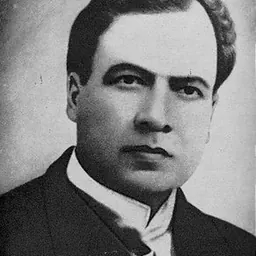
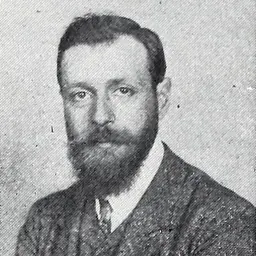

Related people
Same field, nearest in time


Contemporaries
People whose lives overlapped Pedro Muguruza's





Frequently asked questions
Who was Pedro Muguruza?
Spanish architect
When was Pedro Muguruza born?
Pedro Muguruza was born on 25 March 1893 in Elgoibar.
When did Pedro Muguruza die?
Pedro Muguruza died on 3 February 1952 in Madrid.
What was Pedro Muguruza's occupation?
Pedro Muguruza was an architect, politician and goalkeeper (association football).
What nationality was Pedro Muguruza?
Pedro Muguruza was Spanish.
Sources & further reading
Cite this page
APA: Biography.guide. (2026). Pedro Muguruza. https://biography.guide/pedro-muguruza/
MLA: "Pedro Muguruza." Biography.guide, https://biography.guide/pedro-muguruza/.
Chicago: "Pedro Muguruza." Biography.guide. https://biography.guide/pedro-muguruza/.
Data last updated: 2026-09-20 · Spot an error? Report a correction.
Page generated 2026-09-27 05:19 UTC