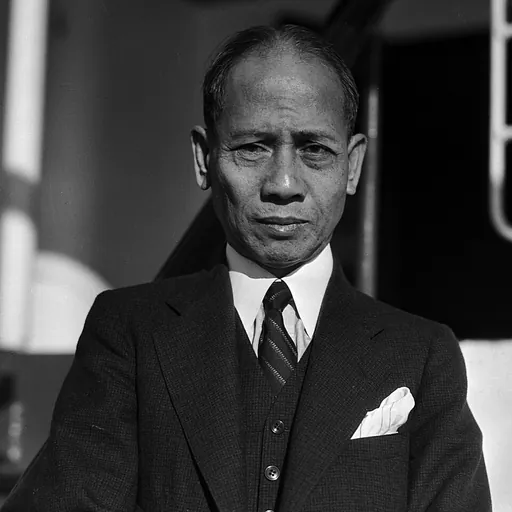
About Pedro Guevara
Lived 1879 – 1938 (aged 58). Pedro Guevara was an American politician and lawyer.
Pedro Guevara y Valenzuela (February 23, 1879 – January 19, 1938), was a Filipino soldier, lawyer, legislator, and Spanish-language writer who became Resident Commissioner of the Philippines during the American occupation.
Early life and education Pedro Guevara was born in Santa Cruz, La Laguna (now Laguna), Philippines on February 23, 1879, to Miguel Guevara and María Valenzuela. Guevara attended Ateneo Municipal de Manila and graduated from Colegio de San Juan de Letran, Manila in 1896.
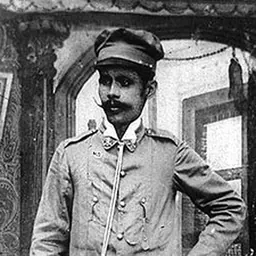
Philippine Revolution Guevara joined the Filipino forces during the Philippine Revolution and assisted in promoting the peace agreement of the Biak na Bato at San Miguel, Bulacan, in 1897. He later rejoined the Filipino forces during the revolution and served throughout the Spanish–American War and the Philippine–American War, attaining the rank of lieutenant colonel. He was the aide and private secretary to General Juan Cailles.
Political career Later, Guevara became a journalist for the Spanish-language newspaper Soberania Nacional and Vidas Filipinas. He entered politics as a municipal councilor of San Felipe Neri, Rizal (present-day city of Mandaluyong, Metro Manila) in 1907. He studied law at La Jurisprudencia and became a lawyer in private practice. He later became a member of the Philippine House of Representatives from the 2nd district of La Laguna from 1909 to 1912 and a member of the Philippine Senate from the 4th senatorial district from 1916 to 1923. In 1921, Guevara was chair of the Philippine delegation to the Far Eastern Bar Conference at Beijing, China.
He gave up his Senate seat in 1923, less than two years before his second term expired, as he was elected as a Nationalist resident commissioner to the House of Representatives of the United States Congress. He would serve for four three-year terms from March 4, 1923, to February 14, 1936. During this time, Guevara worked tirelessly for the approval of the Tydings–McDuffie Act, which would establish the Commonwealth of the Philippines and eventually its independence in 10 years. Later, he served as delegate of Laguna during the Constitutional Convention of 1934 which framed the 1935 Philippine Constitution. His term ended on February 14, 1936, when a successor qualified in accordance with the newly established Commonwealth of the Philippines was selected.
Later life and death Upon retirement, Guevara resumed his law practice. He died of a heart attack in Manila on January 19, 1938, and was buried at the Manila North Cemetery. In 1993, his remains were transferred to Loyola Memorial Park in Marikina.
Gallery
Don’t just read it —
keep it.
Full-length biographies made to live with: read them, listen on the way to work, watch them tonight.
- E-book
- Audio
- Video
Instant download · yours to keep · every purchase keeps this site free
Important facts
People in Pedro Guevara's life
Named in this biography and alive at the same time

Related people
Same field, nearest in time





Contemporaries
People whose lives overlapped Pedro Guevara's





Frequently asked questions
Who was Pedro Guevara?
Filipino politician (1879–1938)
When was Pedro Guevara born?
Pedro Guevara was born on 23 February 1879 in Santa Cruz.
When did Pedro Guevara die?
Pedro Guevara died on 19 January 1938 in Manila.
What was Pedro Guevara's occupation?
Pedro Guevara was a politician and lawyer.
What nationality was Pedro Guevara?
Pedro Guevara was American.
Sources & further reading
Cite this page
APA: Biography.guide. (2026). Pedro Guevara. https://biography.guide/pedro-guevara/
MLA: "Pedro Guevara." Biography.guide, https://biography.guide/pedro-guevara/.
Chicago: "Pedro Guevara." Biography.guide. https://biography.guide/pedro-guevara/.
Data last updated: 2026-09-21 · Spot an error? Report a correction.
Portrait: Wikimedia Commons · author & licence
Page generated 2026-09-27 04:59 UTC