
About Paul Sérant
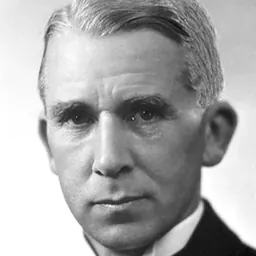
Lived 1922 – 2002 (aged 80). Paul Sérant was a French journalist and writer.
Paul Sérant is the pen name of Paul Salleron (19 March 1922 – 4 October 2002), a French journalist and writer. He was the brother of the Catholic theoretician Louis Salleron. He was a great lover of the French language, but was also a lover of regional diversity, and supported preservation of local cultures such as Breton, Occitan and Basque. His vision for Europe was one in which the nation-states would be dissolved, leaving a federation of ethnic groups.
Life
Paul Salleron was born on 10 March 1922 in Paris. He was one of nine children, the younger brother of the Catholic journalist and theorist Louis Salleron. He was educated by priests. During the occupation of France in World War II (1939–45) he was a member of the Resistance. He then joined the BBC foreign service. He adopted the pen name of Paul Sérant.
The journal Accent grave (revue de l'Occident) was launched in 1963 and published fewer than a dozen issues. Its board of directors included Sérant, Pierre Andreu, Michel Déon, Roland Laudenbach and Philippe Héduy. The journal promoted the ideas of Charles Maurras and had as its theme the crisis of Western civilization. Sérant won three awards from the Académie française:
Sérant died on 2 October 2002 in Avranches, Manche.
Thought
Sérant, though he wrote prolifically, was not part of the literary world, and was not well-known to the public. He published novels that reflected his personal experiences in the post-war period, and he was interested in the mystical and esoteric writings of George Gurdjieff. At first, he was interested in the ideas of traditionalist thinkers such as René Guénon. Later, he devoted himself to the study of ideologies, the crisis of civilization, and regionalism. Sérant was a penetrating and independent thinker who always challenged orthodox opinions of both the left and the right. He wrote about the intellectuals who had collaborated with the German occupiers, and of Portugal under the dictatorship of Salazar. In the early 1970s, he engaged in a vigorous debate with the journalist Louis Pauwels, whom he considered too optimistic, too right-wing, and too Western.
Sérant loved the French language and was proud of its global usage. He said that he would defend the language for its own sake even if it were only used by a small community. In his last work, Les enfants de Jacques Cartier, he explored the history of Americans of French ethnicity including Québécois, Acadians, French-speaking New Englanders, Franco-Indian Métis from Western Canada and Cajuns from Louisiana. His book also examined French-speaking communities in Wallonia, Switzerland and the Aosta Valley. He said that the Jacobin state was the reason for the lack of interest in ethnic French communities outside France, and for the persecution of alien cultures within France.
Sérant was a close follower of Simone Weil and believed in the importance of local roots. He adopted the saying of the Portuguese poet Miguel Torga: "Universal is local without walls". He defended regional cultures such as the Bretons, Occitans and Basques. He saw no problem with these peoples rediscovering the wealth of their original languages, which could not threaten the French language. He wrote, "If I refuse the Bretons the right to speak Breton, I expose myself to one day being refused the right to speak French." In his book La France des minorités (1965), Sérant celebrated and defended the diversity of the regional communities of Flanders, Brittany, the Basque Country, Occitania, Catalonia, Corsica, Alsace and Lorraine. He denounced the destructive Jacobinism that would force all the provinces into the same uniform mold, seeing intolerance of internal diversity as equivalent to hatred of foreign nations and refusal to accept new ideas.
Sérant believed that ethnicism, with its respect for a diversity of cultures, was the opposite of racism, which tried to exalt one community at the expense of others. He thought that the European Federation, starting as a federation of states, could evolve into a federation of ethnic groups in which the unitary French state would disappear. He wrote:
Publications Publications include:
Sérant wrote prefaces to:
Don’t just read it —
keep it.
Full-length biographies made to live with: read them, listen on the way to work, watch them tonight.
- E-book
- Audio
- Video
Instant download · yours to keep · every purchase keeps this site free
Important facts
People in Paul Sérant's life
Named in this biography and alive at the same time




Related people
Same field, nearest in time



Contemporaries
People whose lives overlapped Paul Sérant's

Frequently asked questions
Who was Paul Sérant?
French journalist (1922–2002)
When was Paul Sérant born?
Paul Sérant was born on 19 March 1922 in 7th arrondissement of Paris.
When did Paul Sérant die?
Paul Sérant died on 2 October 2002 in La Godefroy.
What was Paul Sérant's occupation?
Paul Sérant was a journalist and writer.
What nationality was Paul Sérant?
Paul Sérant was French.
Sources & further reading
Cite this page
APA: Biography.guide. (2026). Paul Sérant. https://biography.guide/paul-serant/
MLA: "Paul Sérant." Biography.guide, https://biography.guide/paul-serant/.
Chicago: "Paul Sérant." Biography.guide. https://biography.guide/paul-serant/.
Data last updated: 2026-09-22 · Spot an error? Report a correction.
Page generated 2026-09-27 04:59 UTC