
About Paul Lensch
Lived 1873 – 1926 (aged 52–53). Paul Lensch was a German journalist, economist, politician, university teacher, writer and editing staff.
Paul Lensch (31 March 1873 – 18 November 1926) was a war journalist, editor, author of several books and politician in the SPD. From 1912, Lensch was a member of the German Reichstag for the SPD, and in 1919 he became professor of economics at Berlin University.
Life Lensch was born in Potsdam, Province of Brandenburg. Already in high school he studied Hegel and Marx. After military service he studied economics in Berlin and Strasbourg. In 1900 in Strasbourg he received his doctorate in political science. He then worked as an editor for the newspaper Freie Presse für Elsaß-Lothringen (Free Press for Alsace-Lorraine).
From 1902 he was associate editor of the Leipziger Volkszeitung
Lensch thus converts the Marxist theory of the class struggle to a national level. England was the state of the bourgeois-capitalist class while Germany now had taken the place of the proletariat.
England with its Parliamentary Monarchy was for Lensch the cause of capitalism. The Calvinist religion and the quest for individual wealth in England led to the creation of the bourgeoisie. The British society has an expansive quest for non-English markets, and therefore establishes a monopoly. The now emerging Germany threatened this supremacy, because it stands as a contrast to the individualistic England, and is instead a strong solidarity-oriented country, with no conventional bourgeoisie. He explains this also with the Thirty Years' War and a lack of unification of Germany in the 19th century.
Germany was no longer as reactionary as in the times of Wilhelmine Empire, but had developed democratic elements, which Lensch believed would be increased. For example, general election had been introduced in Germany - and not in liberal England. Further compulsory school attendance had been introduced, creating a national "cultural community" that was superior to the English one. Also Lensch mentions the German conscription as basically socialist in nature, in contrast to the British one.
Lensch do not deny the deficiencies in Germany, but stressed "the strength of the German proletariat" over that of foreign countries. He pointed out that German trade unions were the strongest and most tightly sealed, and contrasted this with the British labor movement and privileges conceded to the bourgeoisie. In Germany the labor leaders and the workers wanted to keep these privileges from others and therefore supported the Government in the war, inferring from this that the victory of Germany would be a victory for international socialism. A British victory would on the other hand set Germany back for years, and mean the end of socialism.
The ideas of socialism as imagined by Lensch differ from the traditionally Marxist. It is about the creation of a national solidarity, which is characterized by government and moral obligations. With this "positive" interpretation of the historical "exceptionalism" of Germany, in contrast to the liberal model country England, Lensch is not alone. Many authors emphasized at the time the superiority of the German "culture" against the "superficial individualistic-capitalist Western civilization" and Ideas of 1914 against the Ideas of 1789.
The fact that Lensch mixed this with Marxist ideas, creating an authoritarian, nationalist model of socialism, is far from unique. There are similarities of this thinking with Ernst Niekisch idea of National Bolsheviks. Also famous is the work 1789 und 1914: Die symbolischen Jahre in der Geschichte des politischen Geistes by Johann Plenge.
Other Through the foundation of the Lensch-Cunow-Haenisch Group, Lensch also was close to Alexander Parvus and he was strongly influenced by Professor Johann Plenge, himself the Ph.D. advisor of Kurt Schumacher and the ancestor of the right-wing tendency in today's SPD known as Seeheimer Kreis. Lensch considered himself a Marxist and saw Germany as the 'revolutionary' side of the conflict, with England as the 'counter-revolutionary'.
It is unclear whether Lensch left the SPD in 1920, after being accused of having supported the Kapp Putsch, or was expelled in 1922.
Books Paul Lensch, Three Years of World Revolution (1918)
Don’t just read it —
keep it.
Full-length biographies made to live with: read them, listen on the way to work, watch them tonight.
- E-book
- Audio
- Video
Instant download · yours to keep · every purchase keeps this site free
Important facts
People in Paul Lensch's life
Named in this biography and alive at the same time


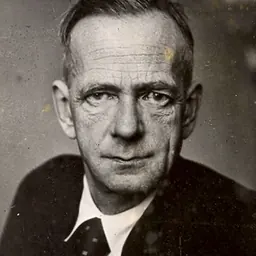

Related people
Same field, nearest in time

Contemporaries
People whose lives overlapped Paul Lensch's


Frequently asked questions
Who was Paul Lensch?
German politician (1873-1926)
When was Paul Lensch born?
Paul Lensch was born in 1873 in Potsdam.
When did Paul Lensch die?
Paul Lensch died in 1926 in Berlin.
What was Paul Lensch's occupation?
Paul Lensch was a journalist, economist, politician, university teacher, writer and editing staff.
What nationality was Paul Lensch?
Paul Lensch was German.
Sources & further reading
Cite this page
APA: Biography.guide. (2026). Paul Lensch. https://biography.guide/paul-lensch/
MLA: "Paul Lensch." Biography.guide, https://biography.guide/paul-lensch/.
Chicago: "Paul Lensch." Biography.guide. https://biography.guide/paul-lensch/.
Data last updated: 2026-09-20 · Spot an error? Report a correction.
Page generated 2026-09-27 05:16 UTC