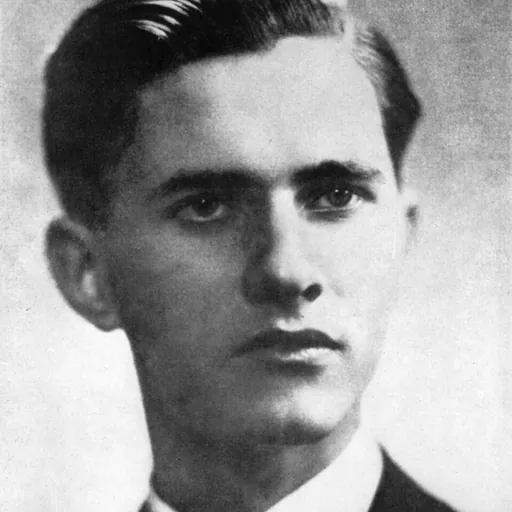
Paul Keres
Estonian chess player and sportsperson
About Paul Keres
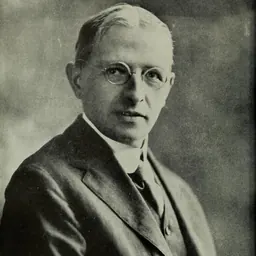
Lived 1916 – 1975 (aged 59). Paul Keres was an Estonian, Russian and German chess player, chess composer, non-fiction writer, sportsperson, journalist and athlete.
Paul Keres (7 January 1916 – 5 June 1975) was an Estonian chess grandmaster and chess writer. He was among the world's top players from the mid-1930s to the mid-1960s, and narrowly missed a chance at a World Chess Championship match on five occasions. As Estonia was repeatedly invaded and occupied during World War II, Keres was forced by the circumstances to represent the Soviet Union (1940–1941, 1944–1975) and Nazi Germany (1941–1944) in international tournaments.
Keres won the AVRO 1938 chess tournament, which led to negotiations for a title match against the reigning World Champion Alexander Alekhine, but the match never took place due to the outbreak of World War II in 1939. Keres was runner-up in the Candidates Tournament on four consecutive occasions in 1953–1962. Due to these and other strong results, many chess historians consider Keres one of the greatest "Super grandmasters" in history, and, along with Viktor Korchnoi, the strongest player never to become world champion.
Robert McFadden of The New York Times described Keres as having "elegant manners and an informal but unflappable bearing", and stated that "his competitiveness and well‐known sense of fairness made him one of the game's most popular figures". Widely admired by Estonians to this day, he was nicknamed "Paul the Second", "The Eternal Second", and "The Crown Prince of Chess".
Early life Keres was born in 1916 in Joaoru, a village in the Governorate of Estonia of the Russian Empire then situated just outside the city limits (now administratively part) of Narva, to parents Peeter and Marie Keres (née Lämmergas). He was two years old when Estonia became an independent country in 1918.
Keres grew up in Pärnu, Estonia. He first learned about chess from his father and his elder brother Harald (afterwards a prominent physicist, who later told friendly jokes to his students: "I am not Paul's brother; Paul is my brother"). With the scarcity of chess literature in his home town, he learned about chess notation from the chess puzzles in the daily newspaper, and compiled a handwritten collection of almost 1000 games. In his early days, he was known for a brilliant and sharp attacking style.
In independent Estonia Keres was a three-time schoolboy champion of the country, in 1930, 1932, and 1933. His playing matured after playing correspondence chess extensively while in high school. He probably played about 500 correspondence games, and at one stage had 150 correspondence games going simultaneously. In 1935, he won the Internationaler Fernschachbund (IFSB) international correspondence chess championship. From 1937 to 1941 he studied mathematics at the University of Tartu, and competed in several inter-university matches.
Keres achieved a very good result at the age of 17 in a Master tournament in Tallinn 1933 with 5/7 (+5−2=0), tied 3rd–4th, half a point behind joint winners Paul Felix Schmidt and V. Kappe. Keres became champion of Estonia for the first time in 1935. He tied for first (+5−2=1) with Gunnar Friedemann in the tournament, then defeated him (+2−1=0) in the playoff match. In April 1935, Keres defeated Feliks Kibbermann, one of Tartu's leading masters, in a training match, by (+3−1=0).
Keres played on for Estonia in the 6th Chess Olympiad at Warsaw 1935, and was regarded as the new star, admired for his dashing style. His success there gave him the confidence to venture onto the international circuit.
At Helsinki 1935, he placed 2nd behind Paulin Frydman with 6½/8 (+6−1=1). He won in Tallinn 1936 with 9/10 (+8−0=2). Keres' first major international success against top-level competition came at Bad Nauheim 1936, where he tied for first with Alexander Alekhine at 6½/9 (+4−0=5). He struggled at Dresden 1936, placing only 8–9th with (+2−4=3), but wrote that he learned an important lesson from this setback. Keres recovered at Zandvoort 1936 with a shared 3rd–4th place (+5−3=3). He then defended his Estonian title in 1936 by drawing a challenge match against Paul Felix Schmidt with (+3−3=1).
Keres had a series of successes in 1937. He won in Tallinn with 7½/9 (+6−0=3), then shared 1st–2nd at Margate with Reuben Fine at 7½/9 (+6−0=3), 1½ points ahead of Alekhine. In Ostend, he tied 1st–3rd places with Fine and Henry Grob at 6/9 (+5−2=2). Keres dominated in Prague to claim first with 10/11 (+9−0=2). He then won a theme tournament in Vienna with 4½/6 (+4−1=1); the tournament saw all games commence with the moves 1.d4 Nf6 2.Nf3 Ne4, known as the Döry Defence. He tied for 4–5th places at Kemeri with 11½/17 (+8−2=7), as Salo Flohr, Vladimirs Petrovs and Samuel Reshevsky won. Then he tied 2nd–4th in Pärnu with 4½/7 (+3−1=3).
This successful string earned him an invitation to the tournament at Semmering–Baden 1937, which he won with 9/14 (+6−2=6), ahead of Fine, José Raúl Capablanca, Reshevsky, and Erich Eliskases. Keres, in his autobiographical games collection, refers to this major event as a 'Candidates' Tournament', and claimed that he was recognized as a Grandmaster after winning it, although its parallel connection with later FIDE-organized Candidates' tournaments (from 1950 onwards) is not exact, and the Grandmaster title was not formalized by FIDE until 1950.
Keres tied for second at Hastings 1937–38 with 6½/9 (+4−0=5) (half a point behind Reshevsky), and at Noordwijk 1938 (behind Eliskases) with 6½/9 (+4−0=5). Keres drew an exhibition match at Stockholm 1938 with Gideon Ståhlberg on 4–4 (+2−2=4). Warsaw 1935, Estonia board 1, 12½/19 (+11−5=3); Munich 1936 (unofficial Olympiad), Estonia board 1, 15½/20 (+12−1=7), board gold medal; Stockholm 1937, Estonia board 1, 11/15 (+9−2=4), board silver medal; Buenos Aires 1939, Estonia board 1, 14½/19 (+12−2=5), team bronze medal.
World Championship match denied
In 1938, he tied with Fine for first, with 8½/14, in the all-star AVRO tournament, held in various cities in the Netherlands, ahead of chess legends Mikhail Botvinnik, Max Euwe, Reshevsky, Alekhine, Capablanca and Flohr. AVRO was one of the strongest tournaments in history; some chess historians believe it the strongest ever staged. Keres won on tiebreak because he beat Fine 1½–½ in their individual two games.
It was expected that the winner of this tournament would be the challenger for the World Chess Championship, in a match against World Champion Alexander Alekhine, but the outbreak of the Second World War, especially because of the first occupation of Estonia by the Soviet Union in 1940–41, brought negotiations with Alekhine to an end. Keres had begun his university studies in 1937, and this also played a role in the failure to set up a match.
Keres struggled at Leningrad–Moscow 1939 with a shared 12–13th place; he wrote that he had not had enough time to prepare for this very strong event, where he faced many Soviet top players for the first time. But he recovered with more preparation time, and won Margate 1939 with 7½/9 (+6−0=3), ahead of Capablanca and Flohr. A 1942 newspaper interview with Keres was later used by the Nazis for anti-Soviet propaganda. As a consequence, he was suspected of collaboration with the Nazis and questioned by the Soviet authorities. Keres managed to avoid deportation or any worse fate (e.g., that of Vladimirs Petrovs); however, he may have been held in detention; precise details are difficult to ascertain.
But his return to the international chess scene was delayed, in spite of his excellent form; he won at Riga 1944/45 (Baltic Championship) (10½/11). Presumably for political reasons, he was excluded from the ten-player Soviet team for the 1945 radio match against the US, and he did not participate in the first great post-war tournament at the 1946 Groningen tournament which was won by Botvinnik, just ahead of Euwe and Smyslov.
He won the Estonian Championship at Tallinn 1945 with 13/15 (+11−0=4), ahead of several strong visiting Soviets, including Alexander Kotov, Alexander Tolush, Lilienthal, and Flohr. He then won at Tbilisi 1946 (hors concours in the Georgian Championship) with a near-perfect score of 18/19, ahead of Vladas Mikėnas and a 16-year-old Tigran Petrosian.
Keres finished second or equal second in four straight Candidates' tournaments (1953, 1956, 1959, 1962), making him the player with the most runner-up finishes in that event. (He was therefore occasionally nicknamed "Paul II".) Keres participated in a total of six Candidates' Tournaments: Bronstein, in his final book, published just after his death in late 2006, wrote that the Soviet chess leadership favoured Smyslov to win Zurich 1953, and pressured several of the other top Soviets to arrange this outcome, which did in fact occur. Bronstein wrote that Keres was ordered to draw his second cycle game with Smyslov, to conserve Smyslov's fading physical strength; Keres, who still had his own hopes of winning the event, tried as White to win an attacking game, but instead lost because of Smyslov's excellent play.
Three-time champion of USSR
In several other post-war events, however, Keres dominated the field. He won the exceptionally strong USSR Chess Championship three times. In 1947, he won at Leningrad, URS-ch15, with 14/19 (+10−1=8); the field included every top Soviet player except Botvinnik. In 1950, he won at Moscow, URS-ch18, with 11½/17 (+8−2=7) against a field which was only slightly weaker than in 1947. Then in 1951, he triumphed again at Moscow, URS-ch19, with 12/17 (+9−2=6),
International team successes Keres represented the Soviet Union in seven consecutive Olympiads, winning seven consecutive team gold medals, five board gold medals, and one bronze board medal. Of note was his appearance on for the USSR in 1952, when the Soviets entered the event for the first time; Keres was the only Soviet team member with Olympiad experience (from his previous appearances for Estonia), and world champion Mikhail Botvinnik was not on the Soviet team. His four straight board gold medals from 1954 to 1960 is an Olympiad record. Although not selected after 1964, Keres served successfully as a team trainer with Soviet international teams for the next decade. Altogether, in 11 Olympiads, playing for both the USSR and Estonia (counting the unofficial Munich 1936 event), and in 161 games, Keres accumulated a brilliant total of (+97−13=51), for 76.1%. His detailed 1952–1964 Olympiad results are: Helsinki 1952, USSR board 1, 6½/12, team gold; Amsterdam 1954, USSR board 4, 13½/14 (+13−0=1), team gold, board gold, best overall score; Moscow 1956, USSR board 3, 9½/12 (+7−0=5), team gold, board gold; Munich 1958, USSR board 3, 9½/12 (+7−0=5), team gold, board gold; Leipzig 1960, USSR board 3, 10½/13 (+8−0=5), team gold, board gold; Varna 1962, USSR board 4, 9½/13 (+6−0=7), team gold, board bronze; Tel Aviv 1964, USSR board 4, 10/12 (+9−1=2), team gold, board gold.
Keres also appeared three times for the Soviet Union in the European Team Championships, winning team and individual gold medals on all three occasions. He scored 14/18 (+10−0=8), for 77.8%. His detailed Euroteams results are: Vienna 1957, USSR board 2, 3/5 (+1−0=4), team gold, board gold; Oberhausen 1961, USSR board 3, 6/8 (+4−0=4), team gold, board gold; Kapfenberg 1970, USSR board 8, 5/5 (+5−0=0), team gold, board gold.
Keres also represented the USSR in many international team matches, in Europe and the Americas, with great success. He represented Estonia on top board with distinction in Soviet team championships, contested between regions.
Later career
Beginning with the Pärnu 1947 tournament, Keres made some significant contributions as a chess organizer in Estonia; this is an often overlooked aspect of his career.
Keres continued to play exceptionally well on the international circuit. He tied 1st–2nd at Hastings 1954–55 with Smyslov on 7/9 (+6−1=2). He dominated an internal Soviet training tournament at Pärnu 1955 with 9½/10. Keres placed 2nd at the 1955 Gothenburg Interzonal, behind David Bronstein, with 13½/20. Keres defeated Wolfgang Unzicker in a 1956 exhibition match at Hamburg by 6–2 (+4−0=4). He tied 2nd–3rd in the USSR Championship, Moscow 1957 (URS-ch24) with 13½/21 (+8−2=11), along with Bronstein, behind Mikhail Tal. Keres won Mar del Plata 1957 (15/17, ahead of Miguel Najdorf), and Santiago 1957 with 6/7, ahead of Alexander Kotov. He won Hastings 1957–58 (7½/9, ahead of Svetozar Gligorić). He was tied 3rd–4th at Zurich 1959, at 10½/15, along with Bobby Fischer, behind Tal and Gligorić. He placed tied 7–8th in the USSR Championship, Tbilisi 1959 (URS-ch26) with 10½/19, as Petrosian won. Keres was third at Stockholm 1959–60 with 7/9. He won at Pärnu 1960 with 12/15. He was the champion at Zurich 1961 (9/11, ahead of Petrosian). At the elite Bled 1961 event, Keres shared 3rd–5th places, on 12½/19 (+7−1=11), behind Mikhail Tal and Bobby Fischer. In the USSR Championship, Baku 1961 (URS-ch29), Keres scored 11/20 for a shared 8–11th place, as Boris Spassky won. Keres shared first with World Champion Tigran Petrosian at the very strong 1963 Piatigorsky Cup in Los Angeles with 8½/14. He won at Hastings 1964–65 with 8/9. He shared 1st–2nd places at Mariánské Lázně 1965 on 11/15 with Vlastimil Hort. In the USSR Championship at Tallinn 1965 (URS-ch33), he scored 11/19 for 6th place, as Leonid Stein won. He won at Stockholm 1966–67 with 7/9. At Winnipeg 1967, he shared 3rd–4th places on 5½/9 as Bent Larsen and Klaus Darga won.
Keres died of a heart attack in Helsinki, Finland, at the age of 59 (it is often erroneously reported that he died on the same date in Vancouver, Canada). His death occurred while returning to Estonia from a tournament in Vancouver, which he had won.
Memory and memorials
A statue honouring him is located in Tõnismägi, Tallinn. A bronze statue of Keres was unveiled on his 100th birthday in his birthtown Narva on 7 January 2016. Streets in Nõmme, a district of Tallinn, in Narva and Pärnu are named after him.
An annual international chess tournament has been held in Tallinn every other year since 1969. Keres won this tournament in 1971 and 1975. Starting in 1976 after Keres' death, it has been called the Paul Keres Memorial Tournament. There are also the annual Keres Memorial tournament held in Vancouver and a number of chess clubs and festivals named after him.
In 2000, Keres was elected the Estonian Sportsman of the Century.
The World Chess Federation named 2016 as "The Year of Paul Keres".
Legacy and writings
The unofficial Chessmetrics system places Keres in the top 10 players in the world between approximately 1936 and 1965, and overall he had one of the highest winning percentages of all grandmasters in history. He has the seventh highest Chessmetrics 20-year average, from 1944 to 1963, behind five World Champions and Victor Korchnoi.
He was one of few players to have plus records against Capablanca, Euwe and Tal, and he also had equal records against Smyslov, Petrosian and Anatoly Karpov. In his long career, he played 10 world champions. He won at least one game against all from Capablanca to Bobby Fischer (his two games with Karpov were drawn), making him one of only three players to beat nine undisputed world champions (the other two are Victor Korchnoi and Alexander Beliavsky). Other notable grandmasters against whom he had plus records include Fine, Flohr, Viktor Korchnoi, Efim Geller, Savielly Tartakower, Mark Taimanov, Milan Vidmar, Svetozar Gligorić, Isaac Boleslavsky, Efim Bogoljubov and Bent Larsen.
He wrote chess books that included a well-regarded, deeply annotated collection of his best games, Grandmaster of Chess , The Art of the Middle Game (with Alexander Kotov) , and Practical Chess Endings . All three books are still considered among the best of their kind for aspiring masters and experts. He also wrote several tournament books, including an account of the 1948 World Championship Match Tournament. He authored several openings treatises, often in German: Spanisch bis Französisch, Dreispringer bis Königsgambit , and Vierspringer bis Spanisch. He contributed to the first volume, 'C', of the first edition of the Yugoslav-published Encyclopaedia of Chess Openings (ECO), which appeared in 1974. Keres also co-founded the Riga magazine Shakhmaty.
Keres published 180 problems and 30 studies, including a rook ending that won a first prize in 1947."
Keres won top-class tournaments from the mid-1930s into the mid-1970s, a span of 40 years, and won major events in western Europe, eastern Europe, the Soviet Union, South America, and North America. Botvinnik, by contrast, never competed in the Americas during his career.
His rival Samuel Reshevsky said that Keres failed to become world champion because he lacked a killer instinct and "was too mild a person to give his all in order to defeat his opponents. He took everything, including his chess, philosophically. Keres is one of the nicest people that I have ever had the pleasure of meeting. With his friendly and sincere smile, he makes friends easily. He is goodnatured and kind. Yes, he loves chess, but being a human being is his first consideration. In addition to chess, Keres was interested in tennis, ping-pong, swimming, and bridge."
Books
Notable games Keres vs. Alexander Alekhine, Margate 1937, Ruy Lopez, Modern Steinitz Defence (C71). Here Keres outplayed Alekhine already in the first 15 moves. The game is crowned by two small combinations. Keres vs. José Raúl Capablanca, AVRO Amsterdam 1938, French Defence, Tarrasch Variation (C09), 1–0. Almost unpredictable jumps of the white knight slowly destroy Black's position. A beautiful game. Max Euwe vs. Keres, Amsterdam 1940 (match), Queen's Indian Defence, Old main line (E19). Black reveals a series of brilliant tactical surprise moves, concluding elegantly against the former world champion. Keres vs. Jaroslav Šajtar, Amsterdam 1954 (ol), Sicilian Defence, Najdorf Variation (B94), 1–0. A typical Sicilian sacrifice on e6 leads to swift . Keres vs. Mikhail Botvinnik, Moscow 1956 (Alekhine Memorial), Sicilian Defence, Classical Variation, Richter–Rauzer Attack (B63), 1–0. Keres had a minus score against Botvinnik, but here he defeats the world champion in convincing style.
Tournament and match record Keres' tournament and match record:
Tournaments
Matches Year !! Opponent !! Result
Scores against other top grandmasters
Only official tournament or match games are accounted for.
Alexander Alekhine: +1−5=8 Mikhail Botvinnik: +3−8=9 David Bronstein: +4−6=18 José Raúl Capablanca: +1−0=5
Max Euwe: +11−7=9 Reuben Fine: +3−1=8 Bobby Fischer: +3−4=3 Efim Geller: +8−7=21
Anatoly Karpov: +0−0=2 Viktor Korchnoi: +4−1=12 Bent Larsen: +2−0=4 Tigran Petrosian: +3−3=27
Lajos Portisch: +1−4=3 Vasily Smyslov: +8−10=21 Boris Spassky: +3−5=29 Mikhail Tal: +8−4=20
Don’t just read it —
keep it.
Full-length biographies made to live with: read them, listen on the way to work, watch them tonight.
- E-book
- Audio
- Video
Instant download · yours to keep · every purchase keeps this site free
Important facts
People in Paul Keres's life
Named in this biography and alive at the same time




Related people
Same field, nearest in time
Contemporaries
People whose lives overlapped Paul Keres's



Frequently asked questions
Who was Paul Keres?
Estonian chess player and sportsperson (1916–1975)
When was Paul Keres born?
Paul Keres was born on 7 January 1916 in Narva.
When did Paul Keres die?
Paul Keres died on 5 June 1975 in Helsinki.
What was Paul Keres's occupation?
Paul Keres was a chess player, chess composer, non-fiction writer, sportsperson, journalist and athlete.
What nationality was Paul Keres?
Paul Keres was Estonian, Russian and German.
Sources & further reading
Cite this page
APA: Biography.guide. (2026). Paul Keres. https://biography.guide/paul-keres/
MLA: "Paul Keres." Biography.guide, https://biography.guide/paul-keres/.
Chicago: "Paul Keres." Biography.guide. https://biography.guide/paul-keres/.
Data last updated: 2026-09-20 · Spot an error? Report a correction.
Portrait: Wikimedia Commons · author & licence
Page generated 2026-09-27 04:57 UTC