
About Max Euwe
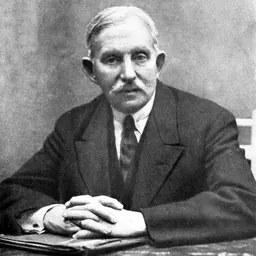
Lived 1901 – 1981 (aged 80). Max Euwe was a Dutch chess player, mathematician, chess official, writer, computer scientist and university teacher.
Machgielis "Max" Euwe (; May 20, 1901 – November 26, 1981) was a Dutch chess player, mathematician, author, and chess administrator. He was the fifth player to become World Chess Champion, a title he held from 1935 until 1937. He served as President of FIDE, the World Chess Federation, from 1970 to 1978.
Early years, education, and professional career Euwe was born in the Watergraafsmeer, in Amsterdam. He studied mathematics at the University of Amsterdam under the founder of intuitionistic logic, L.E.J. Brouwer (who later became his friend and for whom he held a funeral oration), and earned his doctorate in 1926 under Roland Weitzenböck. He taught mathematics, first in Rotterdam, and later at a girls' Lyceum in Amsterdam. After World War II, Euwe became interested in computer programming and was appointed professor in this subject at the universities of Rotterdam and Tilburg, retiring from Tilburg University in 1971. He published a mathematical analysis of the game of chess from an intuitionistic point of view, in which he showed, using the Thue–Morse sequence, that the then-official rules (in 1929) did not exclude the possibility of infinite games.
Early chess career Euwe played his first tournament at age 10, winning every game. He won every Dutch chess championship that he entered from 1921 until 1952, and won the title again in 1955; his 12 titles are still a record. The only other winners during this period were Salo Landau in 1936, when Euwe, then world champion, did not compete; and Jan Hein Donner in 1954. He became the world amateur chess champion in 1928, at The Hague, with a score of 12/15.
Euwe married in 1926, started a family soon afterwards, and could play competitive chess only during school vacations, so his opportunities for top-level international chess competition were limited. But he performed well in the few tournaments and matches for which he could find time, from the early 1920s to mid-1930s. He lost a training match to Alexander Alekhine in the Netherlands in December 1926 / January 1927, with 4½/10 (+2−3=5). The match was played to help Euwe prepare for a future encounter with José Raúl Capablanca, then world champion. Euwe lost both the first and second FIDE Championship matches to Efim Bogoljubow, held in the Netherlands in 1928 and 1928‒29 respectively, scoring 4½/10 in each match (+2−3=5 in the first match; +1−2=7 in the second match). He lost a match to Capablanca in Amsterdam in 1931 with 4/10 (+0−2=8). He won a match against Spielmann in Amsterdam in 1932, 3–1, played to help Euwe prepare for his upcoming match with Salo Flohr.
In 1932, Euwe drew a match with Flohr 8–8, According to Reuben Fine, these results established Euwe and Flohr as Alekhine's most credible challengers.
World Champion Euwe (seated), after one of the games from the 1935 Alekhine-Euwe match. In 1933, Max Euwe challenged Alekhine to a championship match. Alekhine accepted the challenge for October 1935. Earlier that year, Dutch radio sports journalist Han Hollander asked Capablanca for his views on the forthcoming match. In the rare archival film footage where Capablanca and Euwe both speak, Capablanca replies: "Dr. Alekhine's game is 20% bluff. Dr. Euwe's game is clear and straightforward. Dr. Euwe's game—not so strong as Alekhine's in some respects—is more evenly balanced." Then Euwe gives his assessment in Dutch, explaining that his feelings alternated from optimism to pessimism, but in the previous ten years, their score had been evenly matched at 7–7.
On December 15, 1935, after 30 games played in 13 different cities around the Netherlands over a period of 80 days, Euwe defeated Alekhine by 15½–14½, becoming the fifth World Chess Champion. Alekhine quickly went three games ahead, but Euwe managed to even out and eventually win the match. His title gave a huge boost to chess in the Netherlands. It was also the first world championship where the players had to help them with analysis during .
Euwe's win was regarded as a major upset – he reportedly had believed that beating Alekhine was unlikely But Salo Flohr, who helped Euwe during the match, thought Alekhine's over-confidence was more of a problem than alcohol; Alekhine himself said he would win easily.
Euwe's performance in the great tournament of Nottingham 1936 (equal third, half a point behind Botvinnik and Capablanca, half a point ahead of Alekhine) indicated he was a worthy champion, even if he was not as dominant as the earlier champions. Reuben Fine wrote, "In the two years before the return match, Euwe's strength increased. Although he never enjoyed the supremacy over his rivals that his predecessors had, he had no superiors in this period."
Euwe lost the title to Alekhine in a rematch in 1937, also played in the Netherlands, by the lopsided margin of 15½–9½. Alekhine had given up alcohol and tobacco to prepare for the rematch, although he resumed drinking later. He returned to the sort of form he had shown from 1927 to 1934, when he dominated chess. The match was a real contest initially, but Euwe's play collapsed near the end, and he lost four of the last five games. Fine, who was Euwe's second, attributed the collapse to nervous tension, possibly aggravated by Euwe's attempts to maintain a calm appearance. In 1950, FIDE granted Euwe the title of international grandmaster on its inaugural list. He took part in the Gijón international tournament in 1951, winning ahead of Pilnik and Rossolimo with a score of +7=2.
Euwe's final major tournament was the double round robin Candidates' Tournament in Zürich, 1953, where he finished next to last. He was in the top half of the field after the first half of the tournament, but tired in the second half.
Euwe played for the Netherlands in seven Chess Olympiads from 1927 to 1962, a 35-year span, always on . He scored 10½/15 at London 1927, 9½/13 at Stockholm 1937 for a bronze medal, 8/12 at Dubrovnik 1950, 7½/13 at Amsterdam 1954, 8½/11 at Munich 1958 for a silver medal at age 57, 6½/16 at Leipzig 1960, and finally 4/7 at Varna 1962. His aggregate was 54½/87 for 62.6 percent.
In 1957, Euwe played a short match against 14-year-old future world champion Bobby Fischer, winning one game and drawing the other. His lifetime score against Fischer was one win, one loss, and one draw.
Euwe won a total of 102 first prizes in tournaments during his career, many of them local. although the Soviets had won the 1964 Olympiad which had also been held in Israel. The Central Committee of Communist Party of the Soviet Union then started plotting to depose Euwe as president of FIDE.
Euwe lost some of his battles with the Soviets. According to Sosonko, in 1973, he accepted the Soviets' demand that Bent Larsen and Robert Hübner, the two strongest non-Soviet contenders (Fischer was now champion), should play in the Leningrad Interzonal tournament rather than the weaker one in Petrópolis. Larsen and Hübner were eliminated from the competition for the World Championship because Korchnoi and Karpov took the first two places at Leningrad.
Despite the turbulence of the period, most assessments of Euwe's performance as president of FIDE are sympathetic: Revered around the chess world for his many contributions, he had travelled extensively while FIDE President, bringing many new members into the organisation.
Assessment of Euwe's chess Euwe was noted for his logical approach and for his knowledge of openings, in which he made major contributions to chess theory. Fischer World Champion, an account of the 1972 World Chess Championship match, co-authored by Euwe with Jan Timman, was written in 1972 but not published in English until 2002. Euwe's book From My Games, 1920–1937 was originally published in 1939 by Harcourt, Brace and Company, and was republished by Dover in 1975 . He also did not forget children in his published writings. The year he won the World Chess Championship he wrote a book named in .
Don’t just read it —
keep it.
Full-length biographies made to live with: read them, listen on the way to work, watch them tonight.
- E-book
- Audio
- Video
Instant download · yours to keep · every purchase keeps this site free
Important facts
People in Max Euwe's life
Named in this biography and alive at the same time
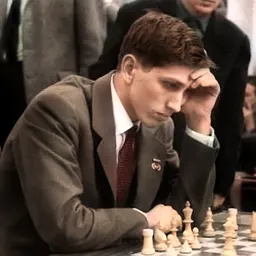

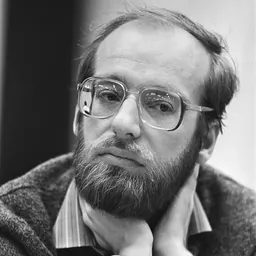
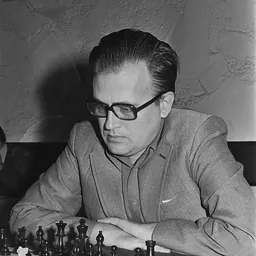
Related people
Same field, nearest in time
Contemporaries
People whose lives overlapped Max Euwe's



Frequently asked questions
Who was Max Euwe?
Dutch chess player and mathematician
When was Max Euwe born?
Max Euwe was born on 20 May 1901 in Amsterdam.
When did Max Euwe die?
Max Euwe died on 26 November 1981 in Amsterdam.
What was Max Euwe's occupation?
Max Euwe was a chess player, mathematician, chess official, writer, computer scientist and university teacher.
What nationality was Max Euwe?
Max Euwe was Dutch.
Sources & further reading
Cite this page
APA: Biography.guide. (2026). Max Euwe. https://biography.guide/max-euwe/
MLA: "Max Euwe." Biography.guide, https://biography.guide/max-euwe/.
Chicago: "Max Euwe." Biography.guide. https://biography.guide/max-euwe/.
Data last updated: 2026-09-26 · Spot an error? Report a correction.
Page generated 2026-09-27 05:16 UTC