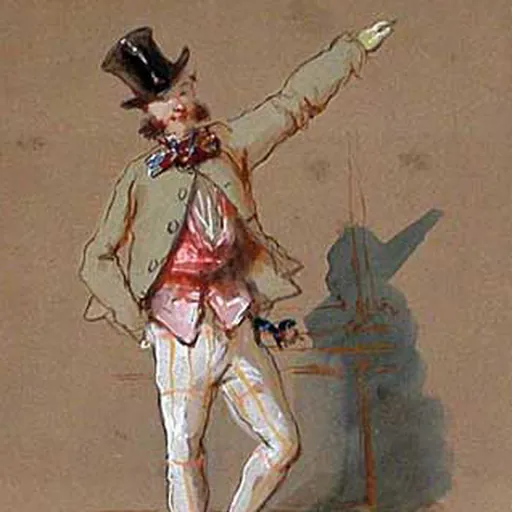
About Paul Gavarni
Lived 1804 – 1866 (aged 62). Paul Gavarni was a French caricaturist, painter, illustrator, draftsperson, graphic artist and visual artist.
Paul Gavarni was the pen name of Sulpice Guillaume Chevalier (13 January 1804 – 24 November 1866),
Pen name The story is told that he took his name from Gavarnie in Luz-Saint-Sauveur where he had taken a journey into the Pyrenees.
At the time, Gavarni was barely thirty years of age. His sharp and witty drawings gave these generally commonplace and unartistic figures a life-likeness and an expression which soon won him a name in fashionable circles. He gradually gave greater attention to this more congenial work, and ultimately stopped working as an engineer to become the director of the journal . He also illustrated Honoré de Balzac's novels, and Eugène Sue's Wandering Jew.
Illustrated works Among his illustrated works were . He had now ceased to be director of ; but he was engaged as ordinary caricaturist of , and, while making the fortune of the paper, he made his own. His name was exceedingly popular, and his illustrations for books were eagerly sought for by publishers. , by Eugene Sue (1843, 4 vols. 8vo), the French translation of Hoffman's tales (1843, 8 vo), the first collective edition of Balzac's works (Paris, Houssiaux, 1850, 20 vols. 8 vo), (1844–1846, 2 vols. 4 vo), (1840–1843, 9 vols. 8vo), the collection of Physiologies published by Aubert in 38 vols. 18mo (1840–1842), all owed a great part of their success at the time, and are still sought for, on account of the clever and telling sketches contributed by Gavarni.
Change in focus
A single frontispiece or vignette was sometimes enough to secure the sale of a new book. Always desiring to enlarge the field of his observations, Gavarni soon abandoned his once favourite topics. He no longer limited himself to such types as the lorette and the Parisian student, or to the description of the noisy and popular pleasures of the capital, but turned his mirror to the grotesque sides of family life and of humanity at large. , , Les Fourberies des femmes, , , , , , , , , , , etc., were composed at this time, and are his most elevated productions. But while showing the same power of irony as his former works, enhanced by a deeper insight into human nature, they generally bear the stamp of a bitter and even sometimes gloomy philosophy.
At one point Gavarni was imprisoned for debt in the debtors' prison of Clichy.
Visit to England
Gavarni visited England in 1849. On his return his impressions were published in the book (1862) by Émile de la Bédollière.
Most of these last compositions appeared in the weekly paper . In 1857 he published in one volume the series entitled (1 vol. 12 mo), and in 1869, about two years after his death, his last artistic work, (1 vol. fol.), was given to the world. Gavarni was much engaged, during the last period of his life, in scientific pursuits, and this fact must perhaps be connected with the great change which then took place in his manner as an artist. He sent several communications to the Académie des Sciences, and until his death on 23 November 1866 he was eagerly interested in the question of aerial navigation. It is said that he made experiments on a large scale with a view to finding the means of directing balloons; but it seems that he was not as successful in this line as his fellow artist, the caricaturist and photographer, Nadar.
Collections and catalogues Gavarni's was published in 1845, A catalogue raisonné of Gavarni's works was published by J. Armehault and E. Bocher, Paris in 1873.
Don’t just read it —
keep it.
Full-length biographies made to live with: read them, listen on the way to work, watch them tonight.
- E-book
- Audio
- Video
Instant download · yours to keep · every purchase keeps this site free
Important facts
more
Guillaume Sulpice Chevalier, Guillaume Sulpice Chevallier Gavarni, Chevalier Hippolyte Guillaume Sulpice Gavarni, Guillaume Sulpice Chevallier, Guillaume Gavarni, Pol Gavarni, Hippolyte-Guillaume-Sulpice Chevalier Gavarni, William Chevalier, Hippolyte Chevalier, Guillaume Chevalier, Sulpice-Guillaume Chevalier, eigentlich guillaume sulpice chevalier gavarni paul, paul gavPeople in Paul Gavarni's life
Named in this biography and alive at the same time
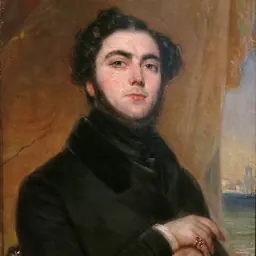
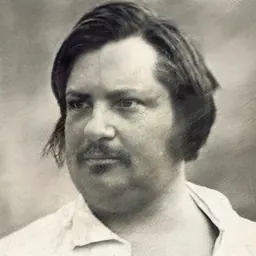

Related people
Same field, nearest in time


Contemporaries
People whose lives overlapped Paul Gavarni's






Frequently asked questions
Who was Paul Gavarni?
French caricaturist (1804-1866)
When was Paul Gavarni born?
Paul Gavarni was born on 13 January 1804 in Paris.
When did Paul Gavarni die?
Paul Gavarni died on 23 November 1866 in 16th arrondissement of Paris.
What was Paul Gavarni's occupation?
Paul Gavarni was a caricaturist, painter, illustrator, draftsperson, graphic artist and visual artist.
What nationality was Paul Gavarni?
Paul Gavarni was French.
Sources & further reading
Cite this page
APA: Biography.guide. (2026). Paul Gavarni. https://biography.guide/paul-gavarni/
MLA: "Paul Gavarni." Biography.guide, https://biography.guide/paul-gavarni/.
Chicago: "Paul Gavarni." Biography.guide. https://biography.guide/paul-gavarni/.
Data last updated: 2026-09-24 · Spot an error? Report a correction.
Portrait: Wikimedia Commons · author & licence
Page generated 2026-09-27 05:09 UTC