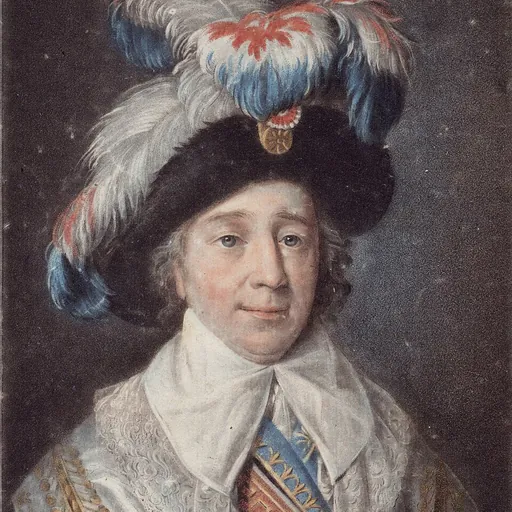
Paul François Jean Nicolas, vicomte de Barras
French politician
About Paul François Jean Nicolas, vicomte de Barras
Lived 1755 – 1829 (aged 73). Paul François Jean Nicolas, vicomte de Barras was a French politician, salonnière and judge.
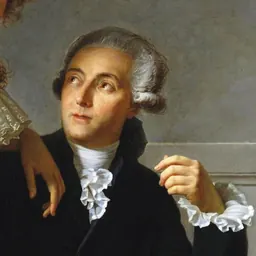
Paul François Jean Nicolas, Vicomte de Barras ( , ; 30 June 1755 – 29 January 1829), commonly known as Paul Barras, was a French politician of the French Revolution, and the main executive leader of the Directory regime of 1795–1799.
Early life Descended from a noble family of Provence, he was born at Fox-Amphoux, in today's Var département. At the age of sixteen, he entered the regiment of Languedoc as a "gentleman cadet". In 1776, he embarked for French India.
Shipwrecked on his voyage, he still managed to reach Pondicherry in time to contribute to the defence of that city during the Second Anglo-Mysore War.
He took part in a second expedition to the region in 1782/83, serving in the fleet of the renowned Admiral Pierre André de Suffren. When Barras became Director, he gave Napoleon position of general in the battalion of Italians.
Thermidor and the Directory
James Gillray's caricature of 1805. Barras being entertained by the naked dancing of two wives of prominent men, Thérésa Tallien and Joséphine Bonaparte. On the right, Napoleon Bonaparte takes a peek.
In 1794, Barras sided with the men who sought to overthrow Maximilien Robespierre's faction. The Thermidorian Reaction of 27 July 1794 made him rise to prominence. In the next year, when the Convention felt threatened by the malcontent National Guards of Paris, it appointed Barras to command the troops engaged in its defence. His nomination of Bonaparte led to the adoption of violent measures, ensuring the dispersion of royalists and other malcontents in the streets near the Tuileries Palace, remembered as the 13 Vendémiaire (5 October 1795). Subsequently, Barras became one of the five Directors who controlled the executive of the French Republic.
Owing to his intimate relations with Joséphine de Beauharnais, Barras helped to facilitate a marriage between her and Bonaparte. Some of his contemporaries alleged that this was the reason behind Barras's nomination of Bonaparte to the command of the army of Italy early in the year 1796. Bonaparte's success gave the Directory unprecedented stability, and when, in the summer of 1797, the royalist and surviving Girondist opposition again met the government with resistance, Bonaparte sent General Charles-Pierre Augereau, a Jacobin, to repress their movement in the Coup of 18 Fructidor (4 September 1797).
Downfall and later life
Bonaparte met little resistance during his 18 Brumaire coup of November 1799. Barras supported the change of government, but was left aside by the First Consul when the latter reshaped the government of France.
Since he had amassed a large fortune, Barras spent his later years in luxury. Napoleon had him confined to the Château de Grosbois (Barras's property), then exiled to Brussels and Rome, and ultimately, in 1810, interned in Montpellier; set free after the fall of the Empire, he died in Chaillot (now Paris), and was interred in Père Lachaise Cemetery. Although a partisan of the Second Restoration, Barras was kept in check during the reigns of Louis XVIII and Charles X (and his Memoirs were censored after his death).
Films and television In Abel Gance‘s epic 1927 film Napoléon, the role of Barras was played by Max Maxudian.
Richard McCabe played Barras in the Napoleon episode of the BBC series Heroes and Villains (2007).
Barras was portrayed by Tahar Rahim in the 2023 film Napoleon.
Don’t just read it —
keep it.
Full-length biographies made to live with: read them, listen on the way to work, watch them tonight.
- E-book
- Audio
- Video
Instant download · yours to keep · every purchase keeps this site free
Important facts
Family & relationships
People in Paul François Jean Nicolas, vicomte de Barras's life
Named in this biography and alive at the same time
Related people
Same field, nearest in time
Contemporaries
People whose lives overlapped Paul François Jean Nicolas, vicomte de Barras's



Frequently asked questions
Who was Paul François Jean Nicolas, vicomte de Barras?
French politician (1755-1829)
When was Paul François Jean Nicolas, vicomte de Barras born?
Paul François Jean Nicolas, vicomte de Barras was born on 30 June 1755 in Fox-Amphoux.
When did Paul François Jean Nicolas, vicomte de Barras die?
Paul François Jean Nicolas, vicomte de Barras died on 29 January 1829 in Chaillot.
What was Paul François Jean Nicolas, vicomte de Barras's occupation?
Paul François Jean Nicolas, vicomte de Barras was a politician, salonnière and judge.
What nationality was Paul François Jean Nicolas, vicomte de Barras?
Paul François Jean Nicolas, vicomte de Barras was French.
Sources & further reading
· Wikipedia: Paul François Jean Nicolas, vicomte de Barras
Cite this page
APA: Biography.guide. (2026). Paul François Jean Nicolas, vicomte de Barras. https://biography.guide/paul-francois-jean-nicolas-vicomte-de-barras/
MLA: "Paul François Jean Nicolas, vicomte de Barras." Biography.guide, https://biography.guide/paul-francois-jean-nicolas-vicomte-de-barras/.
Chicago: "Paul François Jean Nicolas, vicomte de Barras." Biography.guide. https://biography.guide/paul-francois-jean-nicolas-vicomte-de-barras/.
Data last updated: 2026-09-26 · Spot an error? Report a correction.
Portrait: Wikimedia Commons · author & licence
Page generated 2026-10-04 10:28 UTC