
About Patrick Lynch
Lived 1917 – 2001 (aged 84). Patrick Lynch was an Irish economist.
Patrick Lynch MRIA (5 May 1917 – 16 November 2001) was an Irish economist. He believed in economic development and the co-ordination of government policy, including fiscal, social and monetary measures to invest in education and joining the European Economic Community. He favoured empirical education economics in Ireland and development economics flowing from investment in science.
He was " ... one of the most respected and influential social and economic thinkers during the critical period of the Sixties, when Ireland's economic foundations were laid."
A professor of Political Economy at University College Dublin until 1980, he was a civil servant for over a decade, served as chairman of Aer Lingus and Aer Rianta and was deputy chairman of AIB Group.
Early life Born in Dublin in 1917, Patrick Lynch was the first-born child of Daniel and Brigid Lynch.
He was educated at Catholic University School, a feeder school for University College Dublin (UCD). He entered UCD in 1935 to study humanities, at which he excelled.
Civil Service, 1941 - 1952 Patrick joined the civil service in 1941, starting in the Department of Finance and staying there until 1948. After two years seconded as private secretary to Taoiseach John A. Costello, he was appointed Assistant Secretary to the inter-party government in 1950 and he continued in this post when Fianna Fáil attained sole power in 1951. He and Alexis Fitzgerald (Costello's son-in-law) had persuaded Costello to adopt a Keynesian approach to the country's economic policy in 1948, the first major change to Irish economic policy for "a generation", as Murphy phrased it, and one which was achieved despite opposition from both the Department of Finance and the Central Bank.
Lynch's viewpoint on the relationship between the state, the people and the economy is evidenced in a speech he wrote for Costello in 1949:
He contributed to the premises which underlay the Whitaker plan for economic development, a plan that helped to create the economic growth that started in the 1960s. He developed the Whitaker-Lynch rule that encouraged borrowing in fiscal planning, whereby government budget deficits were incurred to fund capital investment projects.
Academic career, 1952 - 1980
He left the civil service in 1952, returning to UCD as a lecturer in economics. This was at least in part due to the persuasions of Professor George O'Brien, the man credited with introducing the theories of Keynes to Ireland. He was elected a Fellow Commoner of Peterhouse, Cambridge for 1955–56, where he formed a friendship with John Vaizey, and then returned to UCD. Some sources reference other years in the early 1950s for his time at Peterhouse; the years used here are those from the records of the college.
Between 1966 and 1975, he was associate professor of Political Economy (Applied Economics). He then held the post of Professor of Economics until 1980, from the University of Dublin (Trinity College, Dublin) (1979), from the National University of Ireland (1985), the University of Limerick (1994), and from the National Council of Education Awards in 2000.
Involvements in business from 1954 Lynch's interest in aviation focused on his support of the state airline Aer Lingus. In 1954, he was appointed chairman of that business and of Aer Rianta, the "ground side" operation which looked after airport facilities. as the bank begun to expand overseas into the UK, US and Europe. As a senior director of the bank he was called to give evidence in the Moriarty Tribunal, an investigation into corruption involving Charles Haughey and which in part looked into why the bank had written-off a £1 million overdraft liability in Haughey's name. for The Bell. Thompson had proposed a labour theory of value before Karl Marx. In turn, Lynch's critiques of Irish capitalism appealed to the Tuairim group in the 1950s and were published by them.
Lynch believed in a positive role for the State in the promotion of economic and social development; that is, he favoured intervention and influence by the state in order to achieve those goals rather than adopting a laissez-faire approach. He was a member of the Capital Investment Advisory Committee during the 1950s, the body that established the use of the tax system as the principal mechanism for developing the Irish economy. The second survey looked at the requirements of the Irish economy in respect of scientific research, development and technology; this resulted in the publication of Science and Irish Economic Development. A part of this report focussed on the issues of energy economics: Ireland relied on imports of oil and gas but had plentiful reserves of turf.
His co-author in the latter report was H. M. S. Miller, an English engineer who at the time headed the Research & Development department of Bord na Mona, the peat development board. The pair privately admitted at that time to being influenced by the Marxist-based ideas of J D Bernal whose 1939 book The Social Function of Science was influential in science policy analysis. They did not think it wise to publicly announce this at the time, although it was as a consequence of this, and the OECD report itself, that Lynch set up the Science Policy Research Unit at UCD, referred to above. Johnston has called the report "somewhat scathing" of the then Irish policy but also believes that, although the outcome was the establishment of the National Science Council in 1969, that body was fundamentally flawed as a consequence of its membership being state appointees. Lynch spent nearly ten years working on that Council.
Civil rights Lynch was chairman of the Irish anti-apartheid movement in the early 1970s, while chairman of Aer Lingus. During the same period he contributed to the Irish Council for Civil Liberties and the Movement for Peace in Ireland.
Don’t just read it —
keep it.
Full-length biographies made to live with: read them, listen on the way to work, watch them tonight.
- E-book
- Audio
- Video
Instant download · yours to keep · every purchase keeps this site free
Important facts
People in Patrick Lynch's life
Named in this biography and alive at the same time

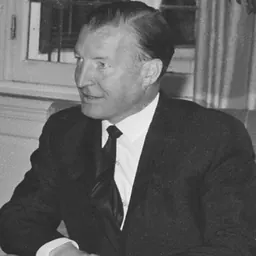


Related people
Same field, nearest in time

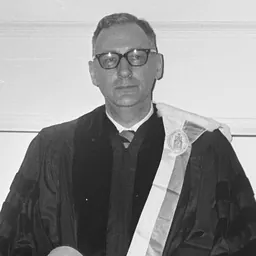


Contemporaries
People whose lives overlapped Patrick Lynch's

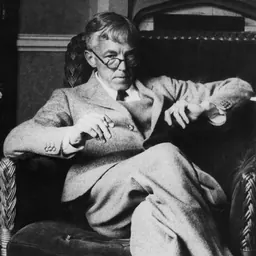
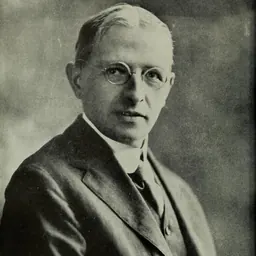
Frequently asked questions
Who was Patrick Lynch?
Irish economist (1917-2001)
When was Patrick Lynch born?
Patrick Lynch was born on 5 May 1917.
When did Patrick Lynch die?
Patrick Lynch died on 16 November 2001.
What was Patrick Lynch's occupation?
Patrick Lynch was an economist.
What nationality was Patrick Lynch?
Patrick Lynch was Irish.
Sources & further reading
· DBpedia: Patrick Lynch (economist)
Cite this page
APA: Biography.guide. (2026). Patrick Lynch. https://biography.guide/patrick-lynch-economist/
MLA: "Patrick Lynch." Biography.guide, https://biography.guide/patrick-lynch-economist/.
Chicago: "Patrick Lynch." Biography.guide. https://biography.guide/patrick-lynch-economist/.
Data last updated: 2026-09-20 · Spot an error? Report a correction.
Page generated 2026-09-27 05:19 UTC