
About Patrick Charles Keely
Lived 1816 – 1896 (aged 80). Patrick Charles Keely was an American architect.
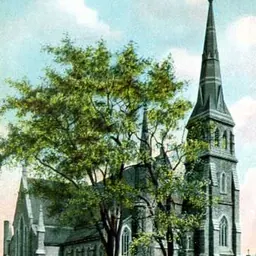
St. Mary's Church Complex in Newport, Rhode Island, the oldest Catholic Church building in the state Patrick Charles Keely (August 9, 1816 — August 11, 1896) was an Irish-American architect based in Brooklyn, New York, and Providence, Rhode Island. He designed nearly 600 churches and hundreds of other buildings for the Catholic Church or Catholic patrons in the United States and Canada, particularly in New York City, Boston and Chicago in the later half of the 19th century. He designed every 19th-century Catholic cathedral in New England. Several other church and institutional architects began their careers in his firm.
Early life in Ireland Keely was born in Thurles, County Tipperary, then a part of the United Kingdom of Great Britain and Ireland on August 9, 1816, to a family in comfortable circumstances. His draftsman and builder father introduced him to architecture and training in construction; having come from Kilkenny to work on the building of St. Patrick's College, Thurles and Patrick was educated there, though nothing is recorded of his architectural design education.
Life in Brooklyn, New York Keely emigrated to the United States, landing at Castle Garden in Manhattan in 1842, and settling in Brooklyn. He arrived at a time when Catholicism in the United States was expanding from its initial footholds in Baltimore, New York City and Boston. Initially, he worked as a carpenter and builder since there were few trained architects practicing and most structures were erected with the design assistance of the client and builder alone. Common practice held that the builder, whether trained as mason or carpenter, crafted his own plans, and details were often executed without even the aid of drawings. For a number of years Keely worked at his trade without attracting attention. During this time, he met the Rev. Sylvester Malone, a Roman Catholic priest his own age.
In 1844 Malone was appointed pastor of St. Mary's Church in Williamsburg, Brooklyn, and set about building a new church. As Know nothing sentiment was strong in the area, Malone let it out that the land he had purchased was for a cemetery. When the people in the area decided that they would rather have a church than a graveyard, opposition subsided. Together with Keely, he worked out a plan for a Gothic church possessing pointed arches, pinnacles, and a few buttresses. Working as a carpenter, Keely produced designs from which the new church was built in 1846. Malone renamed it the Church of Ss. Peter and Paul to avoid confusion with another St. Mary's in Manhattan. The stained glass was by the Morgan Brothers, thus establishing a business relationship with Keely that carried through a number of projects. The church was demolished in 1957, when a new Ss. Peter and Paul was built.
In 1846, Keely married Sarah Farmer; they had seventeen children, ten of whom lived to adulthood. Two of his sons worked in his office, another became a successful musician, the fourth, a physician. Sarah Keely died in 1876.
Architectural career
The Church of Sts. Peter and Paul was considered an epoch in Catholic building in America. The much-praised work established him as a competent architect and builder at a time when a number of new Roman Catholic churches were being planned "but a relative scarcity of competent architects of the Roman Catholic faith, and Keely's reputation for honesty and integrity quickly made him a popular choice among the hierarchy and clergy throughout the eastern United States."
In Brooklyn alone there was a great wave of Catholic settlers for whom churches were urgently needed and Keely was the only one thought of to do the work. He continued as a carpenter / craftsman in conjunction with his designing duties. The neo-gothic St. Mary Star of the Sea in Carrol Gardens was built in 1853 with one center aisle and two side aisles. Keely was assisted by carpenter Thomas Houghton. The cornerstone of St. Mary's on Kent Avenue was set in November 1854. The red brick church was dedicated by Bishop John Loughlin and its name changed to St. Patrick's. The building is noted for its roof dormers that illuminate windows in the wall of the nave.
St. Brigid's on E 8th St. in Manhattan was built in 1848 to a Carpenter Gothic design by Keely, who carved the five-pinnacle reredos, organ case, and wooden altar himself.
Keely designed St. Mary's in Yonkers in 1848. When it was dedicated in November 1851, the name was changed to the Church of the Immaculate Conception, although still popularly called St. Mary's. When the new church, designed by Lawrence J. O'Connor, opened in 1892, Keely's building became the Parish Hall.
Keely designed the Jesuit Church of the Immaculate Conception in the South End of Boston in the style of Italian Renaissance Revival in 1858, as well as its walnut case holding the organ pipe work. It was built of white New Hampshire granite. For many years it served as the church for Boston College. Immaculate Conception closed in 2007 and was later sold to developers who planned to convert it to apartments. In 2018, in response from objections raised by area residents, the South End Landmarks Commission denied the developer's request to remove the traceries from the side windows of the Church.
Keely also designed the Jesuits Church of the Gesù (Montreal), the college chapel for the Collège Sainte-Marie de Montréal. Built in 1864, it was completed the following year. Influenced by the Church of the Gesù in Rome, it is the only entirely baroque-style church in Montreal.
Constructed between 1873 and 1875, St. Bernard's Church on W 14th St. was designed in Ruskinian Gothic style. Its "twin towers, triple-portal entrance, and rose window inset into a pointed arch reveal a masterful blending of French and English influences." The church has at least one Tiffany window. It was the first church dedicated by an American Cardinal, Archbishop of New York John McCloskey. In 2003, St. Bernard's merged with Our Lady of Guadalupe to form the new parish of Our Lady of Guadalupe at St. Bernard Church.
Hammerbeam ceiling, carved by Keely himself, at St. Mary, Charlestown, MA.(1887-1893) The cornerstone of the second St. Francis Xavier Church (Manhattan) West 16th Street was laid in May, 1878 on land immediately to the west of the old church. Keely designed it in a "Roman Basilica" style, —the church has a Neo-baroque exterior with a façade of bluish-gray granite. The main entrance is sheltered by a gabled portico. The stained-glass windows, in a pre-Raphaelite style, were by the Morgan brothers, frequent collaborators of Keely. The church was dedicated by Archbishop Michael Corrigan on December 3, 1882. The current church has been in use since 1882 and underwent extensive restoration on 2001.
St. Mary's, Charlestown was commissioned by pastor John McMahon, the younger brother of Bishop Lawrence Stephen McMahon of the Diocese of Hartford, for whom Keely had built St. Joseph's Cathedral. The Gothic exterior combines Rockport granite with brick trim. The church is noted for its hammer-beam oak ceiling with angels, carved by Keely himself. The altar was likely designed by Thomas F.Houghton, Keely's son-in-law and principal draftsman.
Cathedrals
The Cathedral of the Immaculate Conception (Albany, New York) was Keely's first cathedral. Keely was not a design pioneer, but he followed his era's architectural trends closely. For the cathedral he was most influenced by the ideas of British architect Augustus Pugin, as epitomized in Pugin's 1841 book True Principles. Building took place from 1848 to 1852. Most of the work was done by immigrants; many of them volunteered their time and effort. In 1976 it was listed on the National Register of Historic Places. The Cathedral of St. Mary of the Assumption (Fall River, Massachusetts) was built in 1852. The old church remained in place and continued in use while the new church was built around it. When it was time to put on the roof, the old church was dismantled and rebuilt in a near-by location. Parishioners helped in the construction of their new church. Keely designed it in an “Early English” mode of the Gothic Revival style. He later designed St. Joseph (1880) and St. Patrick (1881-1889) churches in Fall River. The cathedral and the entire steeple are stonework composed of native granite. The naves are covered by a shingled roof; the spire rises to a height of . The main entrance is set in a shallow gabled frontispiece. Above it on the main facade is a rose window in the main gable. The interior includes intricate woodwork, with some gilding above the sanctuary. The structure is divided into three naves by granite columns. The central nave rises above the side naves that flank it forming a clerestory that is lined with windows. It is capped by a hammer-beam ceiling that rises above the floor. It was added to the National Register of Historic Places in 1983.
Construction of the Cathedral of the Holy Cross (Boston) commenced in 1867 and was completed in 1875. With local anti-Catholic sentiments a recent memory, the Gothic Revival edifice was intentionally massive, a statement that the Catholics of Boston were here to stay. Bricks from the 1834 riots in Charlestown, in which an Ursuline convent was burned down, were used in the arch over the front door. Built of Roxbury puddingstone with gray limestone trim, it reaches a height of 120 feet. Until the erection of the new Cathedral of St. Joseph (Hartford, Connecticut) in 1957, Holy Cross was the largest cathedral in New England. Supervision of the construction fell largely to Keely and his assistant John A. Dempwolf. After the Diocese of Providence was separated from the Diocese of Hartford in 1872, Hartford needed its own cathedral. The groundbreaking took place on August 30, 1876. Keely designed St. Joseph's as an Early Gothic structure, cruciform in shape and its exterior clad in Portland rough brownstone. Two square towers that rose flanked the main facade, recalling those of the Church of Notre Dame in Montreal, Canada. The interior featured an inlaid ceiling with wood from every country in the world, a rotunda with $100,000 worth of gold leaf, a bishop's throne of carved oak, a marble high altar, and 72 stained glass windows. The original St. Joseph's Cathedral, which was consecrated on May 8, 1892. A fire destroyed the cathedral on December 31, 1956. Its cause was never determined. When the Diocese of Providence was established, the old Cathedral of Saints Peter and Paul (Providence, Rhode Island) which had been built as the first Cathedral of the Diocese of Hartford, was in disrepair (part of the ceiling actually collapsed on the congregation during a Holy Week ceremony). Bishop Thomas Francis Hendricken, the first Bishop of Providence, also hired Keely to design a new cathedral. The new cathedrals in Hartford and Providence were both built of Connecticut Brownstone and showed a distinct resemblance in their exteriors. The interior of Sts. Peter and Paul has an elaborately coffered, carved, stenciled, and gilded ceiling of cypress wood which features a large painting of The Transfiguration over the Crossing which is surrounded by medallions of the Four Evangelists. They were painted by 19th Century Bavarian artist, William Lamprecht. The complete set of stained glass windows in the Cathedral was executed by the Tyrolese Art Glass Company of Innsbruck, Austria.
The three largest cathedrals in New England, Boston and Providence (both still standing), along with Hartford (lost to fire in 1956), were among Keely's greatest accomplishments.
Keely later partnered with his wife's brother-in-law, James Murphy in Brooklyn, New York, and Providence, Rhode Island, under the name Keely & Murphy from the 1860s to 1867, until Murphy opened his own practice in Providence. Established in 1883, Keely was the second person to receive the award after historian John Gilmary Shea.
Keely died on August 11, 1896, after a long illness, while still directing the completion of several churches with his son-in-law, Thomas Houghton. He was buried in Holy Cross Cemetery, Brooklyn, under an inconspicuous polished granite block embossed "KEELY."
Works Arkansas Cathedral of St. Andrew, Little Rock
Connecticut Church of St. Mary, the Immaculate Conception, Derby Sacred Heart Church, Waterbury Cathedral of St. Augustine (1868), Bridgeport Assumption Church, Ansonia St. Mary of the Immaculate Conception Church, Baltic St. Peter Church, Danbury (Keely and Murphy) Cathedral of St. Joseph Hartford (burned 1956) St. John's Church, Middletown
District of Columbia St. Dominic Catholic Church (Washington, D.C.) (1865).
Illinois Cathedral of the Holy Name, Chicago (1874) St. James Church, Chicago (demolished, 2014) Nativity of Our Lord Catholic Church, Chicago (1868) St. Stanislaus Kostka Church, Chicago (1871) St. Mary Carmelite Church, Joliet
Louisiana St. Joseph Church, New Orleans (1869-1875)
Maine Cathedral of the Immaculate Conception (1869), Portland St. Joseph's Church (1865), Lewiston St. John's Church (1855), Bangor
Maryland Corpus Christi Church, Baltimore St. Joseph's Monastery's Shrine Church Baltimore Congregation of the Passionists' Rectory Baltimore
Massachusetts Immaculate Conception Church, Newburyport Holy Trinity Church, Boston Our Lady of Victories Church, Boston St. James Church, Boston St. Mary's Church, Boston (demolished 1977) St. Mary's Church, Taunton St. Francis De Sales Church, Roxbury (original building, demolished) 1859: St. Francis de Sales Church, Charlestown St. Augustine Church, South Boston St. Vincent de Paul Church, South Boston Sts. Peter and Paul Church, South Boston (rebuild of original church by J. Fox Bryant) St. Peter Church Dorchester St. Margaret Church, Dorchester (with Thomas Houghton) St. Thomas Aquinas Church, Jamaica Plain Church of the Holy Redeemer, East Boston Church of the Assumption, East Boston St. John Church, Cambridge (with James Murphy) Sacred Heart Church, Cambridge (with Patrick W. Ford) Sacred Heart Church, Weymouth (burned 2005) Sacred Hearts Church, Malden Sacred Heart Church, Lynn St. Mary Church, Lawrence St. Patrick's Church (1853), Lowell St. Michael Church, Lowell Church of the Immaculate Conception, Lowell St. Peter Church, Lowell (demolished) St. Paul Church, Hingham St. Joseph's Church, Fall River St. Patrick's Church, Fall River St. Lawrence, Martyr Church, New Bedford Cathedral of St. Michael, Springfield Holy Name of Jesus Church, Chicopee St. Joseph Church, Pittsfield St. Jerome Church, Holyoke
Michigan Most Holy Trinity Church, Detroit
New Hampshire Cathedral of St. Joseph, Manchester (with Patrick W. Ford)
New Jersey St. Bridget Church, Jersey City St. Patrick Church, Jersey City St. Peter Church and College Jersey City St. Michael Church, Jersey City Church of the Sacred Heart, New Brunswick St. Peter the Apostle Church, New Brunswick 91856) Cathedral of St. John the Baptist, Paterson (1865) Church of the Sacred Heart Mt. Holly St Patrick's Pro-Cathedral Newark St. Mary Church, South Amboy
New York
St. Ann's Church, Brooklyn (1860), northwest corner of Gold and Front Streets -razed in 1992.
St. Anthony of Padua's Church (Greenpoint, Brooklyn) -In 1975, St. Alphonsus Church was merged into St. Anthony Church, after which the church was renamed St. Anthony – St. Alphonsus Catholic Church. Church of St. Stephen (Brooklyn, New York) -almost completely destroyed by fire in 1951 and rebuilt. St. Bernard's Church (1873–1875) (now the home of Our Lady of Guadalupe Parish) St. Boniface Church, Brooklyn (now the Brooklyn Oratory) St. Charles Borromeo Church (1868), 21 Sidney Place, Brooklyn, "reputedly his 325th church design." St. Joseph Cathedral, Buffalo St. Joseph's Church, Albany (1855-1860, closed) St. Mary Church, Yonkers (an early church by Keely, replaced in 1880) St. Mary Church, Auburn, 1867–70 St. Vincent de Paul Church, Brooklyn St. John the Baptist Roman Catholic Church, Brooklyn
Ohio Cathedral of St. John the Evangelist, Cleveland St. John the Baptist Church, Canton Church of St. Francis de Sales, Toledo (Parish closed, 2005, still open for daily noon Mass) Saints Peter and Paul Catholic Church (Sandusky, Ohio) St. Martin's Catholic Church, Valley City
Pennsylvania St. Peter Cathedral (1873–1875), Erie St. Joseph Church, Erie Church of the Assumption, (Philadelphia, Pennsylvania) St. John the Baptist Church (1894), Philadelphia, Pennsylvania Rhode Island Cathedral of Saints Peter and Paul (1878), Providence (NRHP) St. Charles Borromeo Church, Woonsocket (1867) (NRHP) St. Joseph's Roman Catholic Church (Providence, Rhode Island) (1851) (NRHP) St. Mary Church (1848), Newport (NRHP)
South Carolina St. Patrick Church, Charleston Cathedral of Saint John and Saint Finbar, Charleston (1850–1854, burned December 1861), rebuilt as the Cathedral of Saint John the Baptist (1907, completed March 2010)
Tennessee St. Peter Catholic Church (1852–55), Memphis
Vermont Cathedral of the Immaculate Conception, Burlington (burned 1972) St. Peter's Church, Rutland, Vermont St. Bridget Church, West Rutland, Vermont
West Virginia St. Francis Xavier Church, Parkersburg
Wisconsin St. Bernard's Church, Watertown
Canada Blessed Virgin's Chapel, Saint John, NB Church of Le Gesù (1865), Montreal, Quebec St. Mary's Basilica (1820–1899), Halifax, Nova Scotia St. Michael's Basilica, Miramichi, Chatham, New Brunswick
Don’t just read it —
keep it.
Full-length biographies made to live with: read them, listen on the way to work, watch them tonight.
- E-book
- Audio
- Video
Instant download · yours to keep · every purchase keeps this site free
Important facts
People in Patrick Charles Keely's life
Named in this biography and alive at the same time



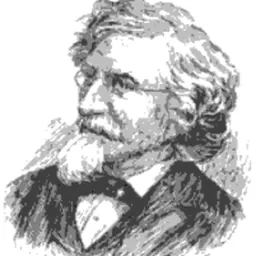
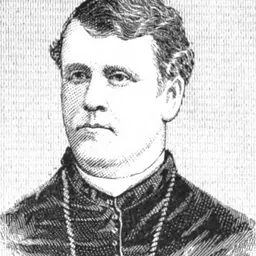
Related people
Same field, nearest in time


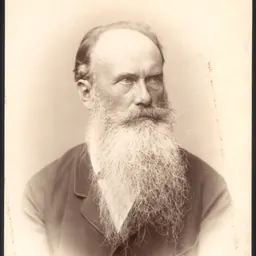

Contemporaries
People whose lives overlapped Patrick Charles Keely's

Frequently asked questions
Who was Patrick Charles Keely?
American architect
When was Patrick Charles Keely born?
Patrick Charles Keely was born on 9 August 1816 in Thurles.
When did Patrick Charles Keely die?
Patrick Charles Keely died on 11 August 1896.
What was Patrick Charles Keely's occupation?
Patrick Charles Keely was an architect.
What nationality was Patrick Charles Keely?
Patrick Charles Keely was American.
Sources & further reading
· Wikipedia: Patrick Charles Keely
Cite this page
APA: Biography.guide. (2026). Patrick Charles Keely. https://biography.guide/patrick-charles-keely/
MLA: "Patrick Charles Keely." Biography.guide, https://biography.guide/patrick-charles-keely/.
Chicago: "Patrick Charles Keely." Biography.guide. https://biography.guide/patrick-charles-keely/.
Data last updated: 2026-09-26 · Spot an error? Report a correction.
Page generated 2026-09-27 05:14 UTC