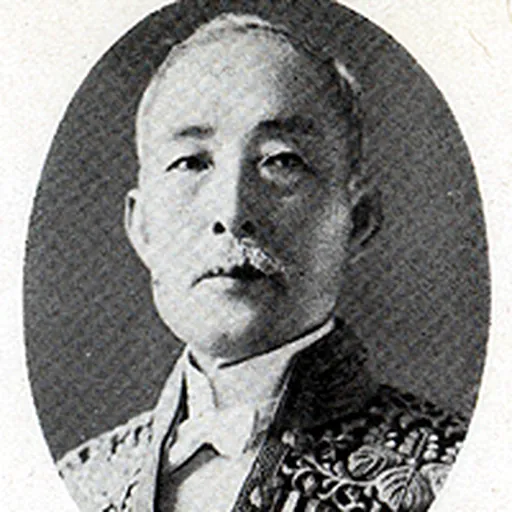
Park Jung-yang
Korean Joseon dynasty and Japanese-ruled Korean bureaucrat, politician, liberalism and social activists
About Park Jung-yang
Lived 1872 – 1959 (aged 86). Park Jung-yang was a South Korean politician, philosopher and autobiographer.
Pak Chungyang (; May 3, 1872 – April 23, 1959) was a Korean bureaucrat and politician in the Japanese colonial government. His art names were Haeak and Ilso , and his courtesy name was Wongeun . He also had the Japanese names , Jūyō Boku (朴 重陽) and . Pak was Governor of the prefecture Kōkai Prefecture from 1921 to 1923 and in 1928. He was also governor of Chūseihoku Prefecture from 1923 to 1925.
Pak went abroad to Japan to study and later returned to become a bureaucrat in his country. He was appointed as the Mayor of Daegu and the deputy Governor of North Gyeongsang Province from 1906 to 1907. Later, he succeeded sequentially in the positions of Governor of Phyeongannamto, South Jeolla Province, North Gyeongsang Province, Phyeonganpukto and South Chungcheong Province. Pak was involved in the Japan–Korea Treaty of 1910 and opposed the March First Movement. He also founded the Refrain Club.
He demolished the castle of Daegueup and the Old Gyungsangdo Provincial Office, and contributed to city planning and road maintenance in Daegu. He also participated in the destruction of the Castle of Jinju. He was a conscientious Japanese colonial supporter with pro-Japanese group ideology as well as an advocate for civil rights.
Pak was pro-Japanese, and was later named a collaborator ("chinilpa") after World War II.
Early life Pak Chungyang was born on May 3, 1872, in Junae-myeon in Yangju County, Gyeonggi Province, Joseon. He was the second son of Pak Jeong-ho (박정호, 朴鼎鎬; 1840 – September 22, 1892) and Lady Yi of the Jeonju Yi clan (April 21, 1845 – July 12, 1929). The origin of his family is unknown, but it is speculated that he either came from the Miryang Park clan or the Bannam Park clan . His father supervised a rent farm and leased it out as well. He had three brothers; one older brother and two younger brothers.
In his adolescence, he joined the Independence Club, but it was dispersed due to the repression of the Korean Empire. This caused Pak to be disappointed and left him with a bad feeling against the Korean Empire.
In March 1894, the Korean Empire employed and dispatched assassins to Japan and China. In Shanghai, China Kim Ok-kyun, a reform minded activist, was murdered by assassin Hong Jong-u. Kim's body was turned over to a Chinese warship, where it was dismembered. Parts of his body were put on public display in several towns in Korea as a traditional humiliation and punishment for treason. When Hong returned to Korea he was appointed to high office. Pak grew an extreme hatred towards the Korean Empire and the people of Korea.
International study From an early age, he wanted to go abroad to Japan. In 1897, he was selected as a Korean state student to study abroad in Japan. Pak supported himself during his studies because his family was poor. From 1897 to 1900, he studied in Aoyama middle school. In 1900, he entered Dokyo buki high school as a banking major. Then, he added a double major in Japanese police studies there.
In 1903, he returned and passed the probation period as a civil officer of Imperial Korea. After returning to Korea, Pak continued to advocate a pro-Japanese position.
Career
Korean Empire era
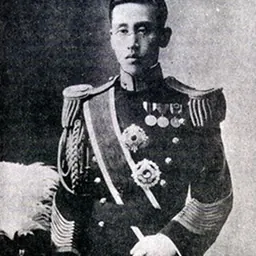
In 1903, Pak successfully filled various government posts, and was also appointed as a staff of the Public Administration Agency. In 1905, he served as a military interpreter during the Russo-Japanese War. In November 1905, he was appointed to the staff of the Farming, Commerce and Industry Department. He resigned when the Japan–Korea Treaty of 1905 was signed. On May 5, he was appointed as an engineer of the National Defense Department (군부;軍部) engineer, and accompanied Prince Yi Kang to go to Japan. Two months later, he returned to his country.
In 1906, Pak was promoted to Governor of Daegu County. Then, after a short period, he was promoted again to the Acting Governor of the North Gyeongsang Province. During the term, Pak tore down the castle of Daegueup without official permission He secretly hired Japanese workers to tear down the structure. also Pak was lay out a new street. In early 1906, he applied for permission from the Korean government, but it was refused. The government tried to punish him for the action, but he acquired protection from Ito Hirobumi. and founded the Refrain club on 6 April in response. But, Pak maintained his innocence at the court and stood by his pro-Japanese beliefs.
The Joseon dynasty was society of more darkness, Japanese ruled time was reformed of modern Korea. The goal for civil servants was social welfare. Japanese ruled time was "squeeze the peoples blood's", it's assert that also unaware of politics meaning, prejudice of causeless Japanese hates. He referred to Itō as "My respected teacher".
Pet name
He had "Stick Mr. Pak" (박작대기/박짝대기) as his pet name. The pet name was selected as such because Pak always carried a long stick, sometime called the "Enlightened Stick".
Other For decades, Pak regularly wrote in his diary every day, which was stored in 20 boxes. Pak's diary was captured when he was arrested by the Special Investigation Committee of Anti-National Activities. Even after being release Pak didn't get his diary back. Pak wrote a memoir "Sulhoe", copy paper of some diary and his memories.
Books 《Pak Chungyang's Diary》 《Sulhoe》 《Sinnyeon sogam》 《Pokdosa pyeonjip jaryo》(; 1907)
Gallery
Don’t just read it —
keep it.
Full-length biographies made to live with: read them, listen on the way to work, watch them tonight.
- E-book
- Audio
- Video
Instant download · yours to keep · every purchase keeps this site free
Important facts
People in Park Jung-yang's life
Named in this biography and alive at the same time

Related people
Same field, nearest in time





Contemporaries
People whose lives overlapped Park Jung-yang's





Frequently asked questions
Who was Park Jung-yang?
Korean Joseon dynasty and Japanese-ruled Korean bureaucrat, politician, liberalism and social activists (1872-1959)
When was Park Jung-yang born?
Park Jung-yang was born on 3 May 1872 in Yangju.
When did Park Jung-yang die?
Park Jung-yang died on 23 April 1959 in Daegu.
What was Park Jung-yang's occupation?
Park Jung-yang was a politician, philosopher and autobiographer.
What nationality was Park Jung-yang?
Park Jung-yang was South Korean.
Sources & further reading
Cite this page
APA: Biography.guide. (2026). Park Jung-yang. https://biography.guide/park-jung-yang/
MLA: "Park Jung-yang." Biography.guide, https://biography.guide/park-jung-yang/.
Chicago: "Park Jung-yang." Biography.guide. https://biography.guide/park-jung-yang/.
Data last updated: 2026-09-20 · Spot an error? Report a correction.
Page generated 2026-09-27 05:10 UTC