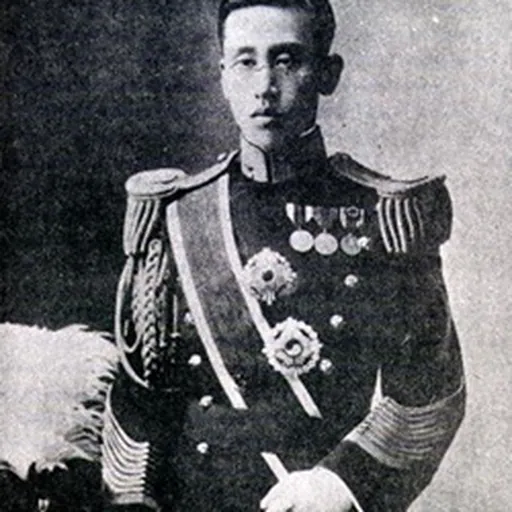
About Prince Yi Kang
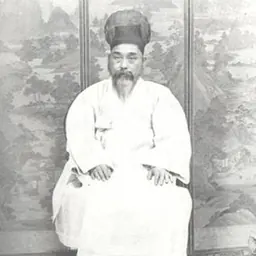
Lived 1877 – 1955 (aged 78). Prince Yi Kang was a South Korean politician.
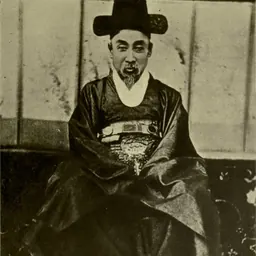
Yi Kang, Prince Imperial Ui (; 30 March 1877 – 15 August 1955), also known as Prince Uihwa (1891–1900) or King Ui (1900–1955) was the second son of Emperor Gojong of Korea and his concubine, Lady Jang, who was a court lady-in-waiting.
In 1891, his father King Gojong issued a decree naming Yi "Prince Uihwa" with the style of Royal Highness. Yi married Lady Kim Deok-su, the daughter of court official Kim Sajun.
Upon declaration of Korean Empire in 1897, Yi was enthroned as King Ui or Prince Imperial Ui by his father Emperor Gojong of Korea in 1900 along with his younger brother, Yi Un.
Biography Education and early life Despite being born as a son of Gojong of Korea, there are not many official records about his early life, which may be a result of having been borne by Lady Jang, a court lady-in-waiting of King Gojong but not the king's official consort or concubine during her lifetime. Lady Jang came from the Deoksu Jang clan, and Queen Inseon (Hyojong of Joseon's queen consort) was her distant relative. According to the tradition, the half-brothers of the crown prince, in this case, Yi Cheok (future Sunjong of Korea), needed to move out from the palace until the latter reached the age 10, so there were some years that Yi Kang lived with Pak Yung-hio, the son-in-law of King Cheoljong. During the Kapsin Coup in 1884, Yi Kang and his mother were taken by Pak Yung-hio to the palace; contemporary rumors claimed that the coup d'état tried to replace the king with Yi Kang; but after the coup ended, Yi left the palace again.
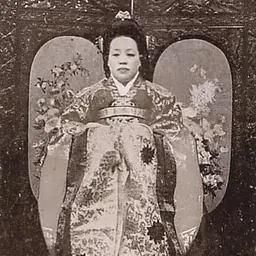
Later, Queen Min, Gojong's wife, asked her husband to grant Yi Kang a title, so Yi Kang became Prince Uihwa in 1891. After three rounds of choosing in 1893, the daughter of an official Kim Sa-jun, Lady Kim Deok-su, was chosen to be the spouse of Yi Kang, which was arranged by Queen Min. Yi Kang did not have children by her. Even after getting married, Yi Kang got involved in debt and lawsuit problems.
Prince Yi Kang was appointed special ambassador to the Empire of Japan for the celebration ceremonies for Japan's victory in the First Sino-Japanese War of 1894–1895. In August 1895, Yi was appointed as special ambassador and visited European countries including the United Kingdom, Germany, France, Russia, Italy and Austria-Hungary. In 1899, he visited Japan. According to Japanese records, 3,000 Won were sent to Yi. While he was not in Korea, Yi Kang was promoted to the rank of Prince Imperial Ui, and styled His Imperial Highness in 1900. At the same year, he went to the United States and began studying at Roanoke College in Salem, Virginia from March 1901, where he majored in mathematics. While in America, Yi was beaten by some Americans in 1903. In 1904, some Korean foreign students tried to dethrone Gojong and make Yi the emperor. After graduation, he spent a brief period at the Ohio Wesleyan University in Delaware, Ohio, and then traveled to San Francisco and Hawaii, returning to Korea on 15 March 1906. The same year, he got Order of the Golden Ruler. On 8 April 1906, Yi was appointed as Lieutenant General . He was appointed as Chanmogwan and was ordered to participate in a military parade in the Empire of Japan. He received the 1st class of the Order of the Paulownia Flowers from the Japanese government while he was in Japan.
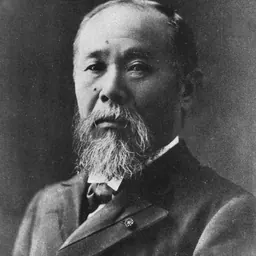
Prince Yi Kang served as the president of the Korean Red Cross from 1906 to 1907. When Emperor Gojong abdicated and Sunjong succeeded him as Emperor, Yi was not appointed as the crown prince, but instead his younger brother, Yi Un; this was because Yi did not receive public support and Gojong was not fond of him. Also, Imperial Consort Sunheon bribed Itō Hirobumi, who was the Japanese Resident General of Korea, to appoint her son as the crown prince. When Itō Hirobumi was assassinated by An Jung-geun, Yi was ordered to participate in the funeral as the deputy of the Korean Imperial House. The order, however, was canceled and the Minister of the Imperial Household was sent instead.
Under Japanese rule
Following the abdication of Emperor Gojong in 1907, and the Japan-Korea Treaty of 1910 through which Korea was annexed to the Empire of Japan, Prince Yi Kang grew increasingly dissatisfied with his status, even though the Japanese provided him with a huge annual allowance. At the same time, the title "Prince Imperial Ui" was abolished and Yi received a reduction in rank to Duke by Japanese until 1930.
During the March 1st Movement, Yi participated as one of the representatives of Korea. Since Yi had studied abroad and knew much about the world, the Provisional Government of the Republic of Korea wanted Yi to join the government. After the escape of Gim Ga-jin, an Imperial Korean official before, the Provisional Government's objective was Yi's refuge in Shanghai. On 9 November 1919, he collaborated with Choe Ik-hwan, a member of , who attempted to support him as the new leader of Korea. Prince Yi Kang then tried to escape to the Provisional Government of Korea based in Shanghai, only to be discovered in Dandong from Manchuria and returned to his home country. Lee Jong-Wook had received orders from Ahn Changho to accompany Yi and help him escape. With the help of Cheon Un-boek, who was an employee of the Japanese General Government Building, Yi successfully met Lee Jong-Wook, who came to rescue him. Yi disguised his face by attaching a mustache on his face. However, Yi was caught near the Dandong Station, which is located in Zhenxing District. On 13 November 1919, Yi was sent back to Keijō by Japanese police force. After this, the Japanese government claimed that Yi Kang was "abducted" and "wanted to escape to live profligately again". Later, Yi Kang asked to be deprived of his title multiple times, but this wasn't approved. Yi's home became part of Deoksugung. His exile promoted a positive view towards the Imperial family, and the Japanese attempted to devalue the exile as a trivial issue.
During the tenure of Saitō Makoto, Saitō met Yi many times and tried to change his stance on independence.
As of 10 November 1925, a law for defining the status of the former Korean imperial family was made. In 1930, due to Yi's continuous independent movement activities against Japan, Yi was stripped of his Duke rank by Japan and became a commoner. On 12 June 1930, Yi officially retired and his eldest son Yi Geon succeeded him as duke. Yi Kang's styles and allowances still remained until the end of World War II.
Throughout the Japanese rule, there were only few members of Yi Kang family recognized by Japan: Yi Kang himself, his wife Kim Deok-su (Duchess Consort of Yi Kang), his eldest son Duke Yi Geon with his family, and his second son Duke Yi U (adopted as the heir to Duke Yi Jun-yong in 1917) with his family.
After independence After the independence of Korea, he continued to live in Seoul, but in increasing poverty. On 9 August 1955 he was baptized a Roman Catholic, given the Christian name "Pius"; Lady Kim was also baptized and given the name of "Maria". Yi said that the reason why he was baptized a Roman Catholic was to apologize for the anti-Catholicism of Joseon led by Heungseon Daewongun. Yi Kang died a week later on 15 August 1955, at the age of 78, in his mansion "Seongrakwon" Manor (now Seongnagwon Garden, in Seongbuk District, Seoul); he was buried at the Hongneung and Yureung imperial tombs in Namyangju near Seoul, where his father and brothers are also buried. His official heritor was chosen as his third son, Yi Bang on 30 June 1970.
Family Prince Imperial Ui, Yi Kang married Kim Deok-su (22 December 1880 – 14 January 1964) in 1892; however, the couple had no children. Therefore, all children Yi Kang had, 12 sons and 9 daughters, were born by 13 of his various concubines. Since his first son Yi Geon was naturalized to Japan, and his second to fifth sons were adopted by royal relatives, his sixth son, Yi Gon became the successor of Yi Kang. Currently Yi Gon's first son, Yi Jun(1961~) is the current heir of Prince Imperial Ui and is the chairperson of Prince Imperial Ui Memorial Foundation.
22 December 1880 14 January 1964 Yeonan Kim clan Baron Kim Sa-junLady Hwang of the Changwon Hwang clan No issue
Concubines Courtesy Title Name IssueLady Jeong of Sugwan Hall Lady Jeong 1st son: Yi Geon (b. 1909)Lady Kim of Suin Hall Kim Heung-in 2nd son: Yi U (b. 1912) 5th son: Yi Ju (b. 1917) 6th son: Yi Gon (b. 1919)Lady Jeong of Suhyeon Hall Jeong Un-seok 3rd son: Yi Bang (b. 1914)—Cho Byeong-suk 4th son: Yi Chang (b. 1915)Lady Yi of Sudeok Hall Yi Hui-chun 1st daughter: Yi Hae-wan (b. 1918) 2nd daughter: Yi Hae-won (b. 1919)Lady Kim of Suwan Hall Kim Jeong-wan 3rd daughter: Yi Hae-chun (b. 1920)Lady Park of Sugil Hall Park Yeong-hui 4th daughter: Yi Hae-suk (b. 1920)—Lady Song 7th son: Yi Kwang (b. 1920)Lady Kim of Sugyeong Hall Kim Chang-hui 8th son: Yi Hyun (b. 1922)—Kim Geum-deok 5th daughter: Yi Haegyeong (b. 1930)—Ham Gae-bong 9th son: Yi Gap (b. 1938)—Kim Hye-su 6th daughter: Yi Hoe-ja (b. 1940) 11th son: Yi Hwan (b. 1944) 9th daughter: Yi Chang-hui (b. 1953)—Hong Jeong-sun 10th son: Yi Seok (b. 1941) 7th daughter: Yi Hae-ran (b. 1944) 12th son: Yi Jeong (b. 1947) 8th daughter: Yi Haeryeon (b. 1950)
Sons Naturalized as a Japanese citizen in 1947 and changed the name to "Momoyama Kenichi" (桃山虔一) Wife: Matsudaira Yoshiko (松平誠子), daughter of Captain Matsudaira Yutaka and a first cousin of Yi Bangja. They had two sons and a daughter; divorced in 1951 He died in the United States Wife: Cho Ui-hye ; they had two sons and two daughters a 3rd cousin of Yi Kang The 7th chairman of the Jeonju Lee Royal Family Association in 1971–1974 Wife: Cheongija (천기자/千枝子), a Japanese; they had two sons and two daughters
Daughters Self-claimed "Empress of Korea" in 2006–2020 3Yi Chan이찬Yi Gil-yun이길연Yi Hae-chun이해춘李海珺19202009 Husband: Marquess Park Chan-beom , grandson of Pak Yung-hio and his successor; they had a son but later divorced 5이공Yi Gil-sang이길상Yi Haegyeong이해경李海瓊1930 Also known as "Amy Hai Kyung Lee"
Ancestry
Honours
Order of the Golden Ruler on 9 April 1906 Korean Colonization Decoration on 1 August 1912 Grand Cordon of the Order of the Rising Sun
Don’t just read it —
keep it.
Full-length biographies made to live with: read them, listen on the way to work, watch them tonight.
- E-book
- Audio
- Video
Instant download · yours to keep · every purchase keeps this site free
Important facts
Family & relationships
People in Prince Yi Kang's life
Named in this biography and alive at the same time



Related people
Same field, nearest in time




Contemporaries
People whose lives overlapped Prince Yi Kang's



Frequently asked questions
Who was Prince Yi Kang?
Korean prince (1877-1955)
When was Prince Yi Kang born?
Prince Yi Kang was born on 30 March 1877 in Seoul.
When did Prince Yi Kang die?
Prince Yi Kang died on 15 August 1955 in Seoul.
What was Prince Yi Kang's occupation?
Prince Yi Kang was a politician.
What nationality was Prince Yi Kang?
Prince Yi Kang was South Korean.
Sources & further reading
Cite this page
APA: Biography.guide. (2026). Prince Yi Kang. https://biography.guide/prince-yi-kang/
MLA: "Prince Yi Kang." Biography.guide, https://biography.guide/prince-yi-kang/.
Chicago: "Prince Yi Kang." Biography.guide. https://biography.guide/prince-yi-kang/.
Data last updated: 2026-09-22 · Spot an error? Report a correction.
Portrait: Wikimedia Commons · author & licence
Page generated 2026-09-27 05:03 UTC